
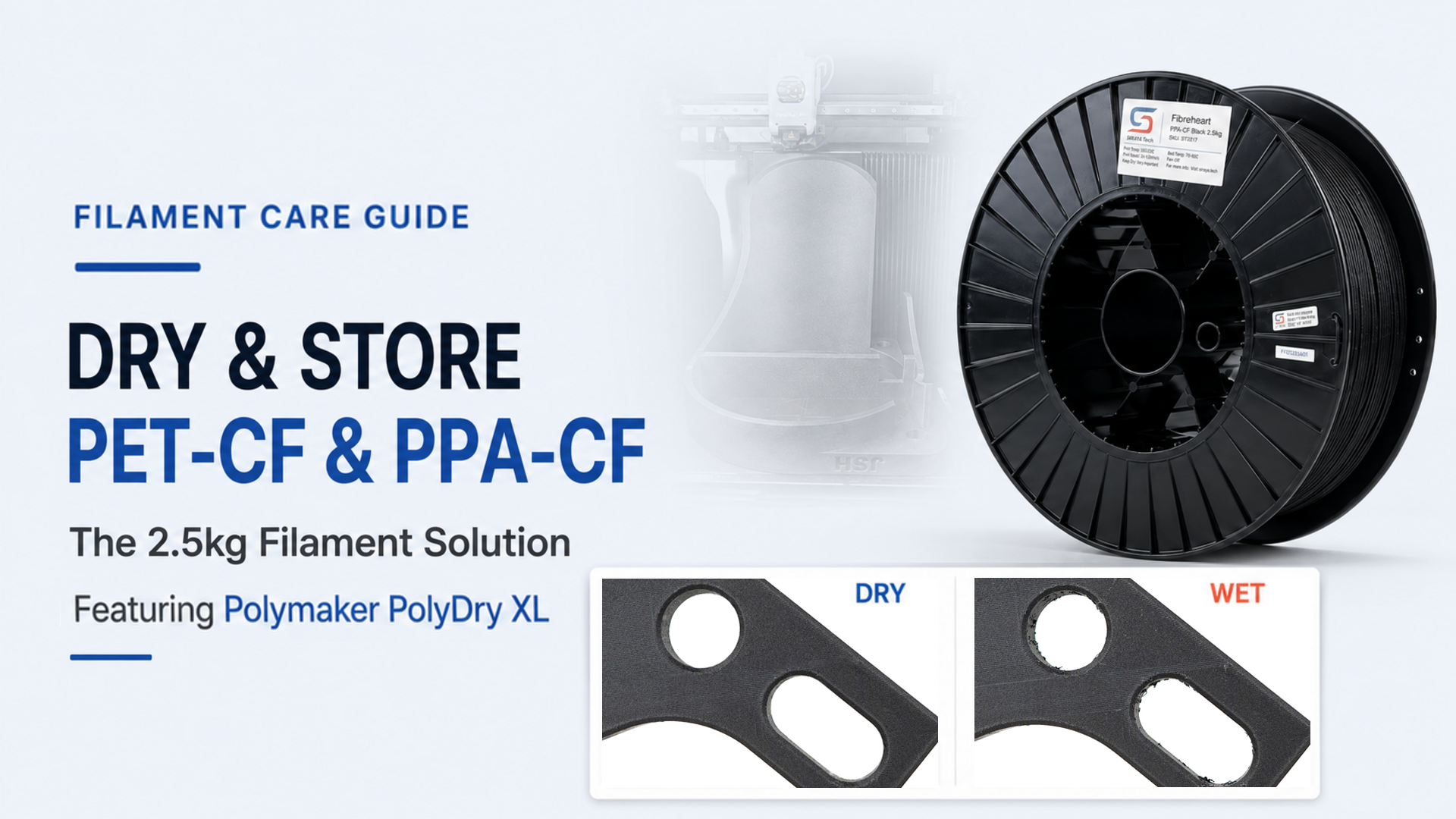
Engineering-grade composites like our Siraya Tech PET-CF and PPA-CF are pushing the boundaries of what desktop 3D printing can achieve. Offering extreme stiffness, high heat deflection, and exceptional chemical resistance, these materials are the go-to choice for advanced users manufacturing functional parts and end-use prototypes.
However, harnessing the full mechanical potential of these filaments means battling their one relentless enemy: moisture.
If you are printing with our large-format 2.5kg spools, multi-day prints are standard. The golden rule for these advanced engineering materials is simple: do not try to dry them after they get wet; keep them dry from the very beginning.
The "Dry From the Get-Go" Philosophy
Because recovering wet composite filament is so difficult, advanced users must shift from a reactive mindset to a proactive one. Prevention is the absolute best approach.
Your filament should either be sealed in the protective silver foil bag it shipped in, or it should be inside a dedicated, enclosed storage container while printing. Leaving a spool of PPA-CF or PET-CF out in ambient room air—even for just a few hours—can compromise your next print.
Why PPA-CF and PET-CF are So Hard to Dry
Both PPA (Polyphthalamide) and PET (Polyethylene Terephthalate) are inherently hygroscopic. They actively draw moisture out of the surrounding air. When moisture-laden filament enters a hotend pushing 300°C, the trapped water instantly boils, causing the polymer to foam as it extrudes. This leads to severe stringing, oozing, and destroyed layer adhesion.


If your filament does become saturated, drying PPA-CF and PET-CF is not as simple as throwing it into a standard consumer filament dryer.
Standard dry boxes and consumer filament dryers do not get hot enough to dry PPA or PET. To effectively drive moisture out of these high-temperature composites, you need sustained, high heat—specifically between 100°C and 120°C.
How to Properly Dry Wet 2.5kg Spools
To hit these high temperatures, you need specific equipment:
*Note: Once the filament is fully dried in a high-temperature oven, it must immediately go back into its silver storage bag or directly into your active printing setup.
The Ultimate Storage & Printing Setup: The Polymaker PolyDry XL
While an oven is required for drying, you need a specialized solution for storing the filament while it feeds into your printer. Embracing the "Dry from the Get-Go" method with 2.5kg spools presents a challenge: most consumer dry boxes simply cannot fit them.
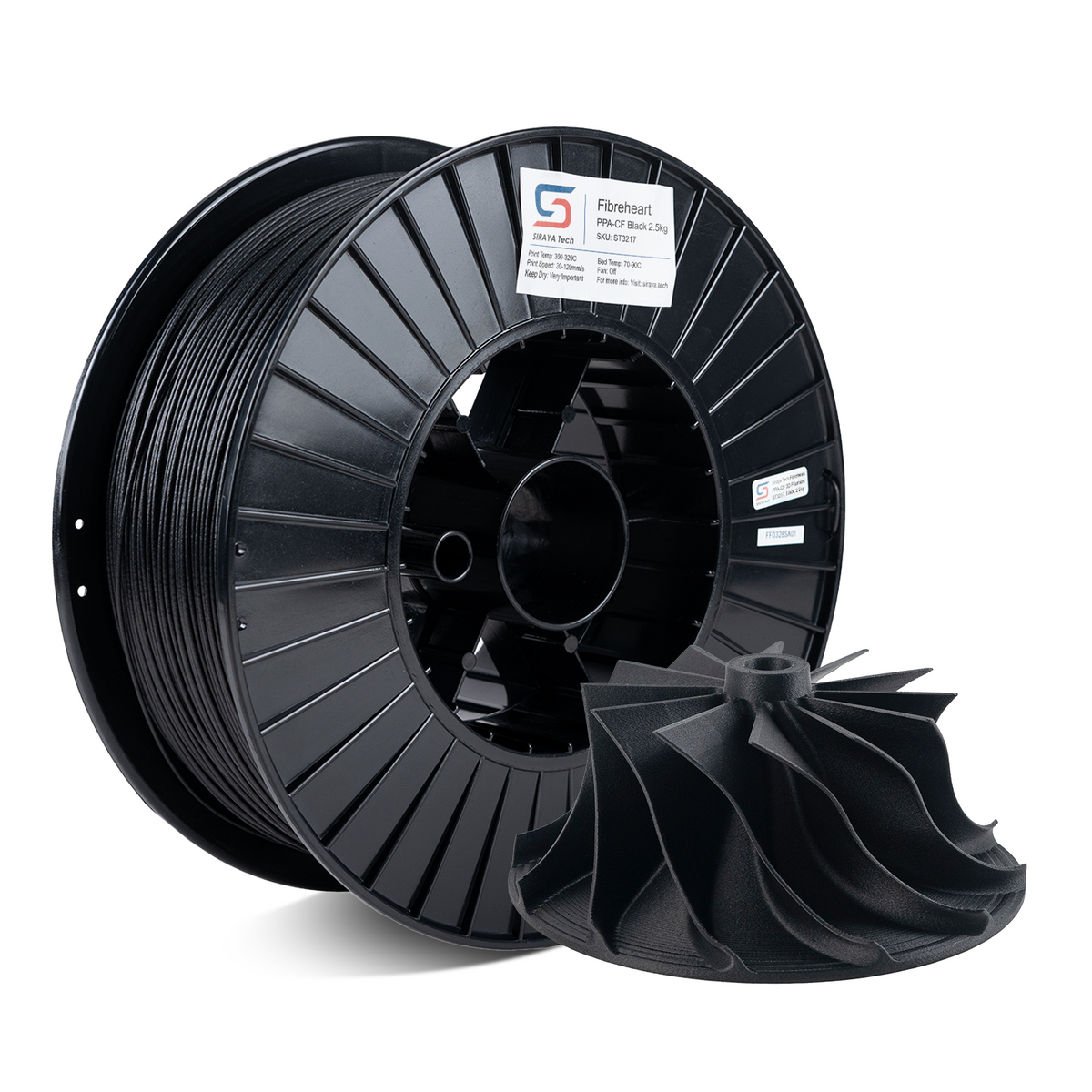
After extensive internal testing at Siraya Tech, we highly recommend the Polymaker PolyDry XL as the absolute best option at the moment for storing our 2.5kg spools while printing.


Maximize Your Mechanical Properties
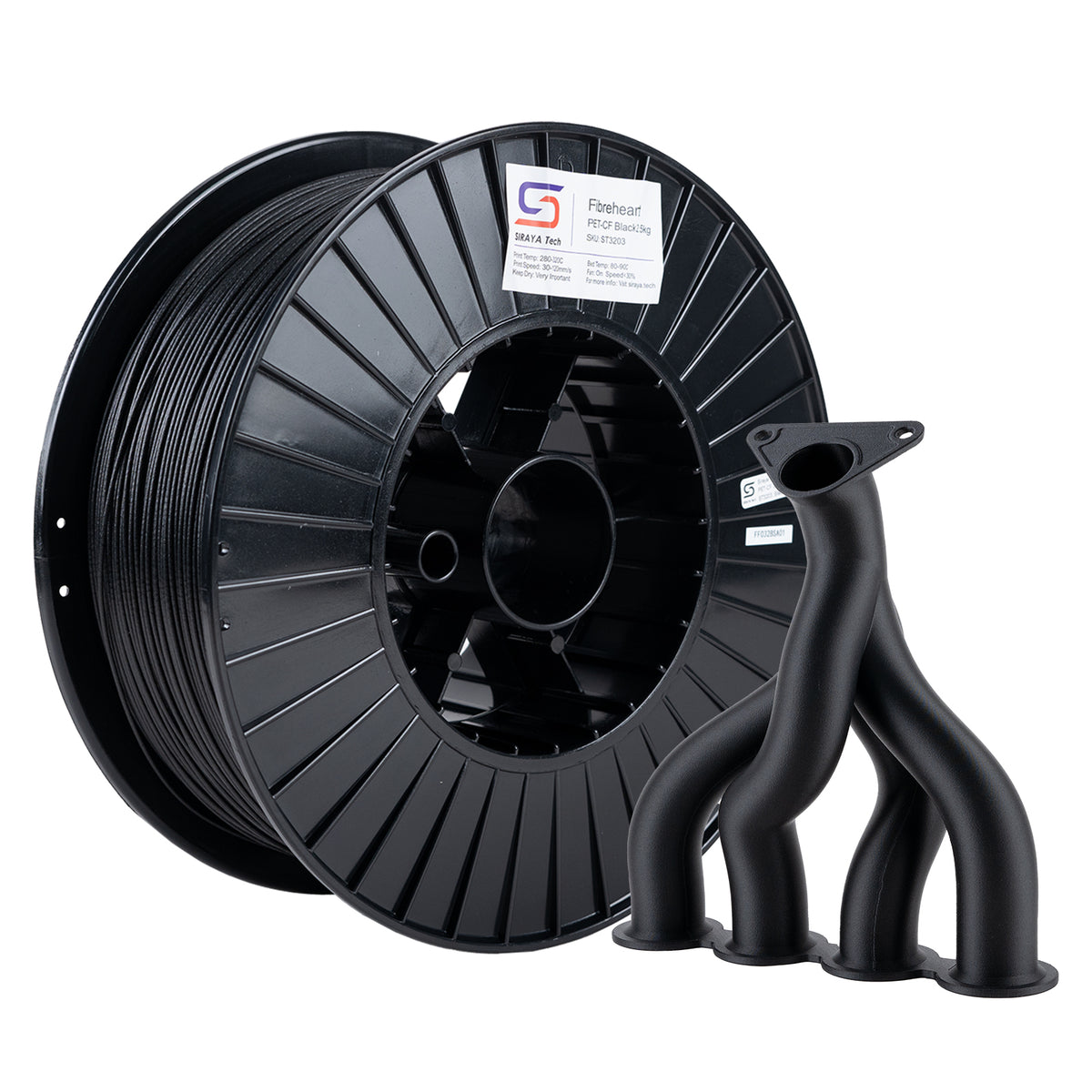
Drying PET-CF and PPA-CF shouldn't be a constant battle. By keeping your filament dry from day one and pairing Siraya Tech’s high-performance 2.5kg composite spools with the flawless feeding environment of the Polymaker PolyDry XL, you guarantee that every millimeter of extruded plastic retains its maximum strength, stiffness, and print quality.
What is your current dry box setup for large-format printing? Let us know in the comments below or join the discussion in our community Discord!