Flexible Polyurethane Resin
4 製品
4 製品の1 - 4を表示しています。
Flexible polyurethane resin represents the next generation of bendable 3D printing materials for professionals and hobbyists seeking rubber-like elasticity combined with exceptional strength. This advanced photopolymer formulation delivers the perfect balance of flexibility and durability, making it ideal for functional prototypes, impact-resistant parts, and applications requiring repeated flexing without failure. Whether you're designing living hinges, shock-absorbing components, or flexible connectors, this versatile material provides the performance characteristics needed for demanding projects.
Flexible Polyurethane Resin: Superior Elasticity and Recovery
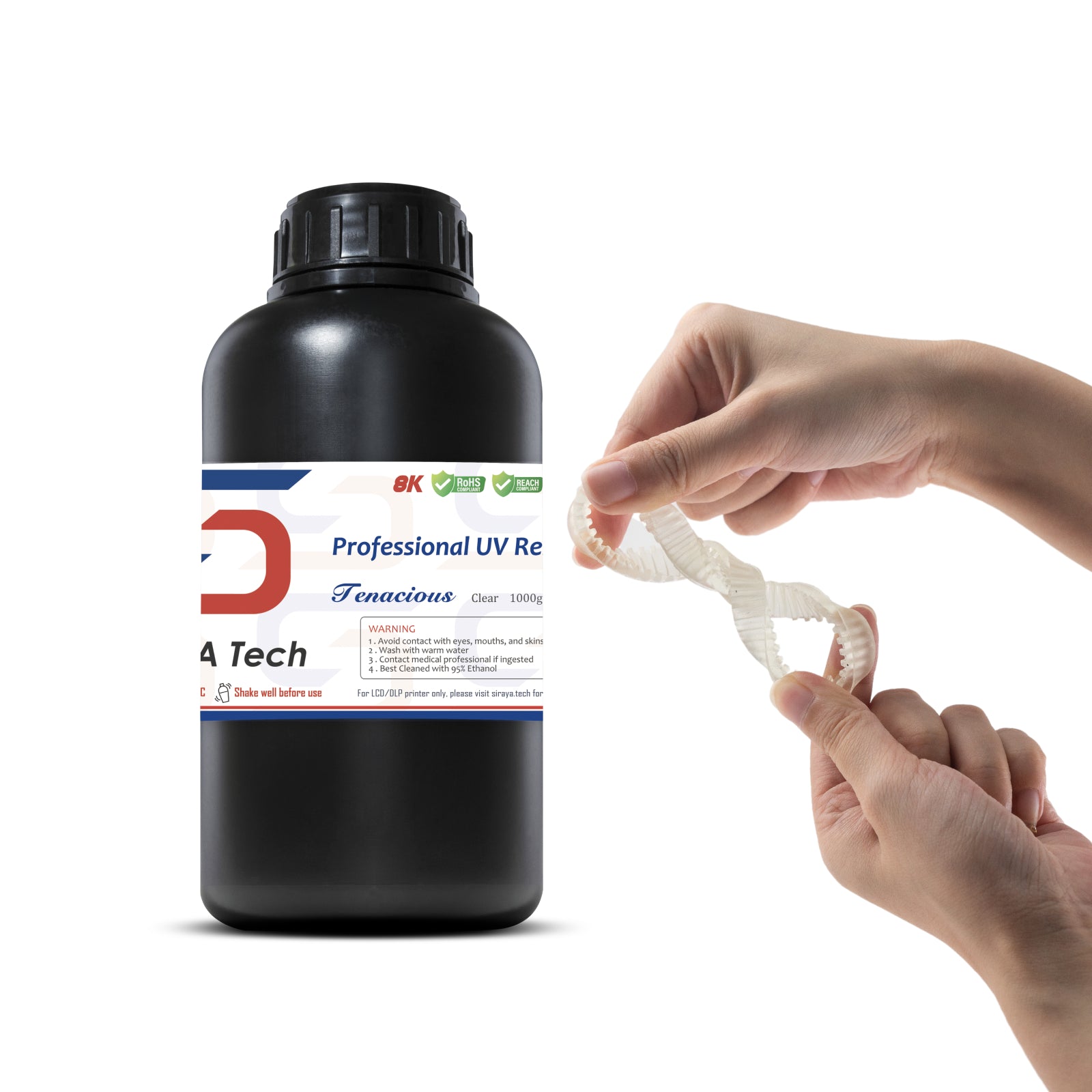
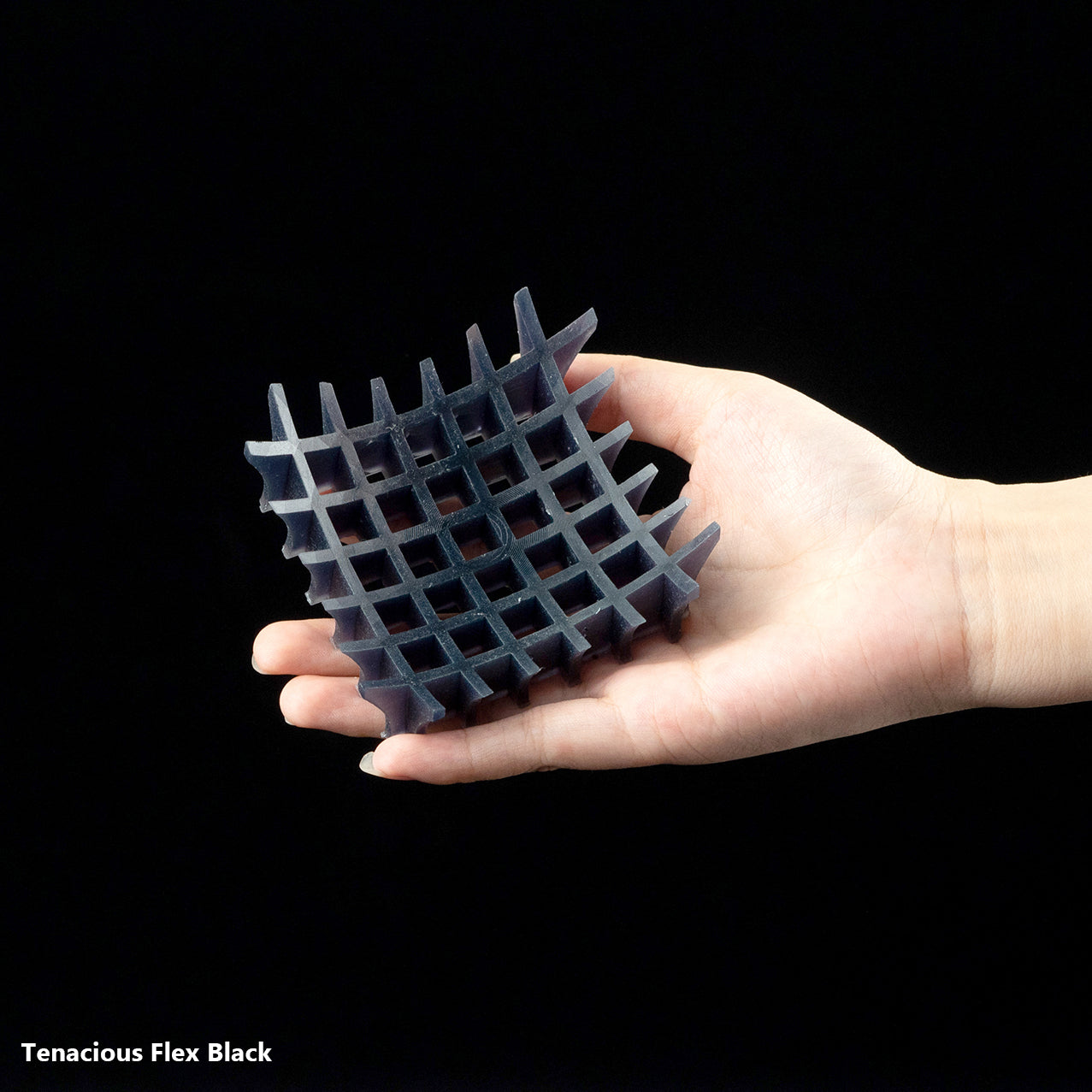
When your application demands materials that flex, bend, and return to their original shape, flexible polyurethane resin delivers outstanding results. With 65D Shore hardness and 70% elongation at break, this formulation maintains its elastic properties through countless cycles of deformation.
- Rubber-like flexibility that allows thin prints to bend 360° without breaking
- Excellent shape memory that returns parts to original dimensions
- 70% elongation at break for extreme flexibility applications
- Ideal for gaskets, seals, O-rings, and living hinge mechanisms
- Compatible with MSLA, DLP, and LCD 3D printing systems
Explore more options: Browse our complete flexible resin 3D printing collection for additional flexible formulations tailored to your specific requirements.
Exceptional Impact Strength and Durability
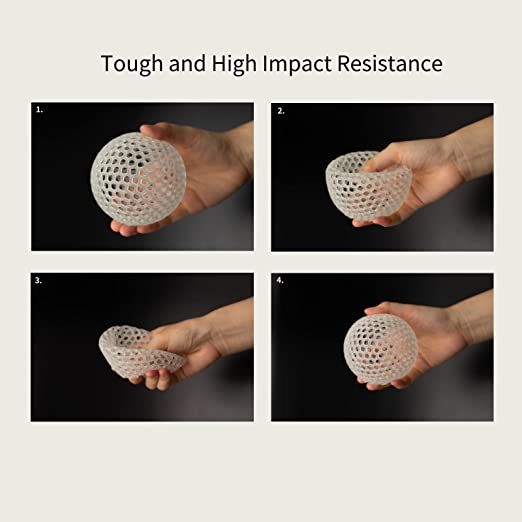
High-performance polyurethane formulations excel in applications where rigid materials simply fail. This impact-resistant material absorbs energy and distributes stress throughout the part, preventing cracks and fractures during drops, impacts, and high-stress situations.
- 28 MPa tensile strength combined with flexibility
- 57 J/m IZOD impact rating for superior shock resistance
- High polymer content enhances toughness and tear resistance
- Perfect for protective cases, bumpers, vibration dampeners, and durable miniatures
- Thick prints demonstrate exceptional strength capable of withstanding repeated drops
- Prevents brittle failure common in rigid photopolymers
Versatile Additive for Enhanced Resin Properties
Achieving custom mechanical properties is simple when using polyurethane flexible resin as an additive. Mix this material with other 405nm resins to reduce brittleness, improve impact resistance, and create formulations perfectly suited to your specific application needs.
- Blend with rigid resins to enhance toughness and reduce fragility
- Create custom flexibility levels by adjusting mixture ratios
- Improve durability of standard photopolymers without sacrificing detail
- Experiment with different concentrations to optimize part performance
-
Maintains excellent interlayer adhesion in mixed formulations
Need temperature resistance? Check out our heat-resistant resin collection for applications requiring enhanced thermal stability and high-temperature performance.
Diverse Applications for Polyurethane 3D Printing Resin
From industrial prototyping to consumer products, flexible polyurethane resin enables designs previously impossible with traditional rigid photopolymers. This material bridges the performance gap between hard and soft materials, opening new possibilities across multiple industries.
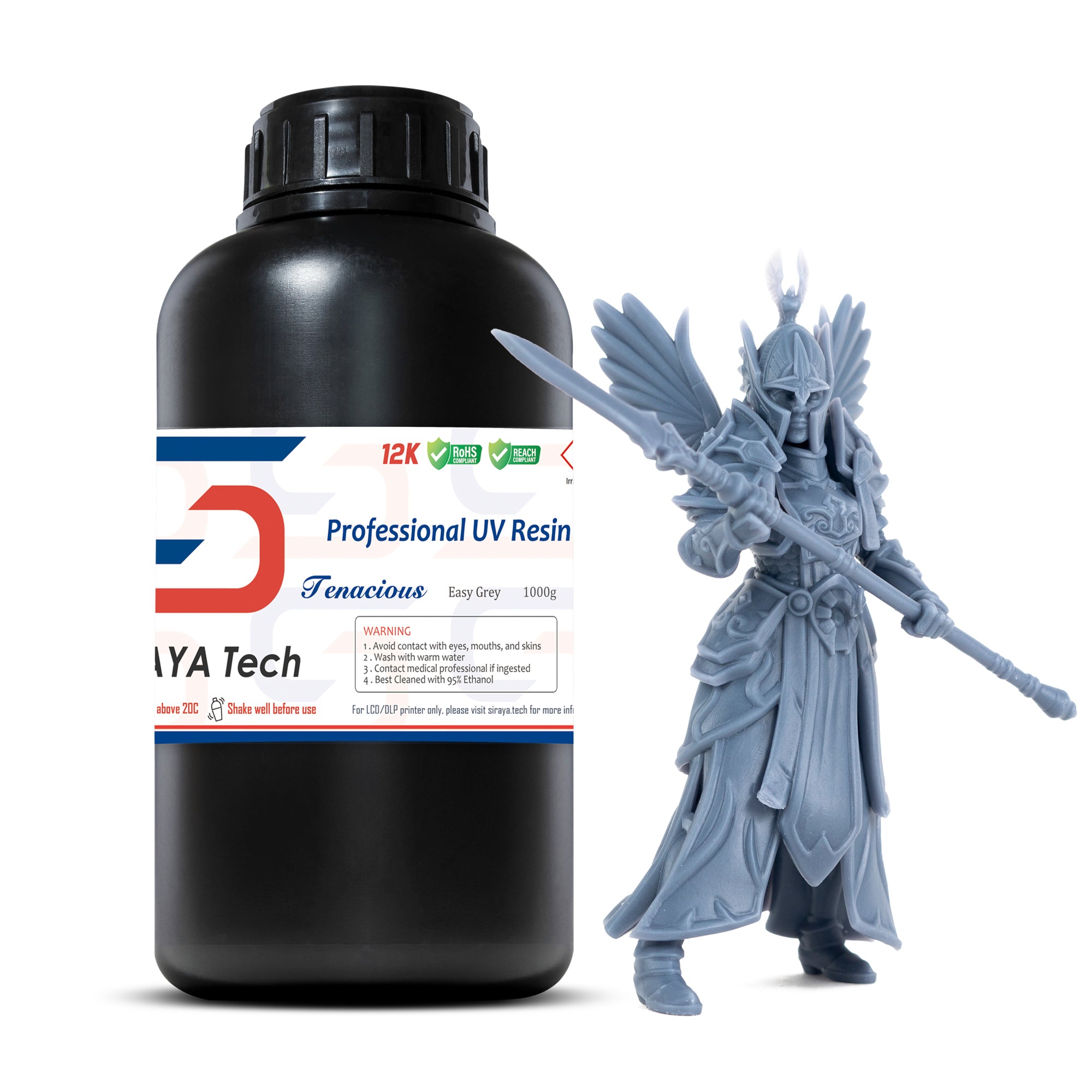
- Tabletop gaming miniatures with flexible weapons and accessories
- Automotive parts including bushings, seals, and shock-absorbing components
- Functional prototypes featuring living hinges and flexible assemblies
- Industrial tooling and fixtures requiring impact absorption
- Dental models, orthodontic braces, and flexible dental appliances
- Consumer electronics with drop protection and flexible features
Discover more materials: Explore our full photopolymer resin collection to find the perfect material for every manufacturing challenge.
Frequently Asked Questions: Flexible Polyurethane Resin
What is polyurethane resin used for?
Polyurethane resin is used for 3D printing flexible, impact-resistant parts that require rubber-like properties. Common applications include gaskets, seals, living hinges, protective cases, and shock-absorbing components. It's also frequently mixed with other resins to improve toughness and reduce brittleness in standard photopolymer prints.
Is polyurethane epoxy flexible?
Polyurethane and epoxy are different material systems with distinct properties. While some polyurethane formulations offer significant flexibility, traditional epoxy resins are typically rigid. Flexible polyurethane photopolymers used in 3D printing provide elasticity and impact resistance that standard epoxy-based resins cannot match.
What is the difference between acrylic and polyurethane resin?
Acrylic resins are typically harder and more rigid with excellent clarity, while polyurethane resins offer superior flexibility and impact resistance. Polyurethane formulations provide rubber-like elasticity and better energy absorption. Acrylic resins are preferred for rigid, detailed parts, whereas polyurethane excels in applications requiring flexibility and toughness.
Is polyurethane resin the same as epoxy resin?
No, polyurethane resin and epoxy resin are different chemical systems with distinct properties. Epoxy resins generally provide rigid, strong parts with excellent chemical resistance. Polyurethane resins offer greater flexibility, impact resistance, and elasticity, making them ideal for applications requiring bendable or shock-absorbing characteristics rather than maximum rigidity.