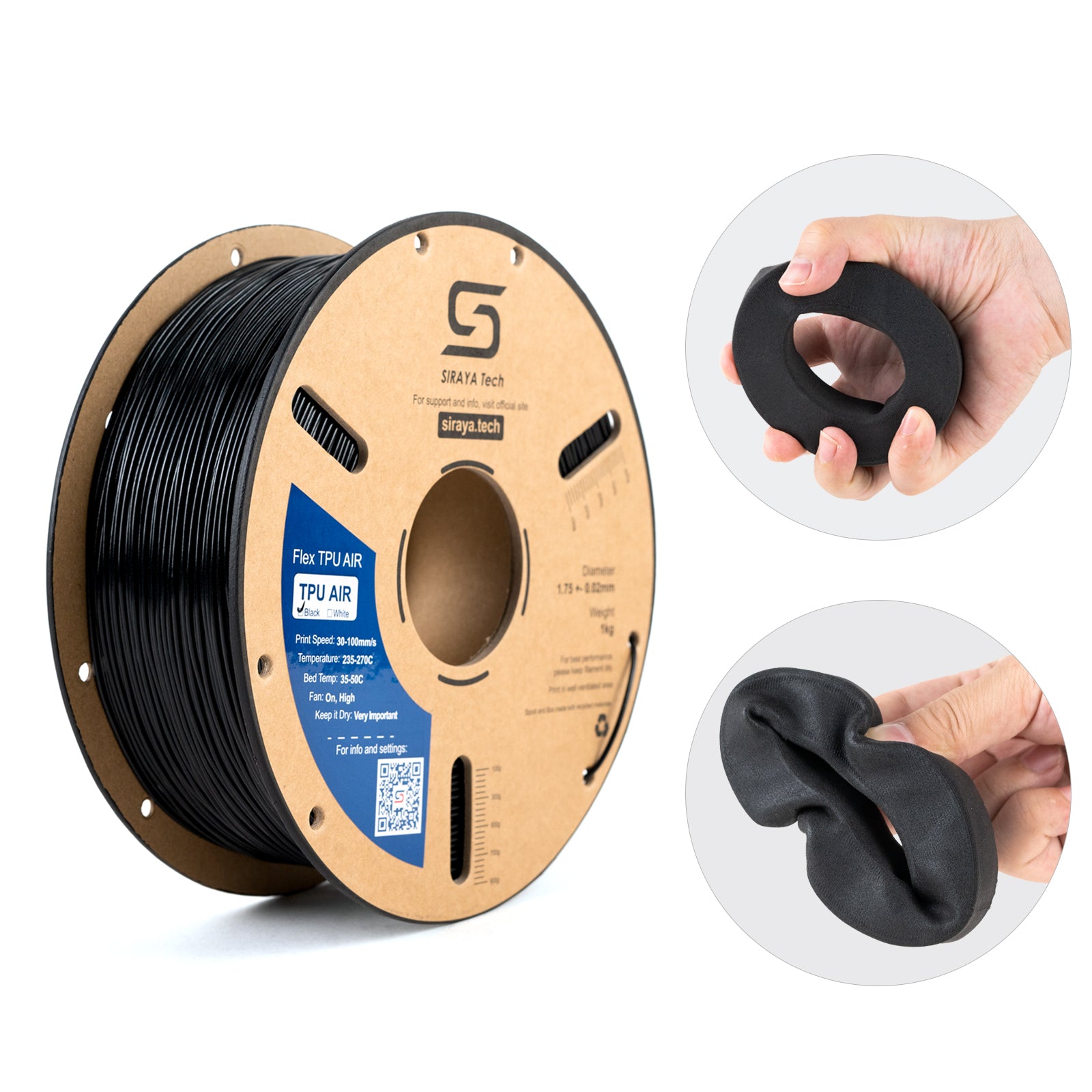
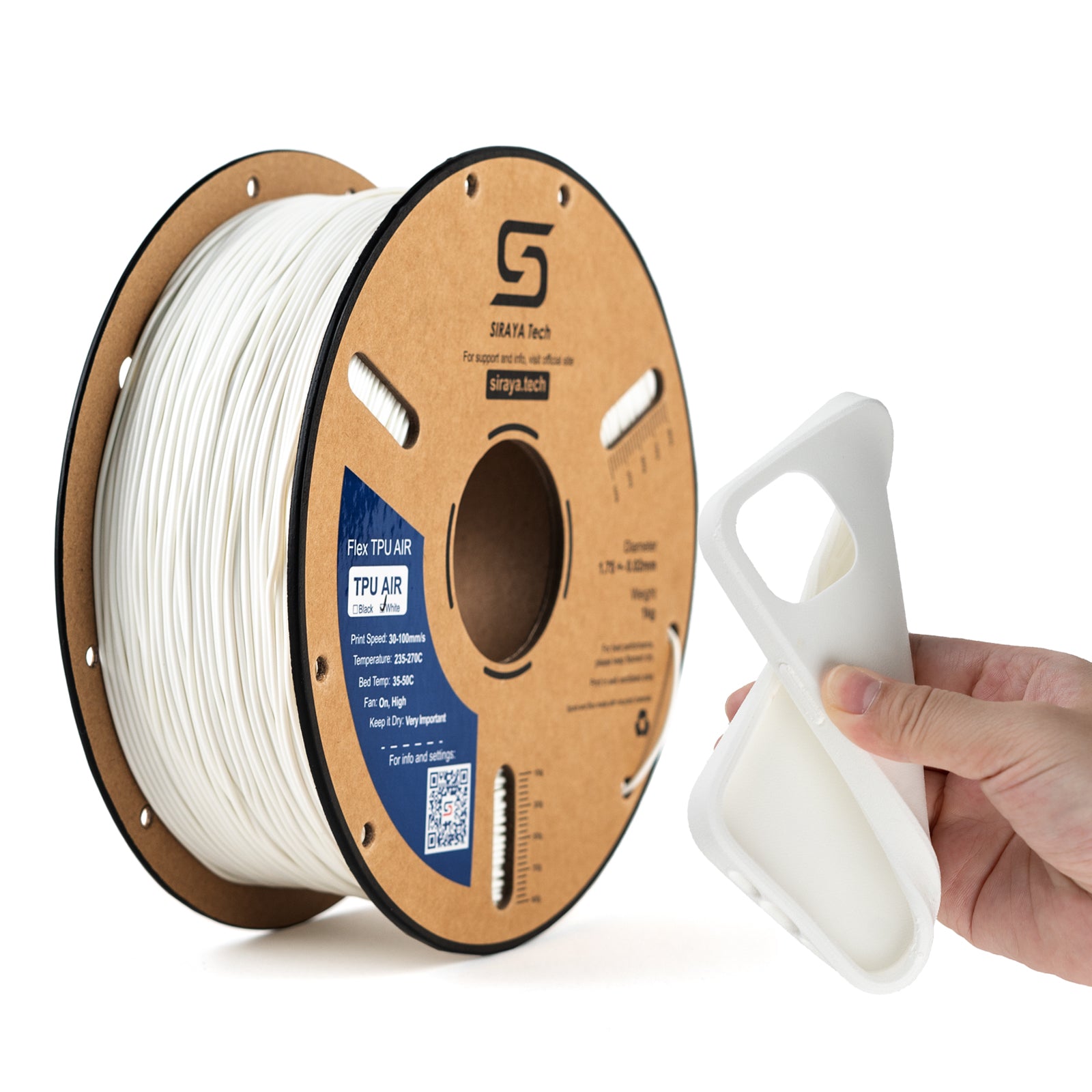
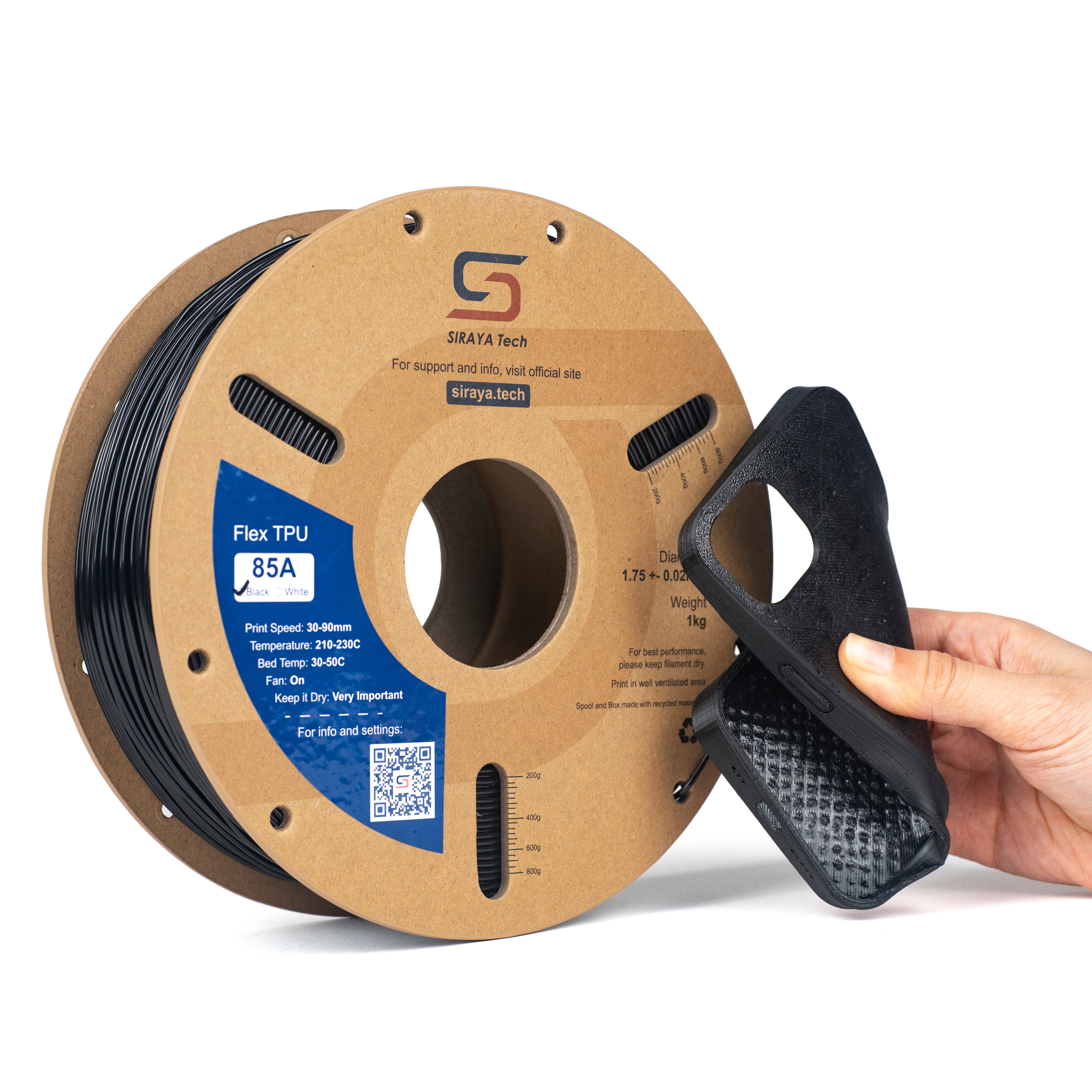
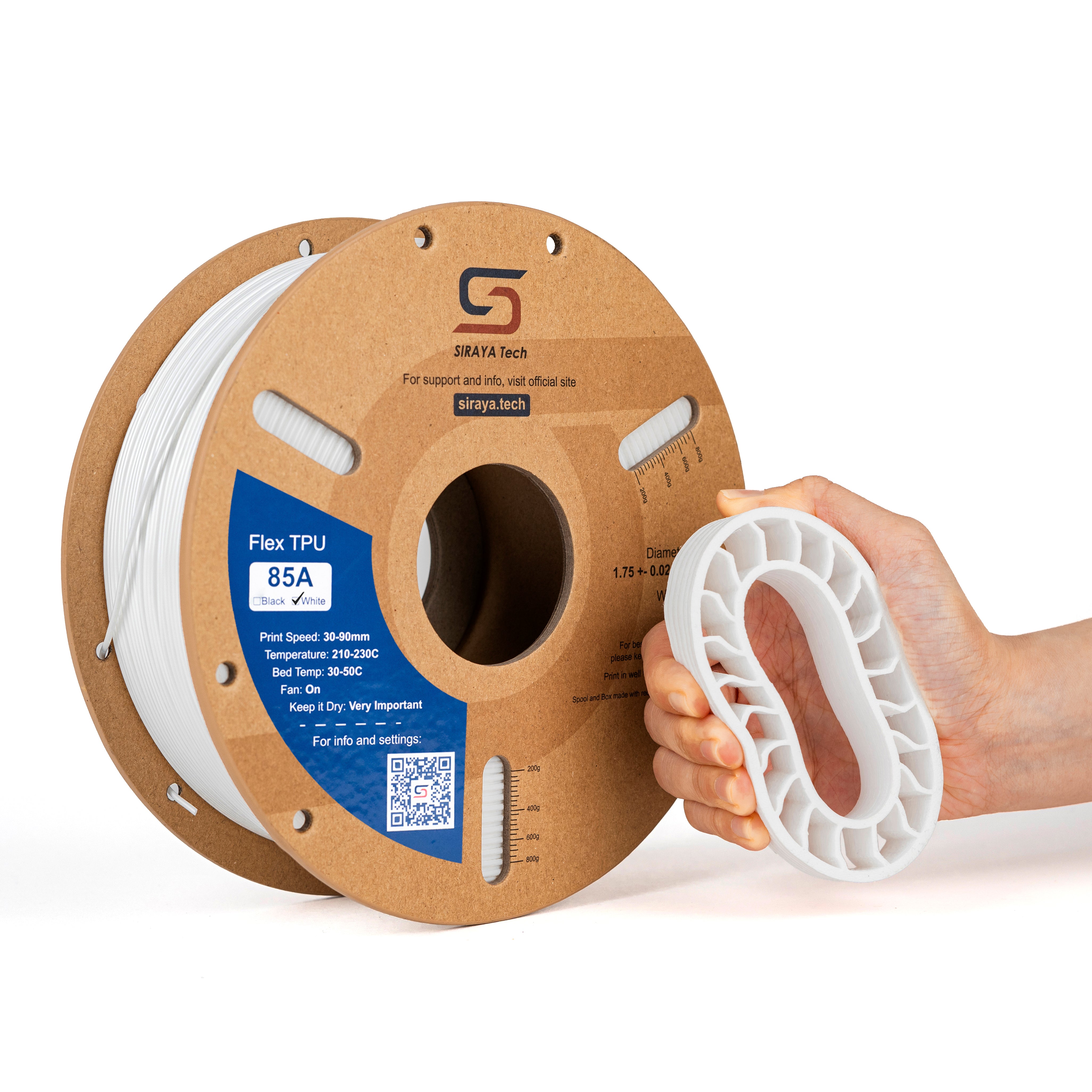
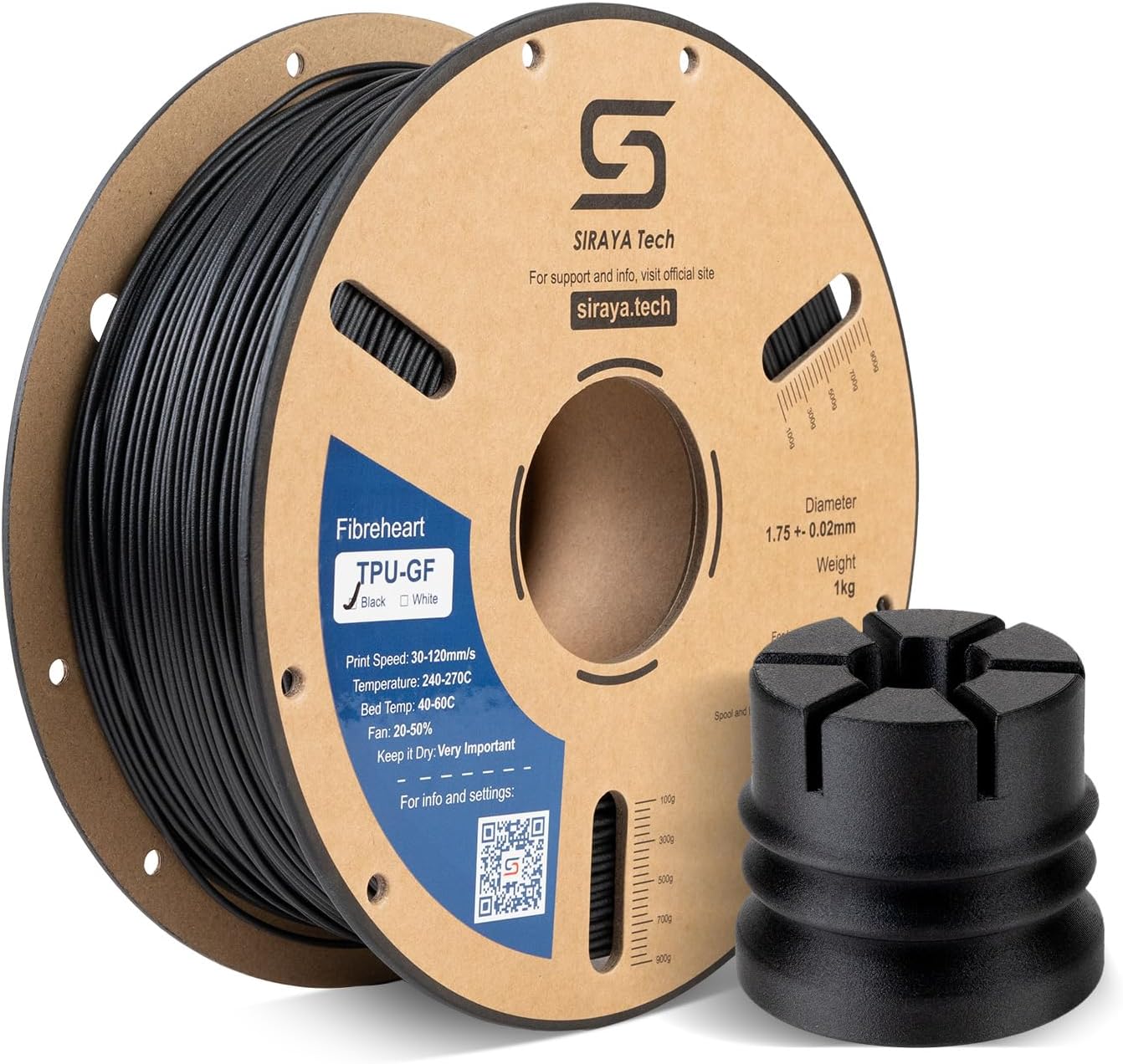
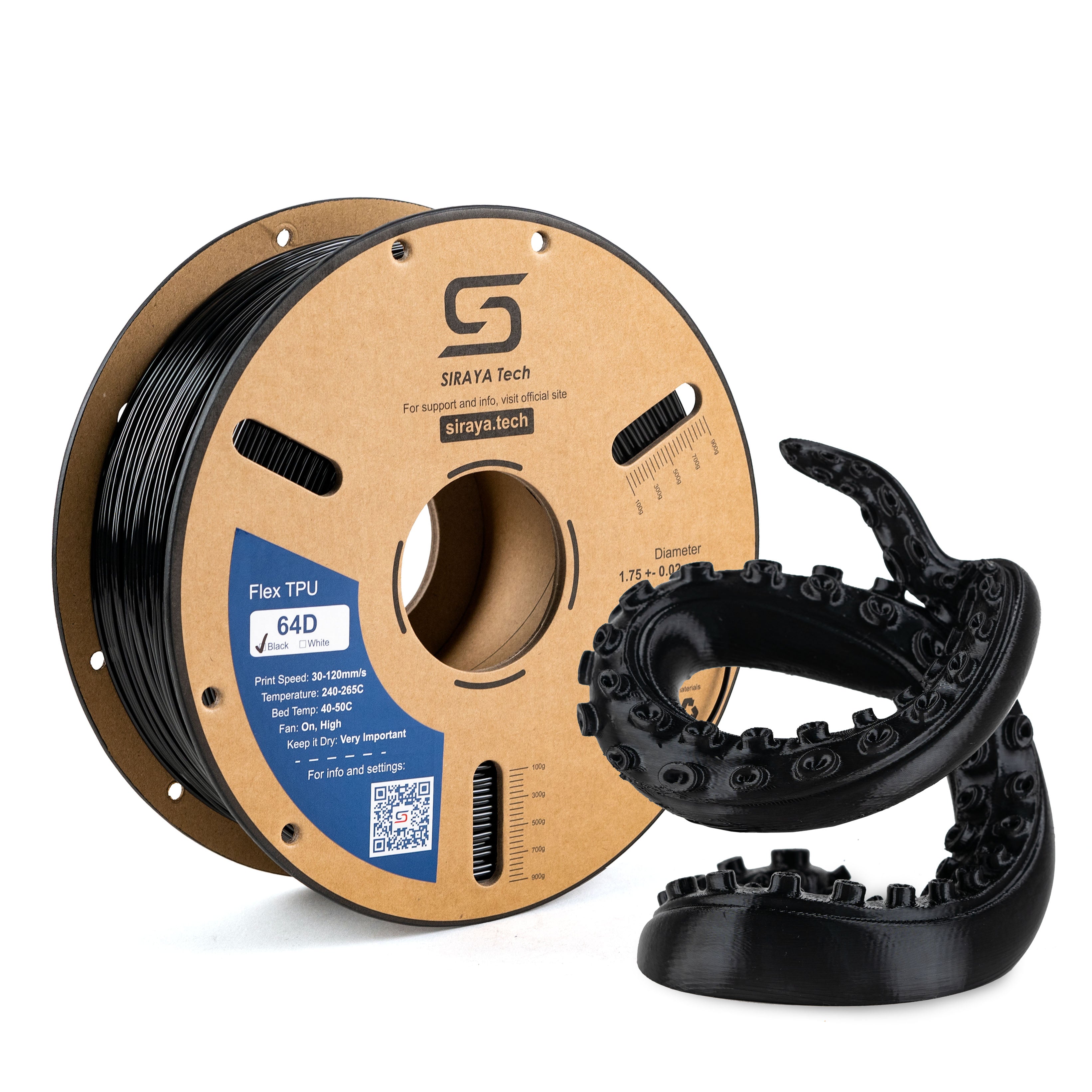
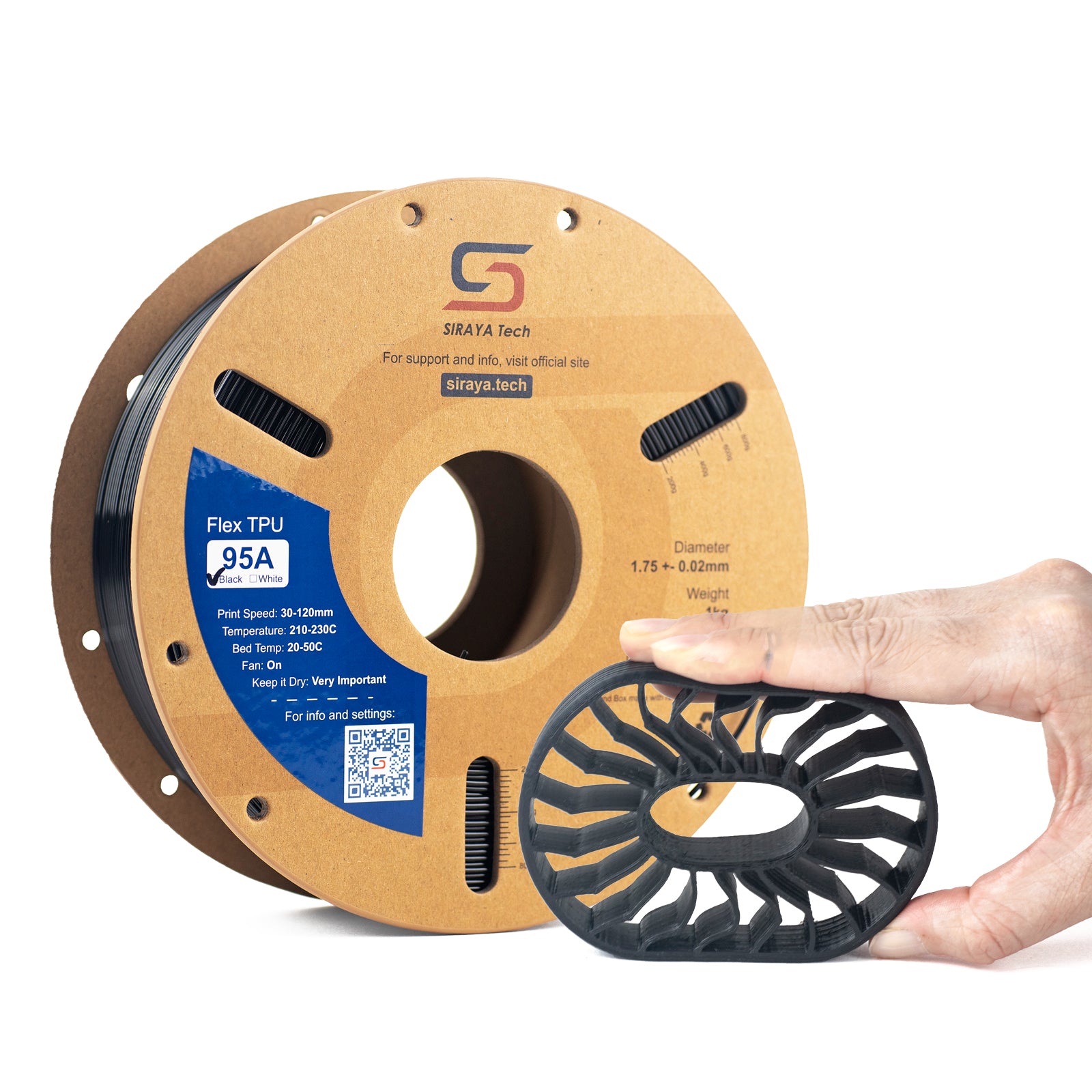
Hard TPU filament from Siraya Tech gives you the flexibility of thermoplastic polyurethane with the rigidity your functional parts need. This collection covers high-durometer TPU options at Shore 64D and above, built for snap-fit assemblies, protective housings, and mechanical components.
If your parts need to absorb impact without bending out of shape, hard TPU is the right material. These 1.75mm filaments work with FDM printers from Bambu Lab, Creality, Prusa, Elegoo, and more.
Rigid Flexibility for Parts That Take a Beating
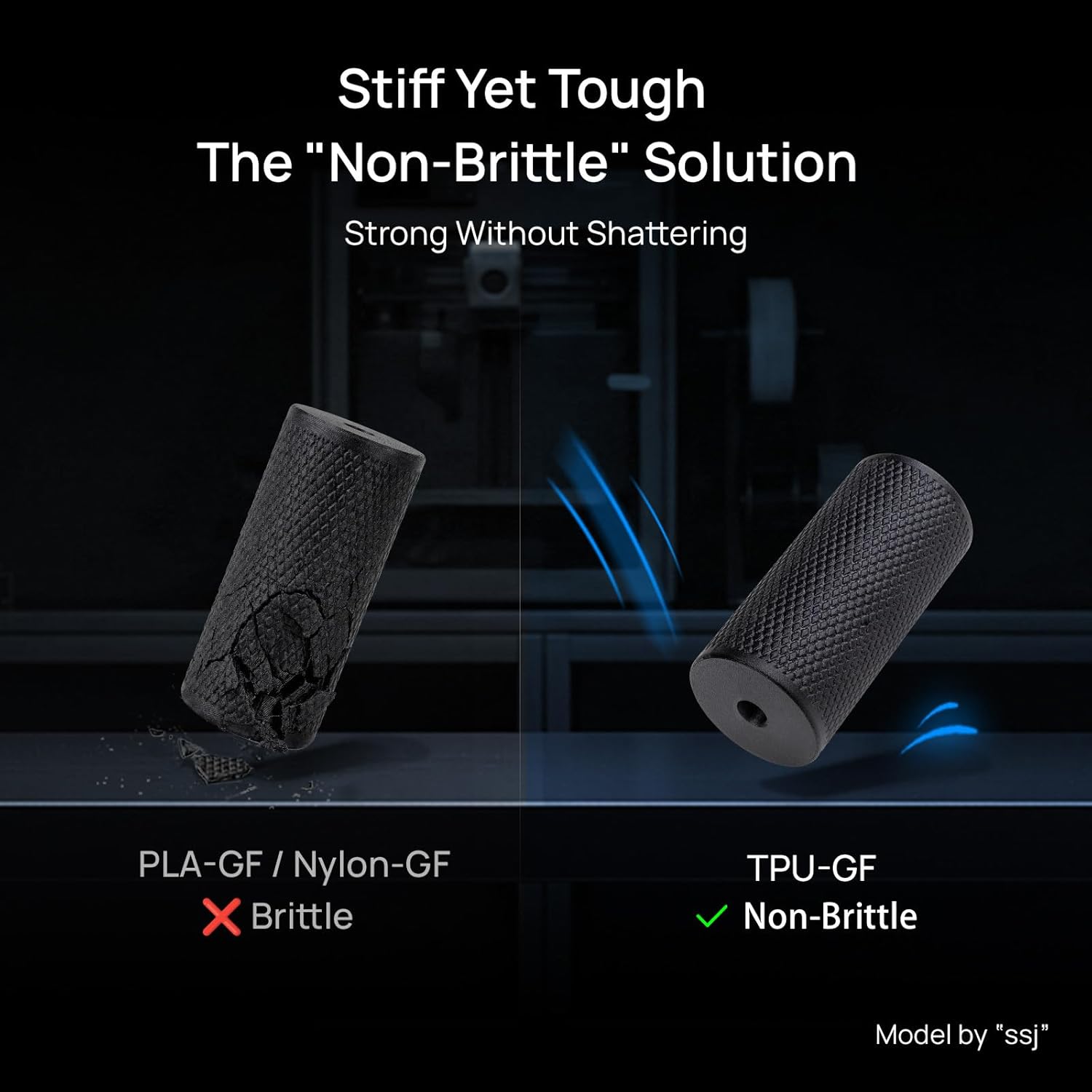
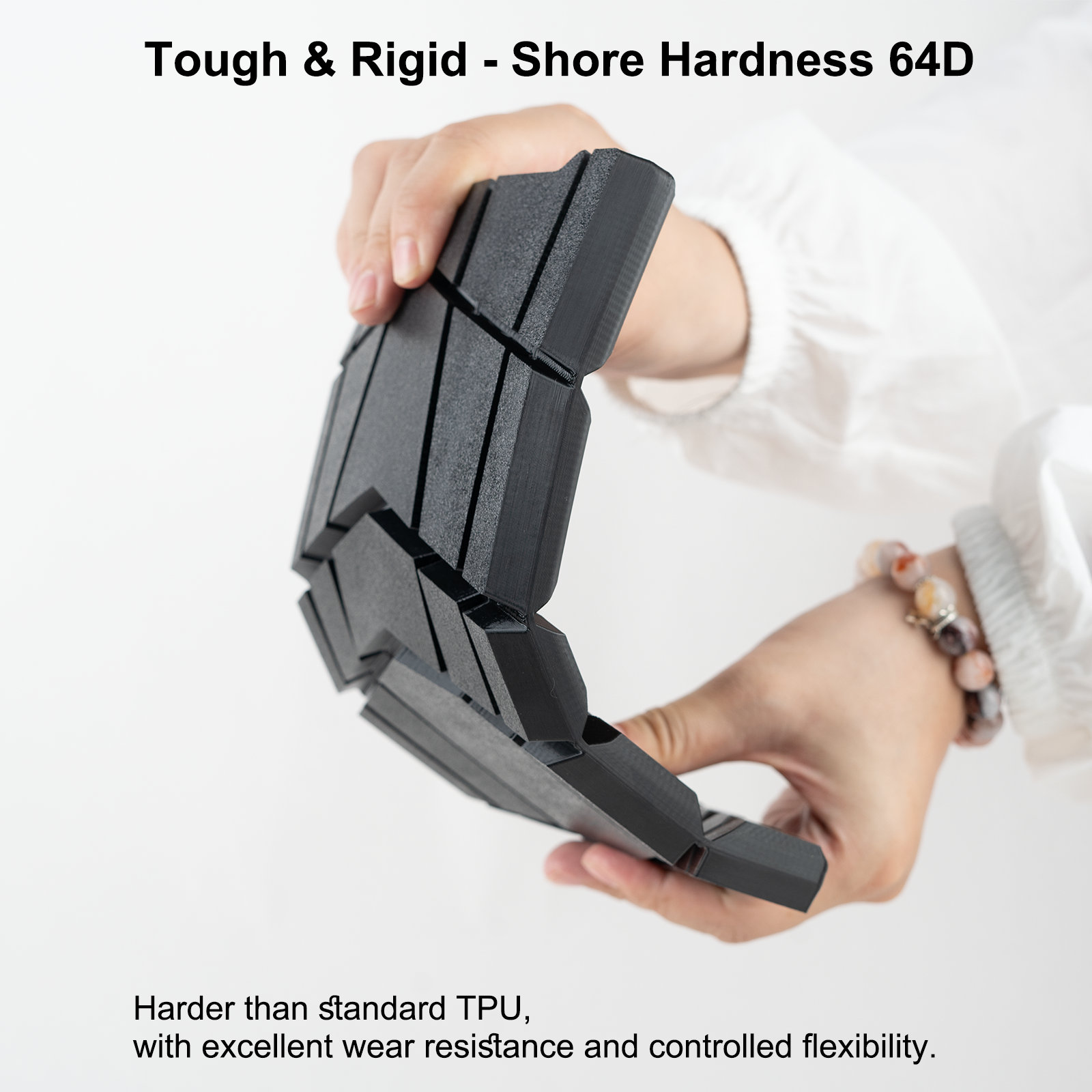
Hard TPU holds its shape under load while absorbing impact better than stiff plastics.
Printed parts resist abrasion and surface wear even in moving assemblies.
Higher Shore hardness means tighter tolerances and less deformation during use.
Works well for brackets, housings, jigs, and industrial fixtures that need some give without folding.
Prints Reliably on Most FDM Printers
1.75mm diameter fits all standard FDM setups, including Bambu Lab, Creality, and Prusa.
Higher-hardness TPU feeds more smoothly than softer variants, reducing jams and stringing.
Direct-drive extruders give the best results, but many Bowden setups handle hard TPU well too.
Drying the filament before use improves surface quality and layer adhesion.
Built for Functional Use, Not Just Prototyping
Chemical and oil resistance make hard TPU suitable for automotive and mechanical applications.
Parts flex thousands of cycles without cracking or delaminating.
Excellent layer bonding creates strong, reliable parts right off the build plate.
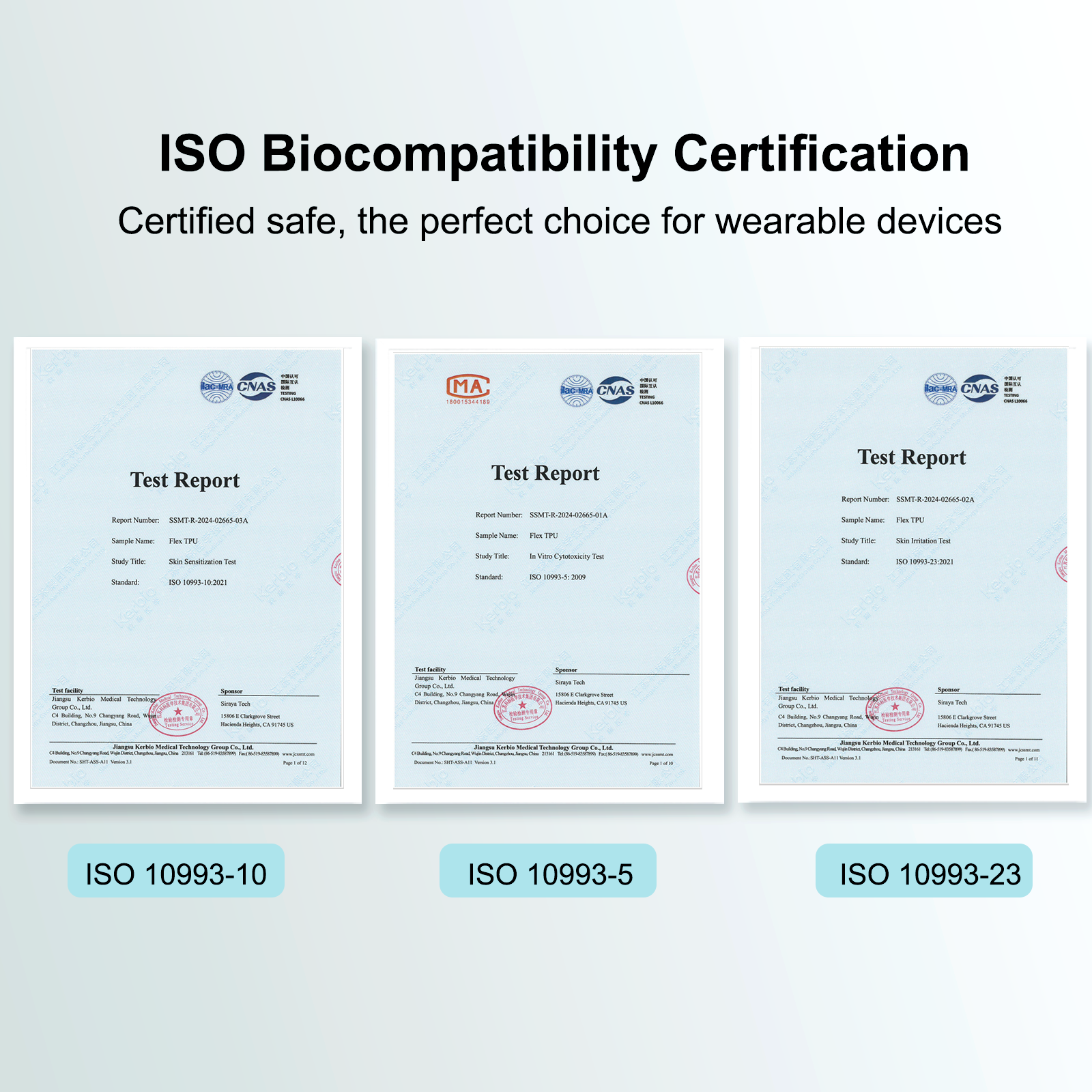
ISO 10993 biocompatibility testing data available for skin-contact evaluation.
Filament for Gears — Wear-resistant filaments designed for mechanical assemblies and moving parts.
Filament for Snap Fit — Flexible yet precise filaments that hold snap connections without cracking.
Impact Resistant Filament — Filaments rated for high-impact applications where parts can't afford to shatter.
Frequently Asked Questions on Hard TPU Filament
What Shore hardness is considered hard TPU?
TPU rated at Shore 64D or higher is generally considered hard. At this range, the material still has some flex but behaves more like a rigid engineering plastic. It won't bend easily under finger pressure the way 85A or 95A grades do. Hard TPU is best for parts that need structural integrity with minor give.
Is hard TPU filament difficult to print?
Hard TPU is actually easier to print than softer grades. Its rigidity reduces buckling and tangling in the extruder, which means fewer feed issues. You still want to print slower than PLA and keep retraction settings low. A direct-drive extruder gives the smoothest results.
What is hard TPU filament used for?
It's used for protective cases, mechanical clips, tool grips, industrial bumpers, and gears. Anything that needs to resist impact and wear while holding a defined shape is a good fit. It also works well for couplings and fixtures in low-load assemblies.
How does hard TPU compare to nylon filament?
Hard TPU offers better impact absorption and flexibility than nylon while being more resistant to moisture. Nylon has slightly higher tensile strength in some grades but absorbs water readily, which affects print quality. Hard TPU is the better choice when you need durability without constant drying.