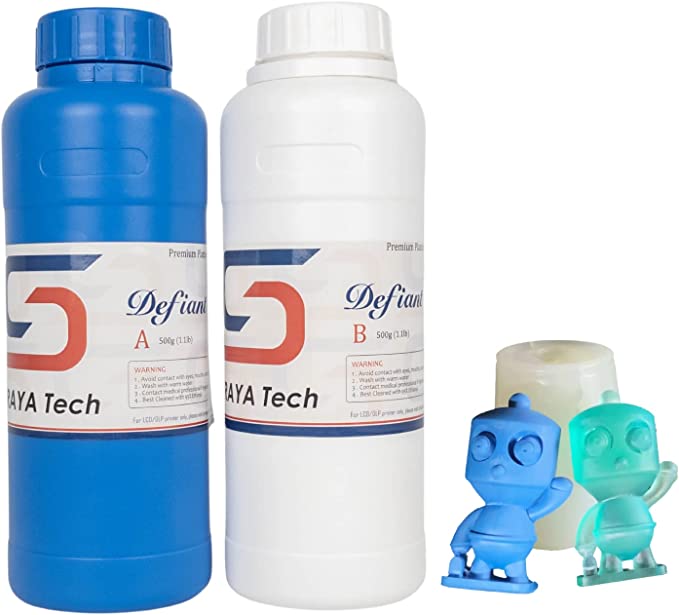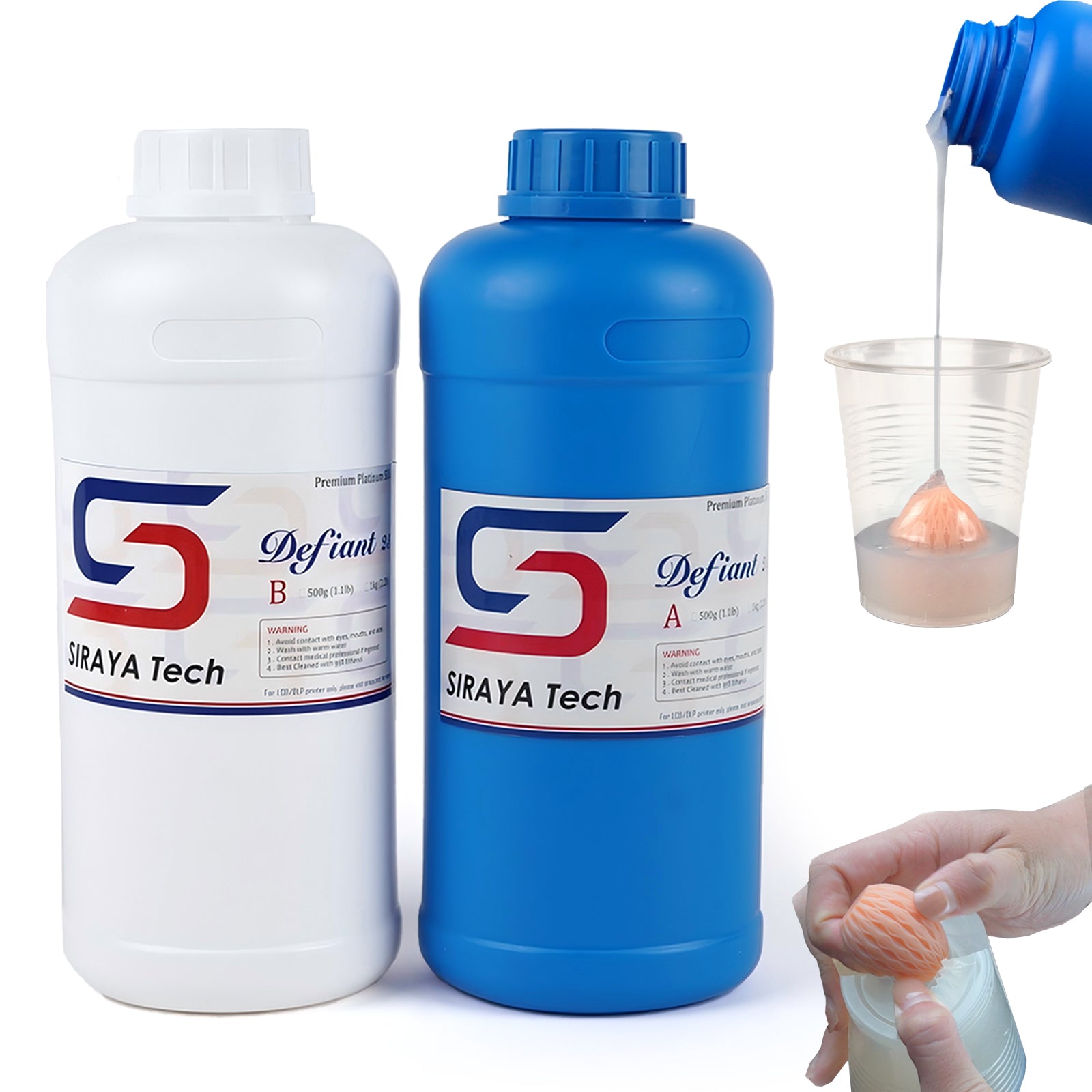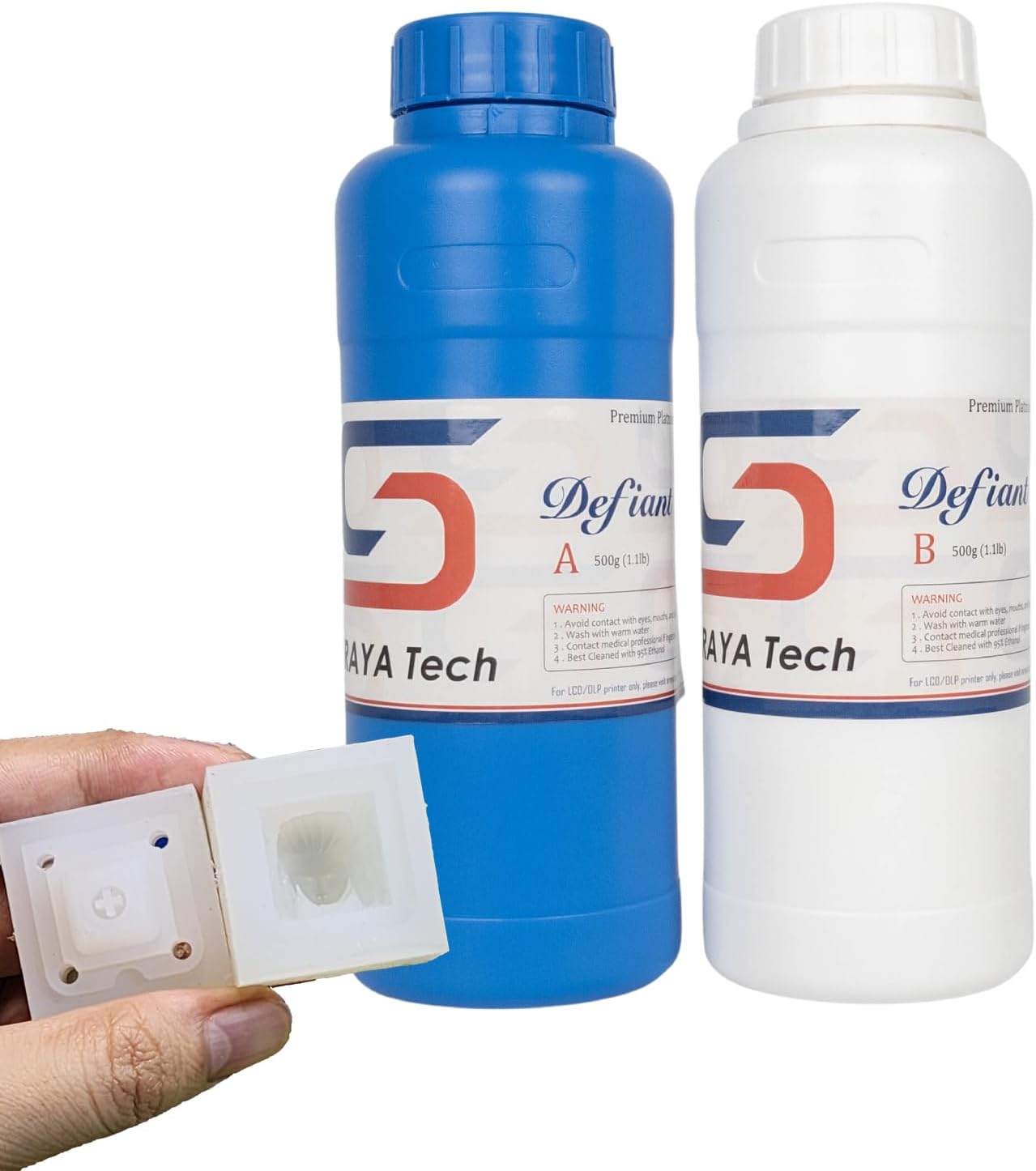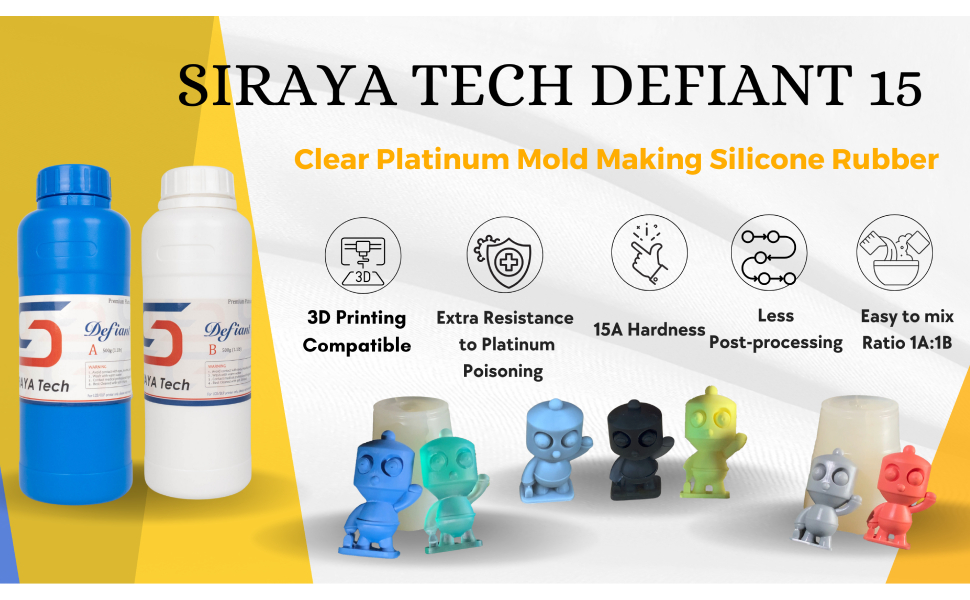
Silicone Rubber
3 製品
3 製品の1 - 3を表示しています。
Silicone rubber 3D printing resins represent a breakthrough in additive manufacturing, offering unprecedented flexibility and durability for creating rubber-like parts directly from your resin printer. At Siraya Tech, our silicone-based resins deliver exceptional elasticity and resilience, making them ideal for producing functional prototypes, custom gaskets, seals, and flexible components that withstand real-world applications. Whether you're an engineer, designer, or maker, our advanced silicone formulations unlock new possibilities for creating parts that were previously impossible with standard rigid resins.
Silicone Rubber with Unmatched Flexibility and Elasticity
Our silicone rubber resins deliver rubber-like properties that bounce back after deformation, providing genuine elastomeric performance for your 3D printed parts. Unlike traditional hard resins, these flexible materials mimic the behavior of molded silicone components while maintaining excellent printability.
- Shore hardness of 25A for soft, flexible parts
- Superior elongation at break for impact-resistant applications
- Consistent flexibility across temperature ranges
- Memory retention that returns parts to original shape
Looking for more specialized materials? Explore our complete range of 3D printing resins for every application.
Durable Silicone Resin with Exceptional Wear Resistance
Silicone-based printing materials offer outstanding resistance to wear, abrasion, and repeated compression that would degrade standard resins. This durability makes them perfect for seals, gaskets, grips, and functional components requiring long-term reliability in demanding applications.
- High resistance to wear and tear
- Excellent rebound resilience for repeated use
- Maintains properties through compression cycles
- Durable formulation for high-stress applications
Need cost-effective material solutions? Check out our bulk filament collection for volume savings.
Easy Processing with Rubber-Like Silicone Materials
Despite their advanced properties, our elastomeric resins maintain user-friendly printing characteristics that produce consistent, professional-grade results. The formulation balances flexibility with printability, ensuring successful prints without specialized equipment.
- Compatible with standard LCD/MSLA resin printers
- Minimal post-processing requirements
- Low odor during printing
- Excellent layer adhesion prevents delamination
Versatile Flexible Silicone for Diverse Applications
Rubber-like resins open new manufacturing possibilities across diverse sectors, from prototyping to end-use production. Create functional parts that compress, flex, and absorb impact just like injection-molded rubber components.
- Custom seals, gaskets, and O-rings
- Protective bumpers and shock absorbers
- Ergonomic grips and handles
- Flexible connectors and dampers
Looking for high-strength engineering materials? Discover our nylon 3D printer filament for tough, durable prints.
Frequently Asked Questions: Silicone Rubber
What is silicone rubber used for?
Silicone rubber is used for seals, gaskets, medical devices, automotive parts, and countless applications requiring flexibility and chemical resistance. Its temperature stability makes it ideal for both hot and cold environments. The material excels in situations where traditional rubber would degrade.
Can you 3D print with silicone rubber?
Yes, silicone-based resins can be 3D printed using LCD/MSLA resin printers. These specialized formulations cure under UV light while maintaining rubber-like flexibility. The process is similar to printing standard resins but yields elastomeric properties.
Is silicone a plastic or rubber?
Silicone is technically a synthetic polymer elastomer, not a true rubber or conventional plastic. It contains silicon-oxygen bonds rather than carbon-carbon chains found in plastics. This unique structure gives silicone its distinctive heat resistance and flexibility.
What is the difference between rubber and silicone rubber?
Natural rubber comes from tree sap, while silicone rubber is synthetically manufactured from silicon. Silicone offers superior temperature resistance, chemical stability, and doesn't degrade from UV exposure like natural rubber. Silicone maintains flexibility across wider temperature ranges than conventional rubber materials.