
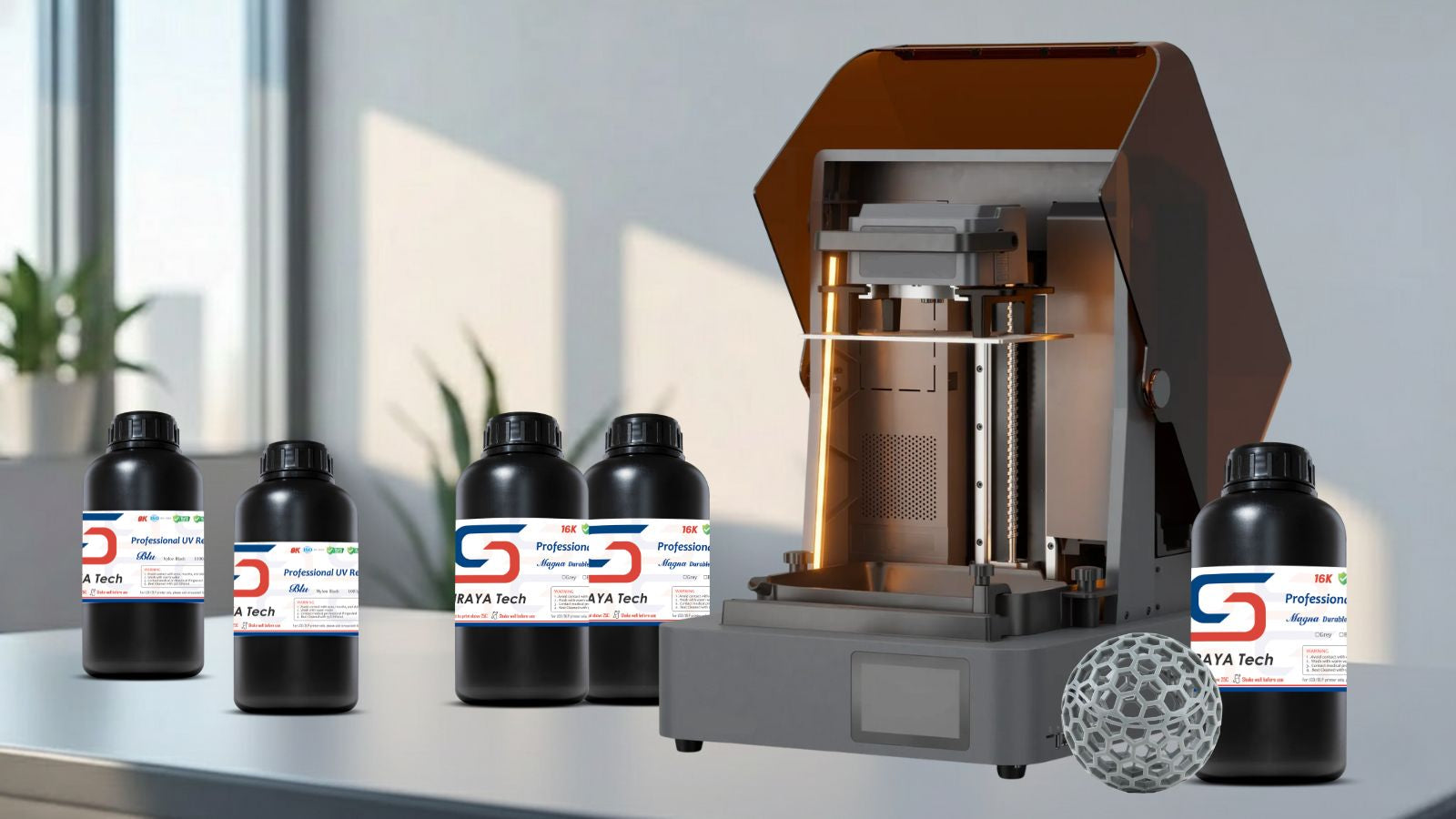
Finding the strongest resin for 3D printing can make or break your project. Whether you're creating functional prototypes, engineering parts, or durable end-use products, resin strength directly impacts performance and longevity.
Not all 3D printing resins are created equal. Some excel at impact resistance, while others offer superior tensile strength or flexibility. Understanding these differences is crucial for selecting the right material.
In this guide, we'll explore the strongest resin for 3D printing options across different resin types. From professional SLA formulations to fast-curing UV resins, you'll discover which products deliver the durability and strength your projects demand.
Key Takeaways
- The strongest 3D printing resins can hit tensile strengths up to 85 MPa—way above standard resin and common filaments like PLA and ABS
- Engineering and ABS-like tough resins offer the best mix of strength, impact resistance, and heat tolerance for real-world parts
- For max strength, always cure your resin prints well and stick to the manufacturer's guidelines
Ready to find your perfect match? Explore our complete collection of 3D printing resins designed for strength, precision, and performance.
What Makes a 3D Printing Resin Strong?

A resin's strength comes down to its chemistry and how it handles different stresses. Tensile strength is all about how much pulling force it can take, while impact resistance is about surviving drops or sudden hits.
Tensile Strength vs. Impact Resistance
Tensile strength shows you how much pulling or stretching your resin can take before it snaps. Strong resins usually fall between 40-50 MPa, but some, like Liqcreate Composite-X, push up to 85 MPa. Standard resin? It tops out around 20 MPa.
Impact resistance is a different story. It tells you how well your print survives sudden shocks. Some resins have high tensile strength but still crack if you drop them. That's where flexible resins shine—even with lower tensile strength, they often hold up better in the real world.
Key differences:
- High tensile strength: Great for parts that stay under load or tension
- High impact resistance: Better for stuff that gets dropped or hit
Think about your project. Prototypes and mechanical bits usually need tensile strength, while housings and wearables benefit more from impact resistance.
Flexibility vs. Rigidity: Finding the Right Balance
Rigid resins don't bend much and keep their shape under pressure. They're good for mechanical parts and enclosures where precision matters. Engineering resins have high flexural strength, meaning they can take some bending before breaking.
Flexible resin acts more like rubber. These use urethane acrylate blends and get measured by Shore Hardness—usually around 80A. They can stretch 130-160% before snapping, so they bounce back instead of shattering.
Some newer tough resins mix both worlds. They're rigid enough for functional parts but have enough flex to absorb impacts. That sweet spot works for hinges, joints, and parts that need to stay stable but also take a beating.
Key Properties to Consider for Your Project
Flexural strength tells you how your part handles bending. If you're making clips, brackets, or cantilevers, you'll want high flexural strength so things don't snap when flexed.
Dimensional stability keeps your print from warping or shrinking after curing. Engineering resins really shine here, keeping measurements tight even with temp swings or moisture.
Chemical composition is the real game-changer. Acrylate monomers cure fast and hard, while urethane acrylate blends add toughness and flexibility. Nano-micro composite reinforcements can boost strength a ton.
Don't forget to check heat resistance, chemical resistance, and elongation at break. Heat resistance matters near motors or hot surfaces. Chemical resistance keeps parts safe from oils and solvents. Higher elongation means more stretch before failure.
SLA Resin: Professional-Grade Strength for Precision Parts
SLA resins give you serious mechanical properties for parts that need both precision and toughness. Tough resin blends offer impact resistance and tensile strength that rival traditional materials, all while keeping that smooth finish and fine detail that makes stereolithography a favorite for pros.
Best SLA Resins for High-Strength Applications

Siraya Tech Blu is a favorite for parts that need real mechanical strength. It's got high impact resistance and solid tensile properties, so it's a go-to for functional prototypes and end-use parts.
When picking tough resins, look at these:
- Tensile strength for parts that carry loads
- Impact resistance to avoid cracking
- Elongation at break for how much flex before it fails
- Heat deflection temperature for parts that get warm
Ideal Use Cases for SLA Resin Products
Engineering validation gets a boost from SLA resin's ability to make dead-on prototypes that work like final parts. You can check fit, feel, and function before spending on molds or tooling.
Jigs and fixtures in manufacturing love tough resin blends. These parts handle repeated use on production lines and still keep their tolerances tight.
Automotive components need to survive stress and heat swings. High-performance SLA resins do well for under-hood bits, interior parts, and functional test models.
Consumer product devs use SLA for prototypes that look and feel like the real deal. It's easy to run user tests with parts that actually match final products.
Medical models and surgical guides need biocompatible resins with strength and accuracy. These need to stay precise even through sterilization.
Comparing Popular SLA Resin Formulations

Standard resins focus on detail and surface finish, not strength. They're nice for visual models or showpieces, but don't expect much durability from them.
Tough resins find a middle ground. You get parts that can handle some abuse and still look good, with smooth surfaces and fine details.
Engineering resins are for when you need more—higher heat resistance, chemical toughness, or other special features for demanding jobs.
Looking for creative projects beyond 3D printing? Discover our arts and crafts resin collection for jewelry, coasters, and more.
Photopolymer Resin: Durable Solutions for Industrial Projects
Photopolymer resins bring the kind of mechanical strength and dimensional stability that industrial projects need. They're tough on heat, stand up to chemicals, and don't shrink much, so they're a safe bet for functional parts and tooling.
Heat Resistance and Chemical Durability
Industrial parts face rough conditions that standard resins just can't handle. Photopolymer resins made for heat resistance can take temps up to 250°C, which is a must for injection molds and thermoforming tools. You can make patterns for manufacturing without worrying about them melting or warping.
Chemical resistance keeps printed parts safe from solvents, oils, and cleaners. Engineering-grade photopolymer resins hold up when exposed to automotive fluids, industrial chemicals, and even sterilization. This kind of durability means longer part life in tough environments.
Key Performance Properties:
- Heat deflection temperature: Up to 250°C for the best stuff
- Chemical resistance: Handles alcohols, oils, and mild acids
- Low shrinkage: Usually under 2%, so parts stay accurate
- Layer adhesion: Strong bonding between layers stops delamination
Durable resin blends pull all these features together for all sorts of industrial needs. They're handy for master patterns, end-use parts, and tools that need to survive lots of use.
When to Choose Photopolymer Over Standard Resin
Go with photopolymer resin if your project needs mechanical properties that standard resins just can't deliver. If your parts need to hold threads or survive drop tests, engineering-grade photopolymers are the way to go.
Standard resins are fine for visual models or low-stress jobs. They're quick to cure and give you smooth finishes, but don't expect much strength or impact resistance for real-world testing or production.
Pick tough or ABS-like resin for parts that need to flex instead of break. These absorb impacts better than basic options and help cut down on failures. They're worth it when you can't risk a part breaking down the line.
If you need parts to last, especially tools, molds, or fixtures, engineering photopolymer resins are the smart choice. Low shrinkage means everything fits together right—super important for assemblies and mechanical parts where tolerances matter.
UV Resin: Fast-Curing Strength for Small Projects
UV resin cures in seconds under 405nm light, so it's a practical pick for detailed models and functional parts when you want speed and precision. These blends give you quick hardening along with solid mechanical properties.
Advantages of UV Resin for Detail Work
UV resin nails fine features better than a lot of standard resins because it hardens so fast under UV. That quick cure time cuts down on layer lines and keeps overhangs from sagging.
You get smooth surfaces right off the bed. It's perfect for miniatures, prototypes, and small mechanical bits where accuracy really matters. Most UV resins for 3D printing respond to 405nm light, which works with LCD and DLP printers.
Fast curing means less downtime between prints. You can knock out a batch of small parts in hours, not days. And if you go for water-washable resin, cleanup's a breeze—no need for harsh chemicals.
Strongest UV Resin Formulations Available
Siraya Tech Fast prints quickly and stands up to moderate impacts. It's a solid choice for everyday projects—you won't see it crack under typical stress.
Siraya Tech Tenacious brings flexibility and toughness. If you want stronger parts without losing detail, try mixing it with a harder resin. This formula flexes instead of snapping, which is great for thin or moving parts.
For prototypes, fast-curing resins really cut down print times. They harden quicker than standard ones, but you might notice a slight tradeoff in ultimate strength.
Application Tips for Maximum Strength
Stick to the recommended layer height—usually 0.05mm or less if you want sharp details. Thicker layers will print faster, but you lose surface smoothness and the layers don't bond as tightly.
Cure your prints all the way. Wash off leftover resin, then hit your part with UV light for as long as the manufacturer suggests. If you under-cure, parts stay sticky and weak. Too much UV, and they get brittle.
Support placement matters. Put supports where they won't mess up visible surfaces, and take them off gently so you don't snap any fragile bits.
Keep your resin in a cool, dark spot. Heat and sunlight mess with it over time, so you'll get weaker prints if you leave it out. Give the bottle a good shake before you pour—pigments and additives settle to the bottom.
Always work where there's fresh air, or wear a respirator. Those fumes aren't great for your lungs if you breathe them in a lot.
Need crystal-clear parts with optical transparency? Browse our clear resin options for stunning, glass-like finishes.
Conclusion: Strongest Resin for 3D Printing
Choosing the strongest resin for 3D printing depends on your specific project needs. Whether you need SLA resin for precision parts, photopolymer resin for industrial applications, or UV resin for quick curing, understanding material properties helps you make the right choice.
Remember that proper post-processing makes a huge difference. Follow manufacturer guidelines for washing and curing to unlock your resin's full strength potential.
Ready to explore more about innovative 3D printing materials? Check out our article on Siraya Tech's exciting journey into new 3D printing frontiers.
Frequently Asked Questions: Strongest Resin for 3D Printing
Different resins and print methods all have their own strengths. UV-curable resins often hit 40-85 MPa tensile strength, while regular epoxy doesn't handle impacts as well. Print strength really comes down to your resin, printer, and how well you cure each part.
What is stronger, epoxy or UV resin?
UV resin usually wins on strength for 3D printing, hitting 40-85 MPa in tensile strength compared to epoxy's 20-30 MPa. Photopolymerization locks molecules together tightly under UV light. Engineering-grade UV resins with nano-micro reinforcements reach up to four times the strength of basic resins.
Which is better, SLA or SLS?
SLA builds highly detailed parts with smooth finishes using liquid resin and UV light, achieving layer heights as low as 25 microns. SLS uses lasers to fuse powder, creating stronger parts with better heat resistance but rougher finishes. SLS excels at durability and requires no supports, but costs significantly more than SLA.
What is the toughest material to 3D print?
Engineering resins with nano-micro composite reinforcement are the toughest, reaching 85 MPa tensile strength with proper UV and heat curing. These high-stress resins match injection-molded plastics in strength and offer superior chemical resistance. ABS-like tough resins follow closely with excellent impact resistance for demanding applications.
What makes a 3D print stronger?
Material choice is crucial—tough and engineering resins reach up to four times the tensile strength of standard resins. Larger layer heights create stronger bonds between layers, and proper washing plus post-curing with UV and heat maximize strength. Print orientation matters too, with critical stress points perpendicular to the build plate producing more durable parts.