

Choosing the best filament for drone parts plays a big role in how your drone performs in the air and how well it survives crashes.
The right 3D printer filament helps keep parts strong without adding extra weight that reduces flight time. Some materials handle heat and sun better, while others bend instead of snapping on impact.
Keep reading to learn which filament works best for each drone part and how to make smarter printing choices.
What Makes the Best Filament for Drone Parts?
The best filament for drone parts must handle stress, vibration, and outdoor conditions. Drone parts face constant movement, motor heat, and hard landings.
A good drone filament should offer:
- Strong layer bonding for impact resistance
- Low weight for better flight time
- Heat and weather resistance for outdoor flying
- Reliable printing with minimal warping
Choosing the right balance helps prevent broken parts and frequent reprints.
Best Filament for Drone Parts by Material Type
Each filament type offers different benefits, and understanding them helps you choose the best filament for drone parts based on how you fly. Some materials are easier to print, while others are built for strength and performance.
PLA and PLA Plus for Drone Parts
PLA is easy to print and affordable, which makes it useful for testing designs and learning. PLA Plus improves on standard PLA with better strength and layer bonding.
However, PLA can soften in hot environments and may crack during hard crashes. It works best for indoor drones or non structural parts.
PETG for Drone Parts
PETG is tougher than PLA and handles heat better, making it a popular choice for drone arms and frames. It flexes slightly on impact, which helps reduce cracking.
Some builders also choose carbon fiber reinforced PETG, often called PETG‑CF. This version shares many of PETG’s properties but adds a matte finish, greater hardness, increased stiffness, and reduced warping.
Note: Like most fiber‑reinforced filaments, PETG‑CF can show reduced layer adhesion if printed too cool or too fast, so proper temperature control and filament drying are important.
📌 To better understand this material, check out What Is PETG Filament? A Complete Beginner’s Guide.
ASA and ABS Based Filaments
ASA and ABS based filaments are known for strength and heat resistance, making them suitable for outdoor drone use. ASA also resists UV exposure, helping parts last longer in sunlight.
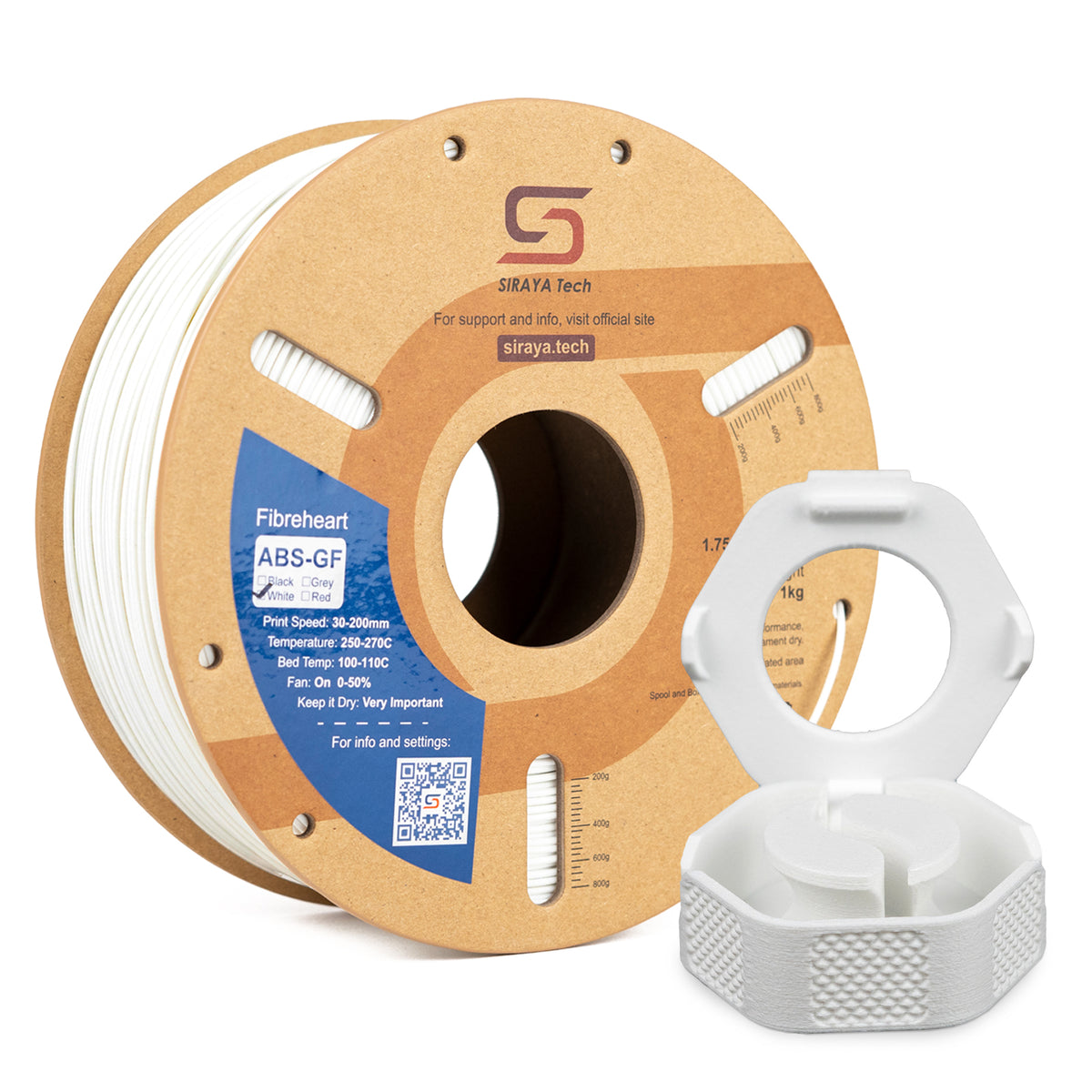
Glass fiber and carbon fiber reinforced options improve rigidity and dimensional stability. ABS‑GF, ABS‑CF, and ABS‑CF Core increase stiffness for frames and arms, while ASA‑GF improves strength and reduces warping compared to standard ASA.
Printing note: ABS and ASA benefit greatly from a heated enclosure to prevent warping and layer separation, especially on larger drone parts.
Nylon and Carbon Fiber Nylon
Nylon is extremely tough and resists repeated impacts, which makes it ideal for high stress drone parts. Carbon fiber nylon adds stiffness while keeping weight low, making it a strong choice for performance focused frames.
These filaments require careful printing and strict moisture control, but they deliver excellent durability.
TPU for Flexible Drone Parts
TPU is a flexible filament used for parts that need to bend instead of break. It absorbs vibration and protects sensitive electronics.
Common TPU drone parts include camera mounts, antenna holders, and landing gear.
Siraya 3D Filaments and Resin You May Shop
Explore More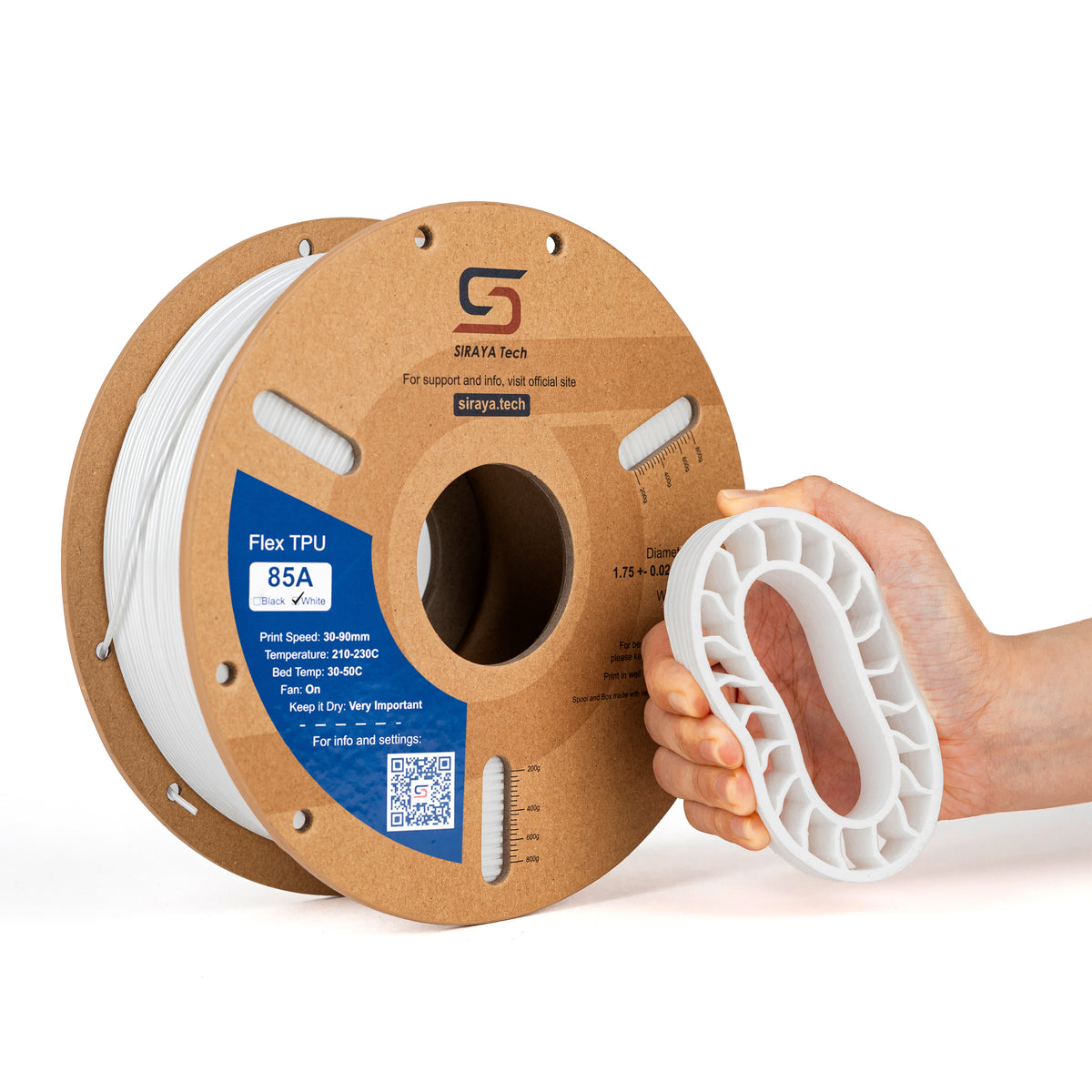

Best Filament for Drone Parts Comparison Table
The table below helps you quickly compare popular materials and decide which option best fits your drone build.
|
Filament Type |
Strength |
Flexibility |
Heat Resistance |
Print Difficulty |
Best Use for Drone Parts |
|---|---|---|---|---|---|
|
PLA |
Low |
Low |
Low |
Very Easy |
Test prints, indoor drones, non structural parts |
|
PLA Plus |
Medium |
Low |
Low |
Easy |
Light duty parts, beginner builds |
|
PETG |
Medium |
Medium |
Medium |
Easy |
Drone arms, frames, general outdoor use |
|
PETG‑CF |
High |
Low |
Medium |
Medium |
Stiffer arms, frames, reduced warping |
|
ASA |
High |
Low |
High |
Medium |
Outdoor frames, heat resistant parts |
|
ASA‑GF |
Higher |
Low |
High |
Medium |
Strong outdoor frames, improved stability |
|
ABS |
High |
Low |
High |
Medium to Hard |
Structural parts with enclosure |
|
ABS‑CF |
Very High |
Very Low |
High |
Hard |
Rigid frames, high stress components |
|
Nylon |
Very High |
Medium |
High |
Hard |
Impact resistant frames and arms |
|
Carbon Fiber Nylon |
Extremely High |
Low |
High |
Hard |
Performance frames, racing drones |
|
TPU 85A |
Low |
Very High |
Medium |
Medium |
Soft mounts, bumpers, vibration control |
|
Medium |
High |
Medium |
Medium |
Firmer mounts, guards, landing gear |
Best Filament for Drone Frames
Drone frames carry motors, batteries, and electronics, so they need high strength and low weight. Choosing the best filament for drone parts often starts with the frame.
Common frame materials include:
- Carbon fiber nylon for maximum strength
- ASA or ASA‑GF for outdoor durability
- PETG or PETG‑CF for balanced strength and flexibility
📌 To explore materials with the highest strength, see Strongest 3D Printer Filament: Strength Comparison Guide.
Best Filament for Drone Arms
Drone arms absorb most crash impacts and must hold motors securely. They need strong layer bonding and some flexibility.
Good filament options include:
- PETG for shock absorption
- PETG‑CF for stiffer arms with less flex
- ASA or ABS‑CF blends for heat and impact resistance
Print orientation and wall thickness also play a major role in durability.
Best Filament for Drone Mounts and Accessories

Drone mounts and accessories protect cameras, antennas, and wiring. These parts benefit more from flexibility than stiffness.
TPU works well for:
- Camera mounts
- Antenna mounts
- Battery holders
- Landing gear
PLA Plus and PETG are also suitable for non critical accessories.
PETG vs PLA vs ASA for Drone Parts
Many builders compare these materials when choosing the best filament for drone parts. Each has advantages depending on flying conditions.
PLA is easy to print but struggles in heat. PETG offers better toughness and flexibility. ASA performs best outdoors and resists sunlight damage. Reinforced versions like PETG‑CF, ASA‑GF, and ABS‑CF improve stiffness, reduce warping, and provide better long term stability.
📌 For a broader material comparison, read Best 3D Filament: Top Materials Compared for Every Use.
Best Filament for FPV Drones
FPV drones crash often and fly aggressively. The best filament for drone parts in FPV builds focuses on durability and vibration control.
Popular choices include:
- PETG or PETG‑CF for frames and arms
- TPU for bumpers and mounts
- Carbon fiber nylon for racing frames
Using different filaments for different parts improves overall performance.
Best Filament for Beginners Printing Drone Parts
Beginners benefit from filaments that print easily and give consistent results. The best filament for drone parts at this stage should be forgiving and reliable.
PLA Plus and PETG are great starting options. PETG‑CF offers an upgrade path once printing skills improve.
📌 To learn more about materials, see 3D Filament Types Explained: A Simple Guide for Beginners.
3D Printing Tips to Make Drone Parts Stronger
Material choice matters, but print settings matter just as much. Small adjustments can greatly improve strength.
Helpful tips include:
- Increase wall count for frames and arms
- Align layers with stress direction
- Use higher infill for structural parts
- Keep temperatures stable for good layer bonding
These steps help you get the most from the best filament for drone parts.
When to Upgrade to Advanced Filaments
Advanced filaments are useful when standard materials fail. Frequent cracks or heat deformation signal the need for stronger options.
Carbon fiber reinforced PETG, ASA, and nylon provide improved stiffness and durability. These materials cost more but reduce part failures over time.
For more guidance, read Best Filament for 3D Printing: How to Choose the Right One.
Conclusion
Choosing the best filament for drone parts depends on strength needs, flying conditions, and print experience. PETG, ASA, nylon, and TPU each play an important role in reliable drone builds. Using reinforced filament versions can further improve durability where needed.
For more helpful guides and tips about drone materials and 3D printing, explore Siraya. Siraya also offers high quality products like 3D printing filaments, resins for 3D printing, and Platinum Silicone Crafting materials options designed to deliver superior results for your projects.
FAQs About the Best Filament for Drone Parts
What is the best filament for drones?
The best filament for drones depends on the part and flying style. PETG and ASA work well for general use, while carbon fiber nylon suits frames. TPU is ideal for flexible mounts.
What is stronger, ASA or PETG?
ASA performs better in heat and sunlight. PETG offers more flexibility and impact absorption. Both are strong when used correctly.
Is PETG good for drones?
Yes, PETG is good for drones because it balances strength and flexibility. It handles heat better than PLA and resists cracking.
Is PETG or PLA Plus stronger?
PETG is stronger and more heat resistant. PLA Plus prints easier and works for lighter parts. PETG is better for outdoor use.
Is TPU 85A or 95A better?
TPU 85A is softer and absorbs impacts better. TPU 95A is firmer and holds shape. The right choice depends on the part.
2 コメント
Droney
Not a good way of categorizing what is a ‘drone’. What is a “racing drone”? Is it the code name for 5" frame drone?
Since when flexibility is a desired feature in a drone, I mean a drone, that is, a 5" frame freestyle drone? Perhaps it would be better to say a whoop (2 inches and below), or a cine drone (no more than 3.5" frame).
Otherwise, there is some misleading here in this article.
sv infotech
Good. Best AWS &DEVOPS Training Institute in Hyderabad