
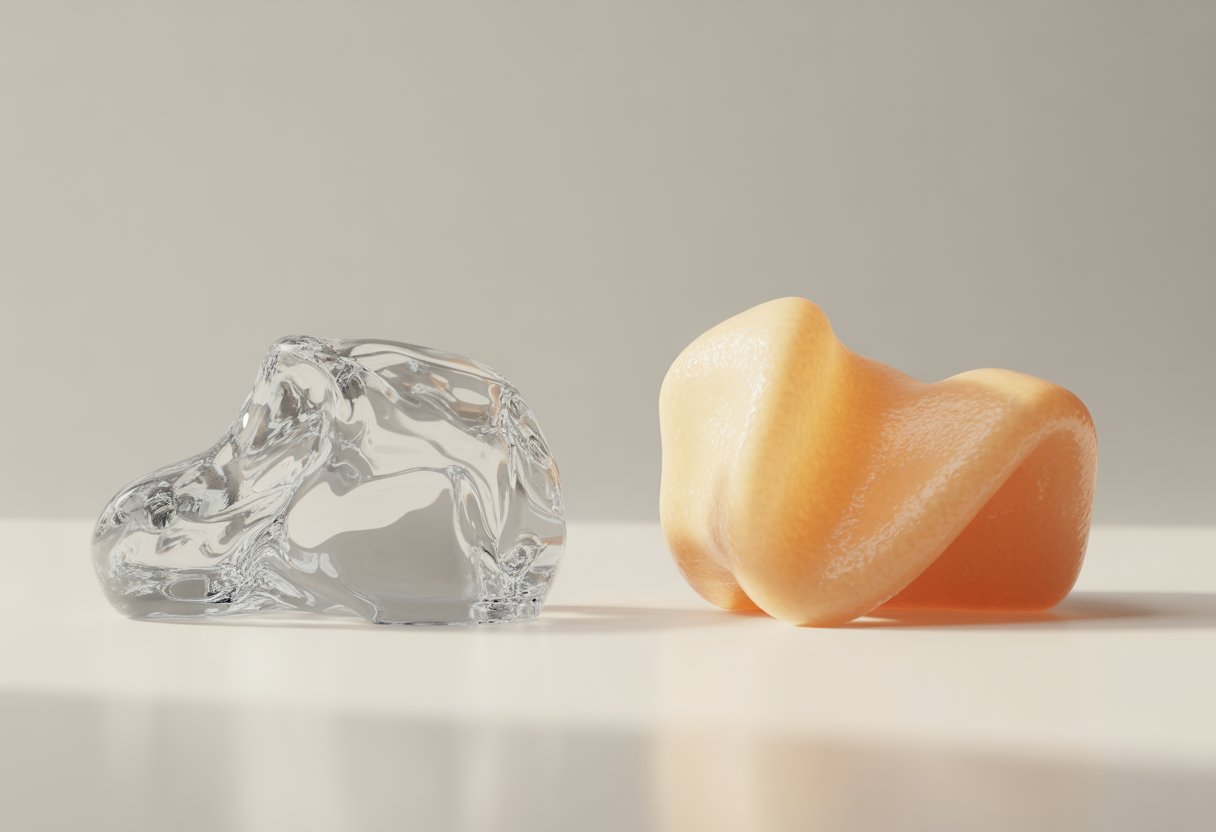
When you compare resin vs silicone in 3D printing, you look at two materials that shape projects in very different ways.
Resin gives you sharp details and smooth surfaces, while silicone offers flexibility and strength for parts that need to bend or stretch.
Knowing which one fits your project saves time, money, and frustration. You’ll see resin used for models, prototypes, and parts that need precision.
Silicone works better for molds, medical parts, and soft-touch designs. Each has limits, but both open new options for custom manufacturing.
Key Takeaways
- Resin gives detailed, rigid prints; silicone adds flexibility and durability.
- Each material fits different 3D printing technologies and uses.
- Understanding both helps you pick the best option for your project.
Explore the Silicone Collection for flexible, heat‑resistant, and professional‑grade molding materials.
Summary Table: Resin vs Silicone for 3D Printing
|
Category |
Resin |
Silicone |
|
Type |
Thermoset polymer |
Elastomer |
|
Texture |
Hard, smooth surface |
Soft, rubbery, flexible |
|
Printing Method |
SLA/DLP (light-cured photopolymerization) |
Extrusion or Direct Ink Writing (DIW) |
|
Flexibility & Elasticity |
Rigid; limited flexibility |
Highly elastic; stretches and returns to shape |
|
Durability & Resistance |
Brittle; moderate heat and chemical resistance |
Excellent heat, wear, and chemical resistance |
|
Detail & Precision |
High precision and fine details |
Lower detail; rougher surface finish |
|
Temperature Resistance |
Up to ~150°C (higher for special resins) |
-50°C to 250°C depending on formulation |
|
Biocompatibility |
Low to moderate (depends on resin type) |
High; safe for skin and medical use |
|
Common Printing Technologies |
SLA, DLP |
DIW, LSR extrusion |
|
Applications |
Models, prototypes, dental tools, jewelry |
Molds, seals, wearables, medical devices, soft robotics |
|
Setup & Production Cost |
Low setup cost; ideal for small runs |
Higher setup cost; better for mass production |
|
Best For |
Detailed prototypes, rigid parts |
Flexible, durable, or heat-resistant parts |
|
Limitations |
Brittle, less flexible, not always biocompatible |
Lower precision, slower printing, higher cost |
|
Example Uses |
Miniatures, molds, structural prototypes |
Gaskets, prosthetics, wearable tech, seals |
|
Overall Advantage |
High detail and surface finish |
Superior flexibility and durability |
Discover flexible material options by checking our guide, What Is TPU Filament: An Easy Guide For Smart 3D Printing.
Core Differences Between Resin and Silicone in 3D Printing

You work with both resin and silicone in 3D printing for different reasons.
Resin gives you hard, detailed parts, while silicone offers flexible, rubber-like pieces that handle stress and heat better.
Each material’s structure, feel, and strength affect how you use it in your projects.
Material Composition and Structure
Resin is a polymer that hardens when exposed to light or heat. Most 3D printing resins are liquid photopolymers used in SLA or DLP printers. When cured, they form rigid, detailed parts with smooth surfaces.
Silicone, on the other hand, is an elastomer. It stays flexible even after curing.
Silicone 3D printing uses liquid silicone rubber (LSR) or silicone-like resins that solidify layer by layer through UV light or heat.
|
Property |
Resin |
Silicone |
|
Type |
Thermoset polymer |
Elastomer |
|
Texture |
Hard and smooth |
Soft and rubbery |
|
Printing Method |
SLA/DLP |
Extrusion or UV-cured LSR |
You choose resin when you need precision and stiffness. You use silicone when you need flexibility and comfort.
Flexibility and Elasticity
Silicone stands out for its elasticity. You can stretch, bend, and twist it, and it bounces back to shape. That’s why it’s used for medical models, seals, and wearable parts.
Resin is much more rigid. Standard resin cracks under pressure, though flexible resin blends exist.
Even then, they can’t match silicone’s stretch or softness. If you need a part to move or flex, silicone works better. If you need a firm, detailed prototype, resin is the better pick.
Durability and Chemical Resistance
Durability depends on how a material handles wear, heat, and chemicals. Silicone resists high temperatures and many chemicals, making it useful in harsh environments. It doesn’t break down easily or lose shape.
Resin can be strong but is usually more brittle. It may warp or crack under stress or heat. Some engineering resins improve toughness, but they still have limits.
Silicone’s chemical resistance and long life make it ideal for functional parts. Resin’s strength and detail suit visual models and prototypes better.
For high‑detail resin prints, try the Flexible Resin 3D Printing Collection.
3D Printing Technologies for Resin and Silicone

You use different 3D printing methods for resin and silicone because each material reacts in its own way to light, heat, and pressure.
Resin works best with light-based curing, while silicone needs special systems that handle its flexible and thick texture.
SLA and Photopolymerization
SLA (Stereolithography) is one of the most common ways to print resin parts. It uses a laser or projector to cure a liquid photopolymer layer by layer. The light hardens the resin through a photopolymerization process, turning it into a solid shape.
You get high detail, smooth surfaces, and tight tolerances with SLA. It’s great for prototypes, dental models, and jewelry molds. The curing process is controlled, so you can make small, complex parts that look clean and polished.
SLA printers work fast and use resin vats that hold the liquid material. After printing, you usually need to wash and post-cure the part under UV light to make it stronger. These steps make SLA resin printing one of the most precise forms of additive manufacturing.
Extrusion and Direct Ink Writing
Silicone printing often uses extrusion-based methods, like Direct Ink Writing (DIW). Instead of curing with light, this process pushes liquid silicone through a nozzle to build layers. The printer controls flow rate and pressure to shape the material without collapsing.
You can print soft, stretchy, and heat-resistant parts this way. DIW works well for medical prototypes, soft robotics, and seals.
The silicone cures through a chemical or thermal reaction, not light exposure, which makes it different from resin printing.
Some printers use two-part silicone systems that mix right before extrusion. This helps the material cure evenly and keeps it from clogging the nozzle.
You can also adjust curing speed and hardness by changing the mix ratio or temperature.
Limitations of Silicone 3D Printing
Printing silicone is still tricky. The material’s viscosity makes it hard to control fine details.
Unlike resin, silicone doesn’t react to UV light, so it can’t use SLA or photopolymerization directly. You need special printers that handle high-viscosity fluids and maintain even pressure.
Printing speed is slower, and post-curing can take longer. Another limit is surface finish.
Silicone prints often have rougher layers compared to resin. Dimensional accuracy can vary, especially for small features.
|
Challenge |
Description |
|
Detail level |
Lower precision than SLA resin |
|
Curing method |
Needs heat or chemical reaction |
|
Equipment cost |
Higher for silicone-capable printers |
Learn the fundamentals of resin printing with our guide: A Deep Dive into Resin 3D Printers and Printing Process.
Applications and Use Cases
You can use resin and silicone 3D printing to make flexible, strong, or precise parts. Each material fits best in different industries, depending on how much stretch, strength, or detail you need.
Medical Devices and Implants
You often see silicone used in medical devices because it’s soft, flexible, and safe for the body. It works well for items like catheters, prosthetics, and custom implants.
Printed silicone parts can match a patient’s body shape, helping doctors create better-fitting devices.
Resin printing, on the other hand, gives you high detail and smooth finishes. That makes it useful for dental models, surgical guides, and anatomical prototypes.
While resin is not always biocompatible, some medical-grade resins can handle limited contact with skin or tissue.
|
Material |
Key Benefit |
Common Use |
|
Silicone |
Flexible and biocompatible |
Implants, prosthetics |
|
Resin |
High detail and accuracy |
Models, surgical tools |
Wearables and Consumer Electronics
Silicone printing is popular for wearables because it feels soft on the skin and bends easily. You can use it for watch bands, fitness straps, or earbud tips. It stays comfortable even with heat and sweat, which makes it great for daily wear.
Resin printing fits better for device housings or small electronic parts that need a rigid shape. It gives you sharp detail for buttons, cases, and clips.
You can even combine both materials—resin for structure and silicone for comfort—to get the best of both worlds.
Seals, Gaskets, and Industrial Parts
In factories and machines, seals and gaskets must handle stress, heat, and chemicals. Silicone parts do this well because they resist wear and stay flexible over time.
You can print custom gaskets, seals, and vibration-damping pads that fit exact shapes or tight spaces.
Resin printing helps when you need rigid mechanical parts like brackets or housings. It can also be used for molds that shape silicone components.
This mix of resin and silicone keeps production fast and accurate for industrial use.
Soft Robotics and Emerging Fields
Soft robotics uses flexible materials to make robots that move more like living things. Silicone printing is key here because it bends and stretches without breaking. You can build grippers, actuators, and joints that handle fragile objects safely.
Resin printing supports these systems by creating molds or frames that hold silicone in place. Together, they let you test new ideas in robotics, research, and automation.
Need strong, long‑lasting parts? Check out the Strong Filament Collection.
Practical Considerations and Choosing the Right Material
When you pick between resin and silicone for 3D printing, think about how much you plan to make, what conditions the parts will face, and how they’ll be used.
Cost, durability, and safety all play a big part in which material works best for your project.
Tooling Costs and Production Scale
If you need only a few parts, resin is often cheaper and faster. You can print directly without making molds, which saves money and time. It’s great for one-off prototypes or small batches.
Silicone, however, usually needs molds or special printers. That means higher tooling costs upfront.
But once you have the setup, you can produce many parts at a lower cost per piece.
|
Material |
Setup Cost |
Best Use |
|
Resin |
Low |
Prototyping, small runs |
|
Silicone |
High |
Larger production |
You’ll spend more at first with silicone, but it can pay off if you plan to scale up production.
Heat and Temperature Resistance
Resin can handle moderate heat, but most types start to soften or deform above 150°C. Some high-temp resins can go higher, but they’re more expensive.
Silicone stands out for temperature resistance. It stays flexible and stable from -50°C up to about 250°C, depending on the formulation.
That makes it useful for molds, seals, and parts that face heat or cold. If your project involves heat exposure—like engine parts or kitchen tools—silicone is usually the safer choice.
For decorative or structural prints that won’t get hot, resin works fine.
Biocompatibility and Chemical Stability
When you need your printed parts to be biocompatible, such as for skin contact or medical testing, silicone is the better pick. It’s non-toxic, flexible, and resists many chemicals.
It also doesn’t absorb moisture, which helps it last longer in harsh environments. Most resins are not biocompatible unless they’re specially made for that purpose.
Standard resins can release chemicals or react with certain substances.
|
Property |
Resin |
Silicone |
|
Biocompatibility |
Low to moderate |
High |
|
Chemical Stability |
Moderate |
Excellent |
Mass Production vs. Prototyping
For prototyping, resin gives you quick results at a low cost. You can print detailed shapes directly from a digital file without extra steps. It’s perfect for testing designs before full production.
Silicone fits better for mass production or when you need flexible, durable parts. It pairs well with injection molding or casting once the design is finalized.
If you only need a few test pieces, go with resin. If you’re planning to produce hundreds or thousands, silicone is worth the investment.
Understand resin curing and safety in our article on Proper Handling of UV Curable 3D Printing Resins.
Bottom line
When comparing UV resin vs epoxy, the right choice depends on your project’s needs. UV resin cures quickly under UV light, making it ideal for small crafts, jewelry, and detailed coatings.
Epoxy resin, however, offers greater durability, volume flexibility, and a longer working time—perfect for larger pours and structural applications.
Both have unique advantages in clarity, strength, and finish. Understanding their differences ensures better results and smoother workflows.
For dependable, high-performance materials that elevate your 3D printing and crafting projects, check out Siraya Tech’s filaments and experience premium quality.
For elasticity and soft‑touch designs, explore the Thermoplastic Elastomer Filament Collection.
Also, learn how to handle and maintain silicone parts by reading our article: Cleaning and Sterilizing Siraya Tech Defiant Silicone Parts.
Frequently Asked Questions
What's the difference between resin and silicone molds for 3D printing?
Resin molds are hard and capture fine details well. They’re great for small, precise parts.
Silicone molds are flexible and easy to remove from finished prints. They work better for casting or making soft, reusable molds.
Can you 3D print with silicone, or is resin the better option?
You can 3D print with silicone, but not every printer can do it. It needs special equipment or materials.
Resin is easier to print with on most machines and gives more consistent results.
How does the durability of 3D printed resin parts compare to silicone ones?
Resin parts are strong but can be brittle if dropped or bent.
Silicone parts last longer under stress because they stretch and return to shape without cracking.
What are the cost implications of using resin versus silicone in 3D printing?
Resin printing is usually cheaper because the printers and materials are more common.
Silicone printing costs more due to the special machines and materials it needs.
Is there a difference in the level of detail you can achieve with resin compared to silicone?
Resin prints can show very fine details and smooth surfaces.
Silicone prints are less detailed but provide a soft, flexible finish that resin can’t match.
How do the printing speeds of resin and silicone 3D printing compare?
Resin prints faster and cures quickly under light. Silicone printing takes longer because it uses thicker material and needs more time to set.
2 コメント
Academy karthikeya
Good. smart accounting course
svinfotech
What a great article, BEST Spoken English & Communication Skills Training in Hyderabad