PEBA Filament
3 製品
3 製品の1 - 3を表示しています。
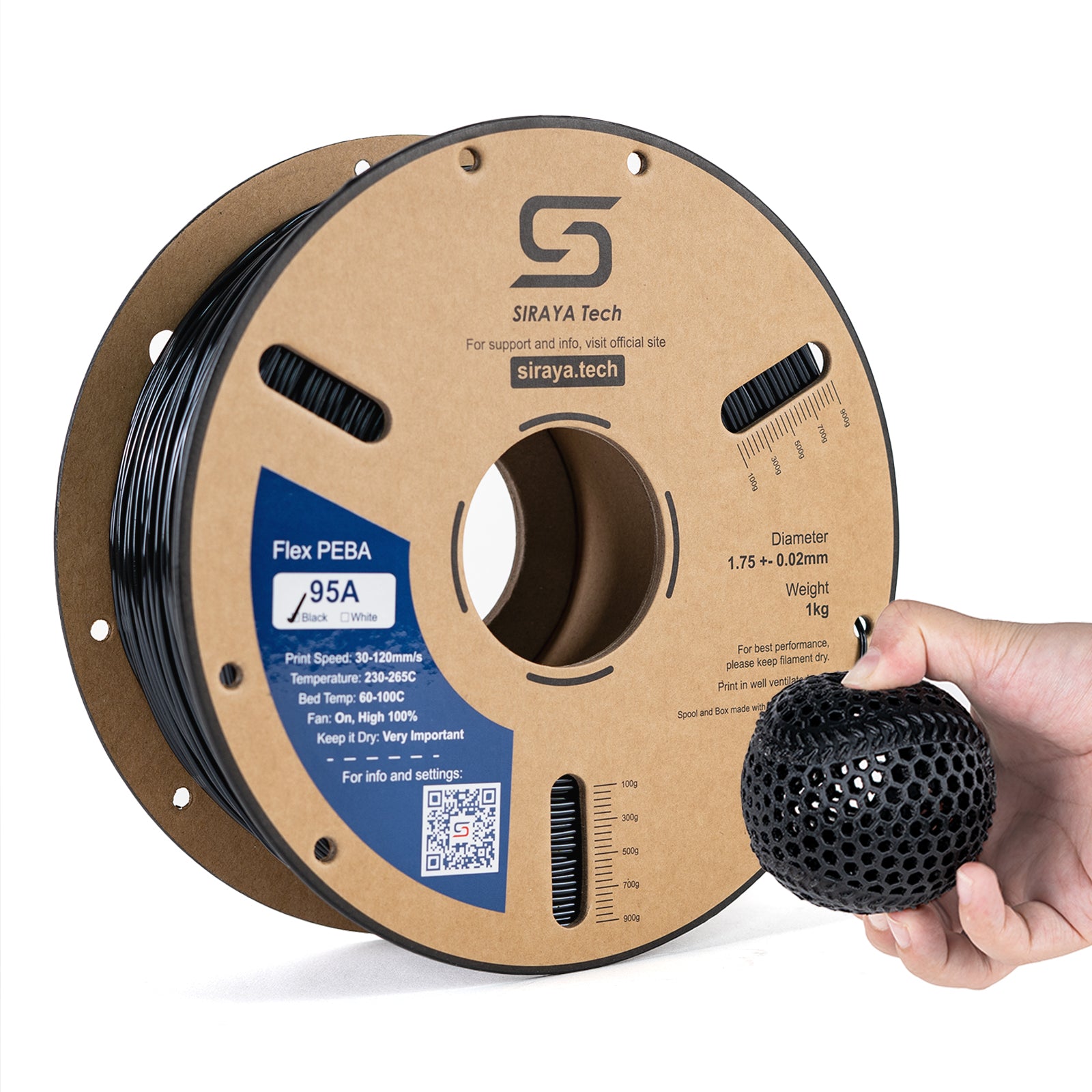
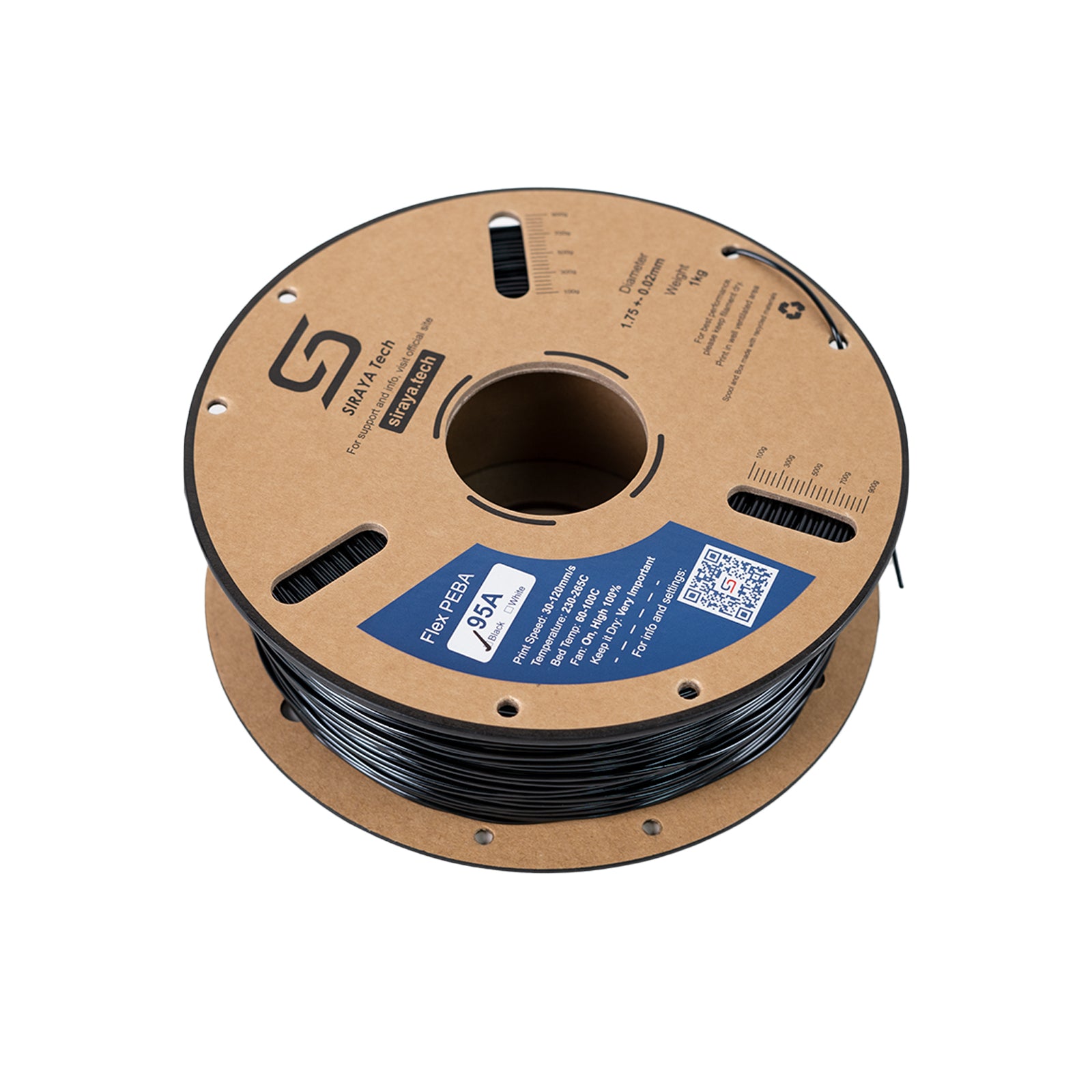
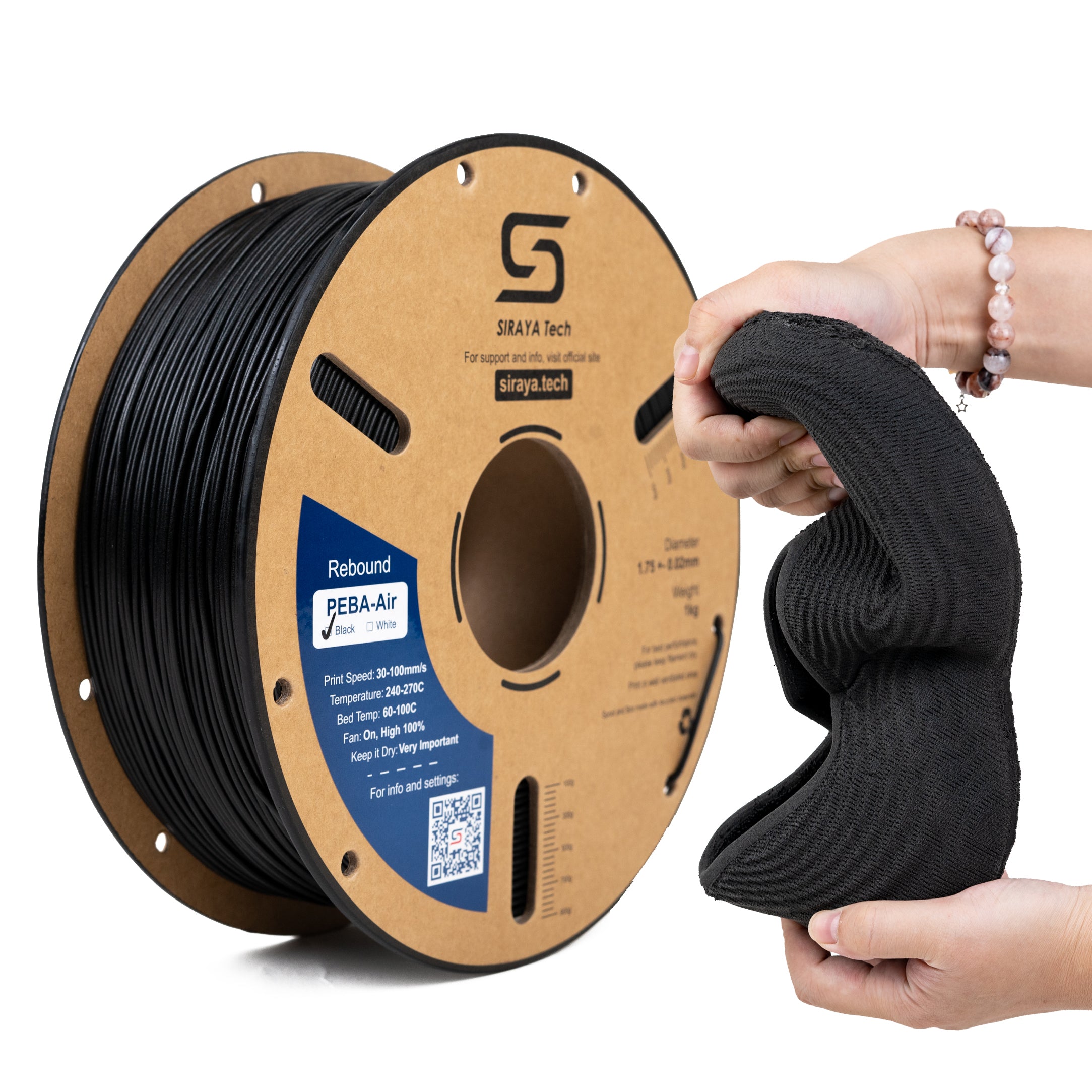
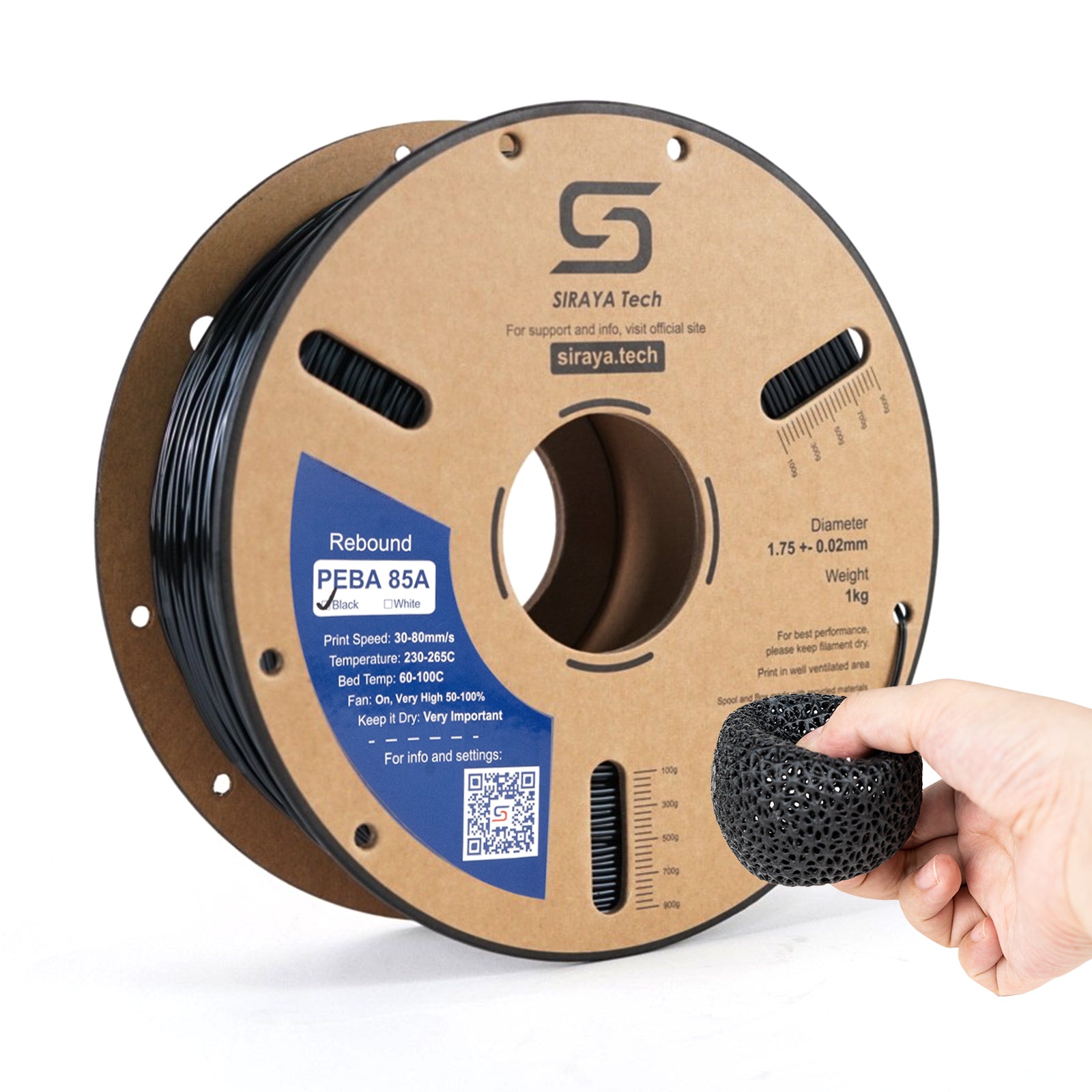
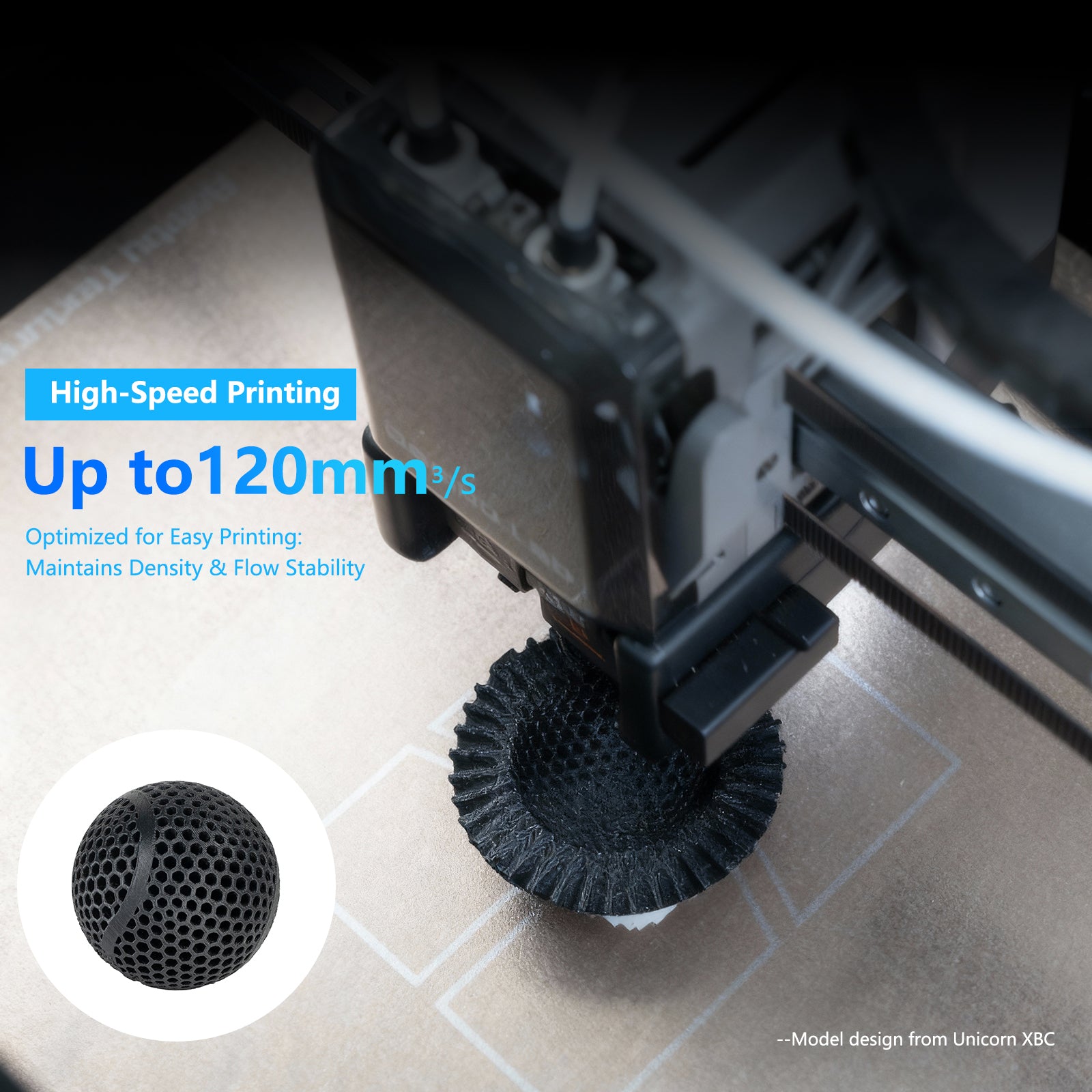
PEBA filament from Siraya is built for makers who need flexibility, toughness, and bounce-back strength. Known for its soft, rubber-like feel and high elasticity, this material is ideal for parts that must bend, twist, and return to shape without cracking or tearing.
Whether you are printing sports gear, wearable prototypes, or flexible joints, PEBA filament gives your prints the freedom to move while staying strong under pressure.
Why Choose PEBA Filament
When you want flexibility without losing durability, PEBA filament delivers. It is lighter than TPU and offers excellent energy return, making it ideal for high-performance parts.
✅ Extremely flexible and elastic
✅ Lightweight yet strong
✅ Excellent impact and fatigue resistance
✅ Works well for both functional and decorative prints
PEBA’s unique chemical structure gives it a smooth surface finish and consistent performance, so your prints look great and perform even better.
Everyday Uses for PEBA Filament
PEBA filament is built for a range of creative and technical uses. From soft-touch parts to shock-absorbing components, this material is a go-to for anyone who needs flexibility and strength in one package.
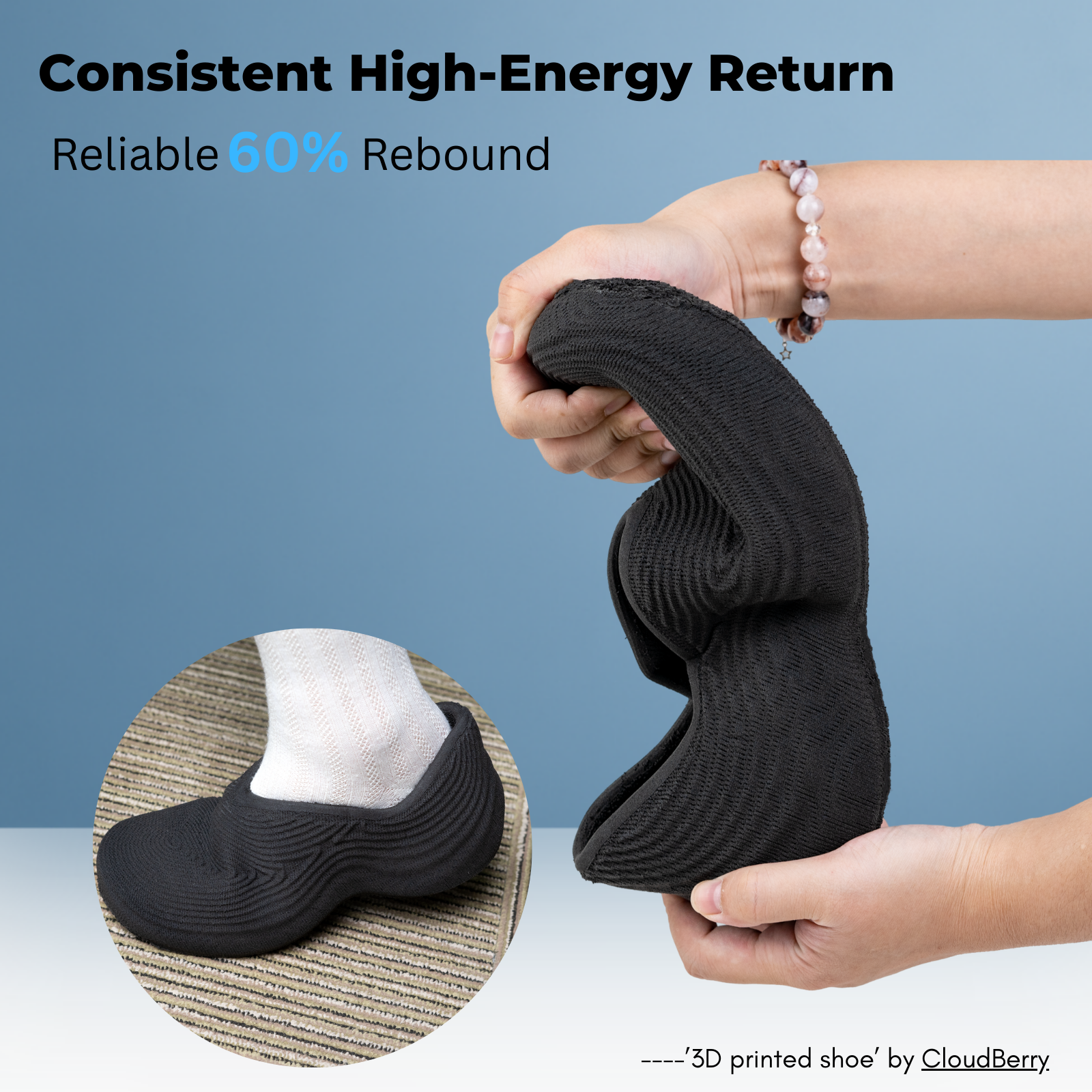
✅ Perfect for sports equipment and shoe soles
✅ Great for robotics, medical parts, and flexible hinges
✅ Ideal for impact-resistant prototypes and functional parts
Because PEBA does not stiffen easily in cold temperatures, it is also a reliable choice for outdoor and all-weather applications.
Built for Performance and Comfort
PEBA filament combines elasticity with a smooth, soft texture that feels comfortable to the touch. It is a favorite for wearable projects and parts that need a gentle feel without losing durability.
✅ Soft, smooth surface finish
✅ Retains flexibility in both hot and cold environments
✅ Excellent rebound and fatigue resistance
If you are designing parts that need to flex repeatedly, such as joints, grips, or cushioning components, PEBA filament is the material to trust.
Lightweight Strength Without Compromise
Unlike heavier flexible materials, PEBA filament keeps your prints light while maintaining top-tier strength. Its low density means you get durable, flexible parts without extra weight.
✅ Reduces print weight without losing strength
✅ Maintains elasticity and shape under stress
✅ Ideal for performance-driven applications
This makes PEBA especially popular in industries like sports, robotics, and engineering, where every gram and every movement matters.
Explore More High-Quality Materials from Siraya
At Siraya, we are dedicated to helping creators bring their ideas to life with top-quality materials. Along with PEBA filament, we offer a wide selection of 3D printing filaments, UV resins, and platinum silicone for crafting superior products.
Browse and shop our collections to find the right material for your next project:
✨ Plastic Filament – Versatile options for everyday printing.
✨ FDM Filament – Reliable filaments for smooth, consistent prints.
✨ Strong 3D Printer Filament – Designed for durability and performance.
✨ 3D Printer Filament – Explore all our premium filament choices.
Frequently Asked Questions About PEBA Filament
Is PEBA a TPU?
No, PEBA is not a TPU, though they share similar flexibility. PEBA is a polyether block amide, while TPU is a thermoplastic polyurethane. PEBA is lighter, more elastic, and offers better energy return than TPU.
What is PEBA made of?
PEBA is made from flexible polyether and rigid polyamide blocks. This combination gives it both elasticity and strength. It is known for being lightweight, durable, and resistant to cold temperatures.
What is PET CF filament good for?
PET CF filament is great for strong, lightweight parts that need stiffness and heat resistance. The carbon fiber reinforcement adds rigidity and reduces warping. It is often used in automotive, aerospace, and mechanical parts.
What is the difference between PEBA and TPU vs EVA?
PEBA is more elastic and lighter than TPU and EVA. TPU offers good flexibility but tends to be heavier, while EVA is softer but less durable. PEBA stands out for combining flexibility, toughness, and low weight.
Which is better, TPU or PU?
TPU is better for flexible and durable parts, while PU is more rigid and less elastic. TPU resists abrasion and impact better, making it ideal for wearables and flexible prototypes. PU, on the other hand, is suited for harder, structural components.
What is the holy grail of 3D printing?
The “holy grail” of 3D printing is achieving perfect balance: strong, lightweight, durable, and easy-to-print materials. Many consider materials like PEBA, PEEK, and high-performance resins close to that goal. These materials combine performance, precision, and reliability in one.