
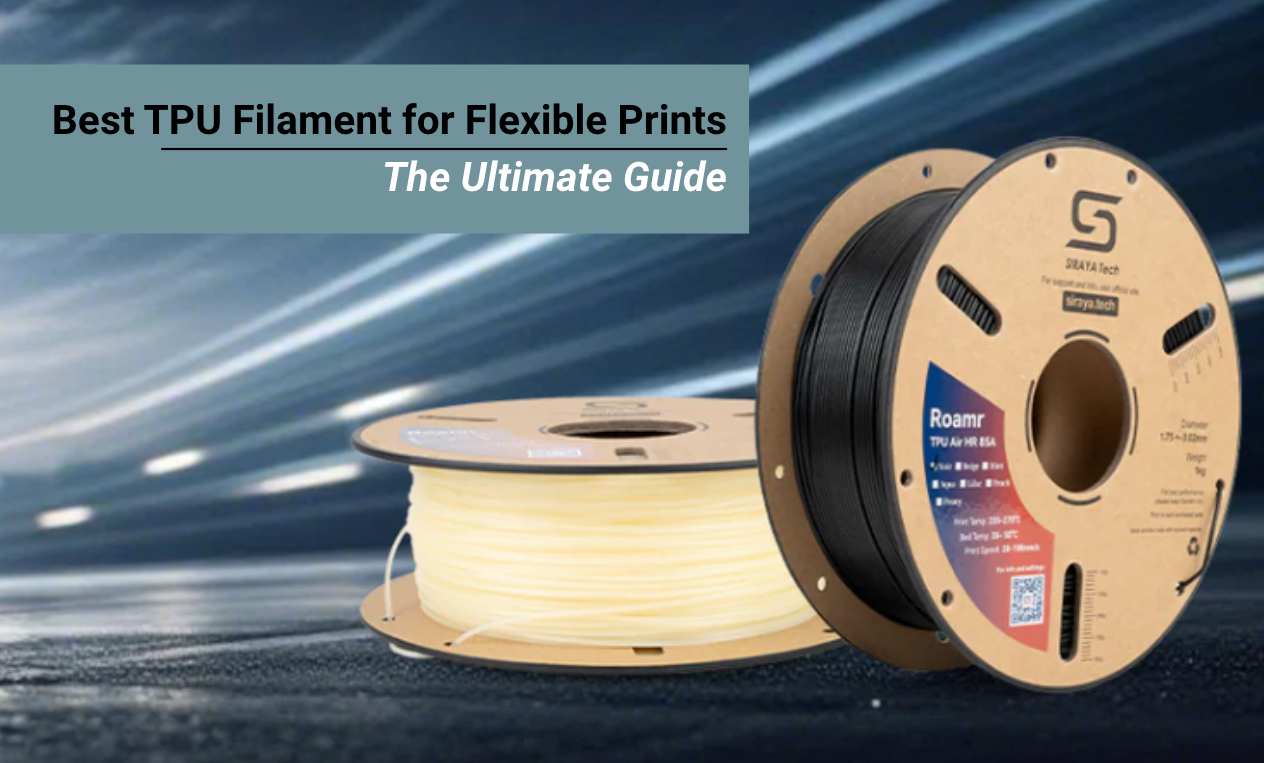
You have a vision: a custom phone case that bounces when dropped, or RC car tires that actually grip the road. To make this happen, you need the best TPU filament. But not all flexible materials are created equal. Cheap TPU clogs nozzles, absorbs moisture, and prints inconsistently.
The best TPU should not fight you. It should feed smoothly, stick to the bed, and produce durable parts. In this guide, we rank the top flexible filaments by Shore Hardness and use case so you can stop unjamming your extruder and start printing.
Quick Picks: Which TPU fits your needs?
Feels Like: Shopping Cart Wheel
Why: Stiff enough to print on ANY printer (even Bowden). Fast printing speeds. Indestructible durability.
Feels Like: Shoe Insole
Why: Soft, grippy, and comfortable against skin. Requires a Direct Drive extruder.
Why: Specifically engineered for high-stress, high-wear, and critical support zones in footwear.
What is TPU Filament?
Before you buy, you need to know what you are getting. TPU stands for Thermoplastic Polyurethane. It is a category of flexible plastic known as a TPE (Thermoplastic Elastomer).
Unlike rigid materials like PLA or PETG, TPU is elastic. It stretches. It bends. It rebounds.
- Durability: It is extremely resistant to abrasion. You can drag it across concrete and it won't wear down.
- Impact: It absorbs shock. It does not shatter like PLA.
- Chemicals: It resists oils and greases.
👉 If you are new to this material, check out our deep dive on what is TPU filament to understand the chemistry and why it is the king of durability.
You May Want to Shop TPU Filaments
Explore More
Understanding Shore Hardness: The Numbers Game
Choosing the "best" filament is really about choosing the right hardness for your specific job. The number on the box (like 95A or 85A) refers to the Shore Hardness Scale.
95A: The Hard Rubber (The All-Rounder)

This is the industry standard. It feels like a shopping cart wheel or a hard rubber heel on a boot.
- Pros: It is stiff enough to push through a printer tube easily. It prints fast. It is very durable.
- Cons: It is not very squishy. It bends, but it doesn't compress much.
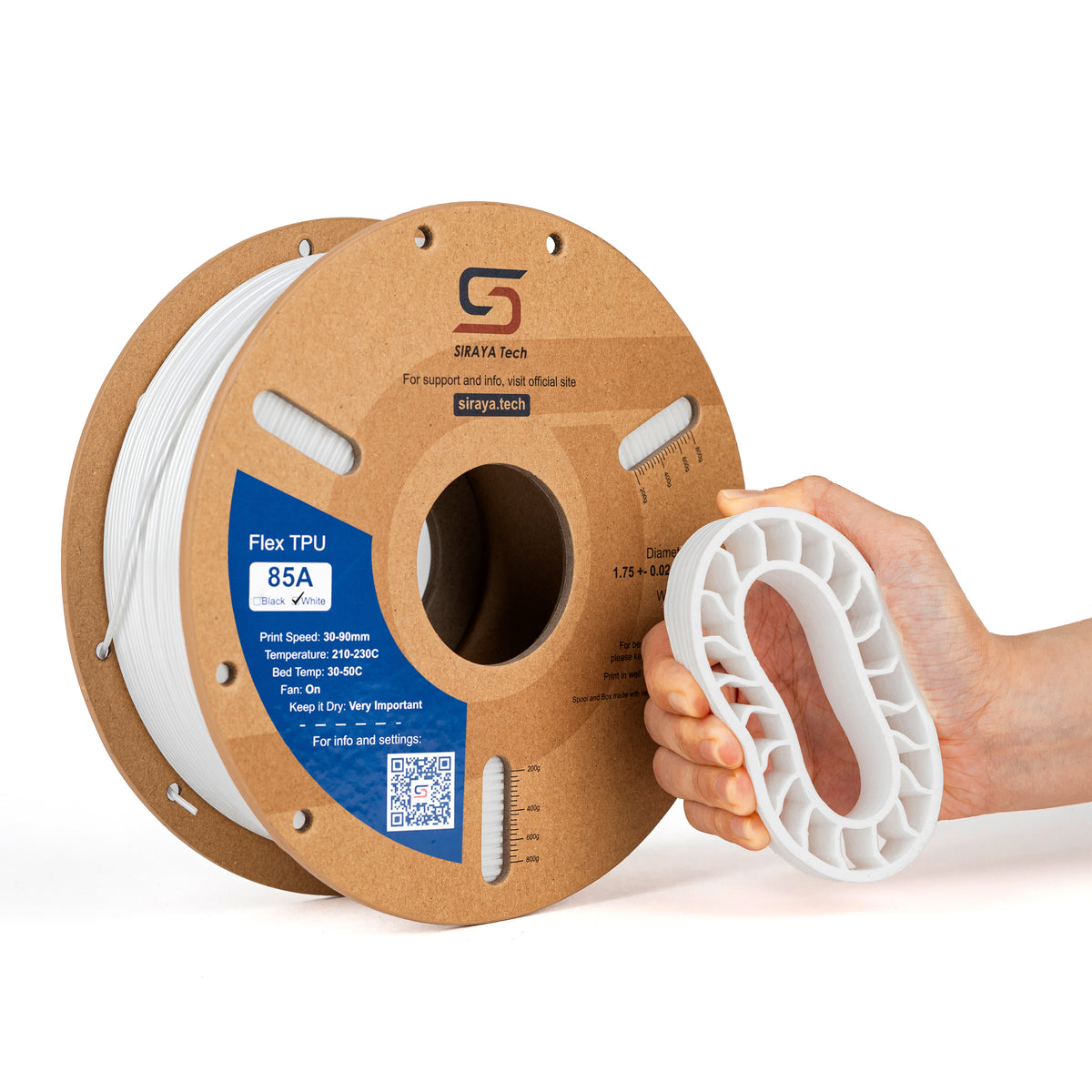
85A: The Soft Rubber

This feels like a shoe insole or a leather belt.
- Pros: It feels soft against the skin. It grips surfaces well. It squishes to make a seal.
- Cons: It is like pushing a wet noodle. It buckles easily in the extruder.
👉 If you are confused about the numbers, we have a specific article comparing 95A vs 98A TPU filament (and other hardness levels) to help you decide.
Best TPU Filament for Beginners and Functional Parts
The Winner: Siraya Tech 95A High Flow TPU
If you have never printed flexible material before, do not start with the super soft stuff. Start with 95A. It is the most forgiving material in the family of flexible materials.
Why It Is The Best for Most Users
1. Printability
The biggest challenge with flexible filament is feeding it. If the filament is too soft, the gears in your extruder cannot push it. It just bends sideways and jams.
95A has good "columnar strength." It pushes straight. This means you can print it on almost any machine. Even older printers with Bowden tubes (like the Ender 3) can handle 95A if you go slowly.
2. Speed and Flow
Siraya Tech 95A is designed with High Flow technology. Standard TPU is sticky and slow. Our formula melts quickly and flows smoothly. This allows you to print faster than traditional flexible materials without under-extrusion.
3. Durability
This material is practically indestructible. You can hit it with a hammer. You can throw it off a roof. It will not break. This makes it the ideal choice for drone bumpers, GoPro mounts, and mechanical hinges that need to flex thousands of times.
👉 For detailed settings on how to get perfect results, read our Flex TPU 95A filament user guide.
Best TPU Filament for Wearables and Soft Grip

The Winner: Siraya Tech 85A Soft TPU
When you want something that truly feels like rubber against your skin, 95A might be too hard. A rigid watch band is uncomfortable. You need to step down to 85A.
Why It Is The Best for Comfort
1. The "Squish" Factor 85A compresses.
When you wear it as a bracelet or a shoe insole, it cushions your body. It conforms to organic shapes much better than harder plastics.
2. Grip and Traction
Softer rubber has a higher coefficient of friction. If you are printing tires for a robot or feet for a piece of furniture, 85A will grip the floor. 95A might slide.
The Catch: Difficulty
We have to be honest. 85A is harder to print. It requires a well-tuned machine. We highly recommend using a "Direct Drive" extruder where the motor is right on top of the nozzle.
If you try to push this through a long tube, it will likely jam. However, the results are unmatched for comfort.
👉 If you are up for the challenge, read our guide to printing with Siraya Tech Flex 85A TPU filament.
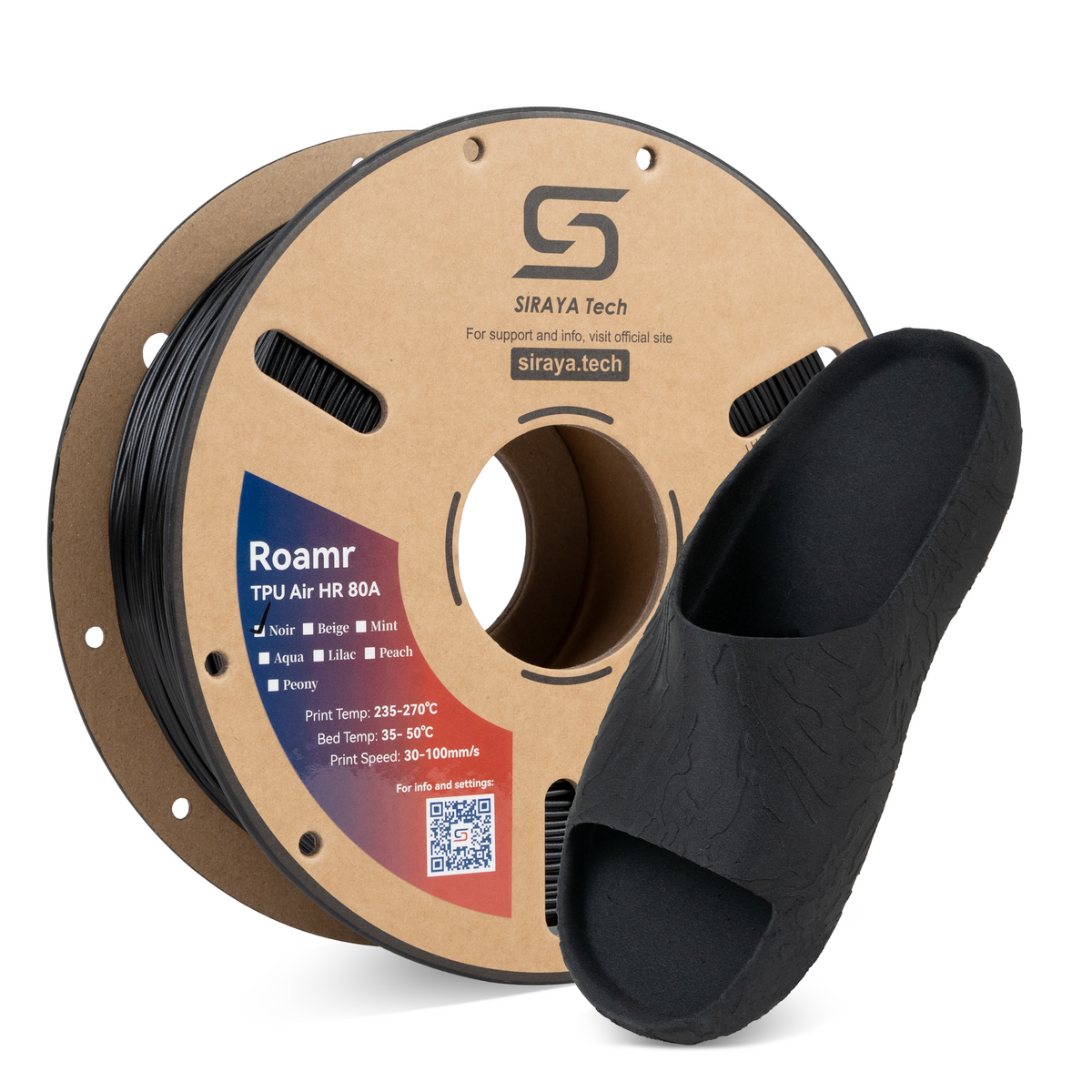
Shop 3D Printed Shoes Filaments
Explore More

Other Flexible Options: TPE vs TPU
Sometimes the best TPU isn't TPU at all. You might see other acronyms like TPE or PEBA.
- TPU (Thermoplastic Polyurethane): The best all-rounder. It prints easier than TPE. It has better chemical and abrasion resistance.
- TPE (Thermoplastic Elastomer): This is a broad category. Generic TPE is often softer but can be very inconsistent to print. It can feel waxy.
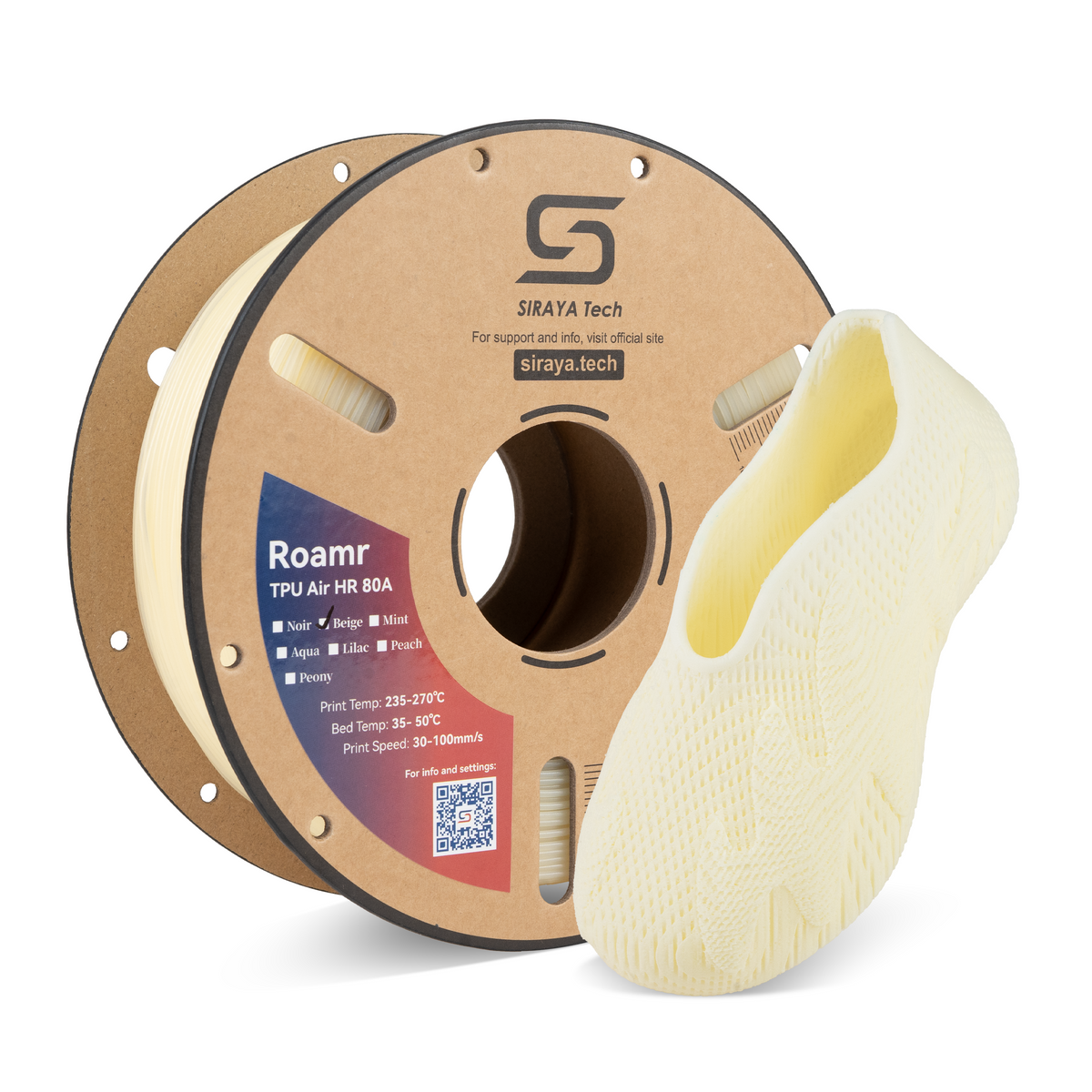
- PEBA: This is a high-performance material used in athletic shoes. It is very bouncy (high energy return) and lightweight.
To explore the entire family of soft plastics and see which one fits your specific needs, read our guide on flexible filament types.
How to Print the Best TPU: Essential Tips
Even with the best filament in the world, you need the right settings. Here are the golden rules for success.
1. Slow Down
Speed is the enemy of flexible printing.
- 95A: You can print at 30mm/s to 50mm/s.
- 85A: You should slow down to 20mm/s to 30mm/s. If you go too fast, pressure builds up in the nozzle. The filament will buckle and wrap around your extruder gears.
2. Retraction Settings
Retraction is when the printer pulls the filament back to prevent stringing.
- The Risk: Pulling on rubber stretches it. It creates tension. This leads to jams.
- The Fix: Turn retraction OFF or keep it extremely low (0.5mm). You might get a few strings, but your print will finish successfully.
3. Keep It Dry
We mentioned this before. But it is worth repeating. If you leave your spool out for a few days, it will get wet. Always store your TPU in the resealable aluminum bag with desiccant when not in use. If it gets wet, dry it in a filament dryer at 55°C.
Conclusion
Finding the best TPU filament comes down to balancing your printer's capabilities with your project's needs.
If you want a hassle-free experience for functional parts, grab a spool of Siraya Tech 95A. It is the reliable workhorse that fits almost any printer and survives almost any impact. If you are making cosplay armor, soft gaskets, or shoe insoles and you have a direct drive printer, go for the 85A.
Regardless of which hardness you choose, prioritize quality packaging. Filament that arrives dry prints better. It is that simple.
Ready to start printing flexible parts?
- Shop Flex TPU Filament for 3D Printing
- Shop Flexible Filaments
- Shop TPU Filament
- Shop Thermoplastic Polyurethane Filament
FAQs About the Best TPU Filament for Flexible Prints
What is the easiest TPU to print?
95A Shore Hardness is the easiest. It is stiff enough to feed reliably through the extruder gears without buckling. If you are a beginner, always start with 95A before trying softer materials.
Do I need a special extruder for TPU?
A: For 95A, you can often use a standard Bowden extruder (like on an Ender 3) if you print slowly. For 85A or softer, a "Direct Drive" extruder is highly recommended. It shortens the path the filament has to travel. This gives you better control and prevents jams.
What is the best TPU filament brand?
The “best” TPU brand depends on what you’re printing, but a reliable pick is Siraya Tech because it’s known for consistent filament and strong, flexible parts. Their Siraya Tech Flex TPU 95A is designed to balance flexibility and toughness, making it great for functional prints like grips, guards, and vibration parts. For softer, rubbery prints, many makers also like very flexible TPU options (often around 85A) for higher stretch. Always choose based on the hardness you need and dry the spool for cleaner results.
Is TPU 90A softer than 95A?
Yes, TPU 90A is softer than TPU 95A on the Shore A scale. A lower number means the filament is more flexible and easier to compress. In real use, 90A bends and “gives” more, while 95A holds its shape better and is usually easier to print. Choose 90A for squishier parts and 95A for stronger, more stable flexible parts.
Which TPU filament is softer?
The softer TPU is the one with the lower Shore A number. For example, 90A is softer than 95A, and 85A is softer than both. Softer TPU is great for parts that need more bend or stretch, but it can be harder to print because it can buckle in the extruder. If you want the easiest flexible printing, many people start with 95A, then move softer once their settings are dialed in.