
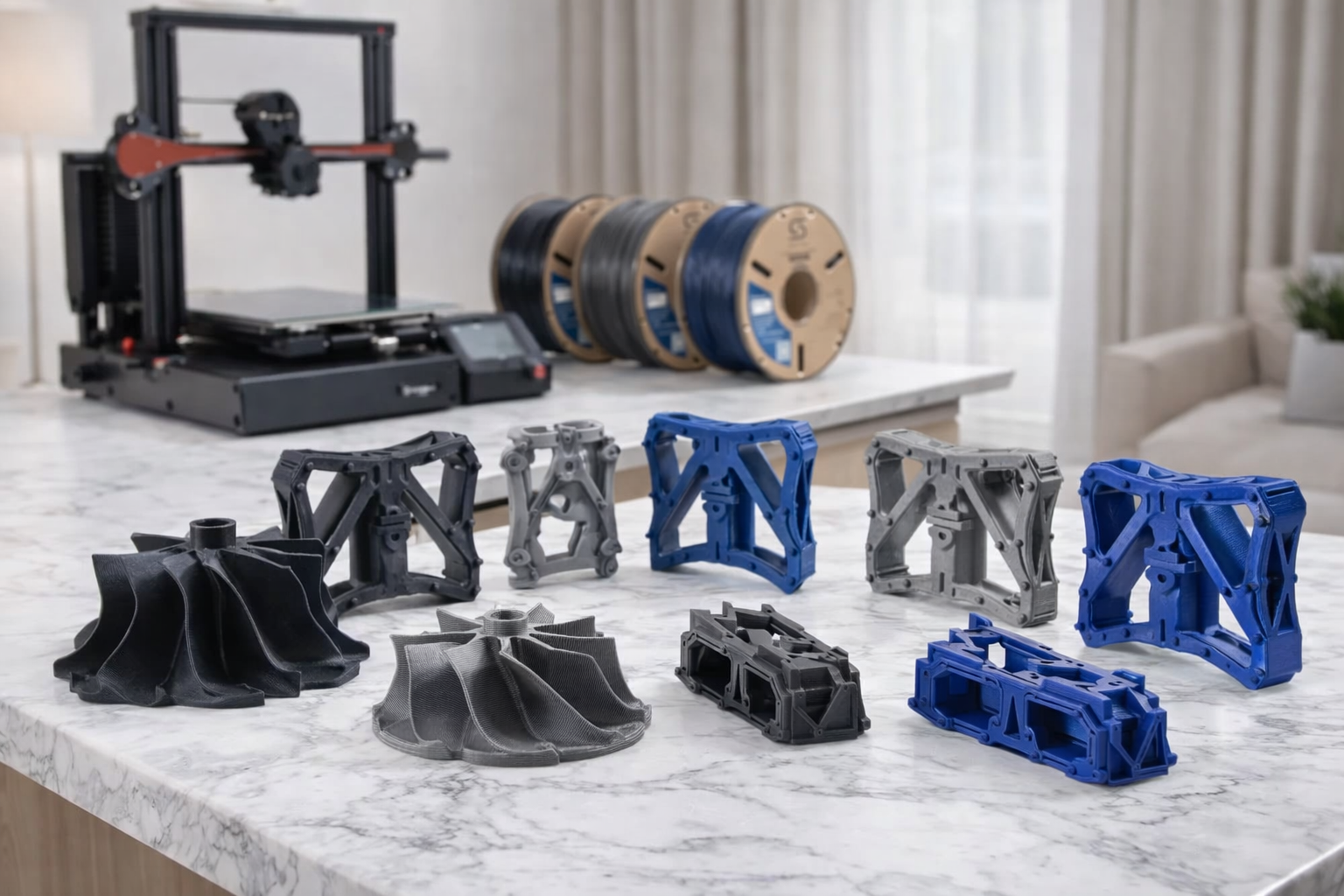
Carbon fiber filament is widely used for 3D printing parts that need to be stiff, accurate, and reliable.
Many people choose it when regular filament bends too easily or does not hold shape under pressure. With multiple types available, understanding what makes the best carbon fiber 3D printer filament helps avoid wasted material and failed prints.
Keep reading to learn how carbon fiber filament works, how the types differ, and how to choose the right one for your needs.
What Is Carbon Fiber Filament?
Carbon fiber 3D printer filament is a plastic filament mixed with small chopped carbon fibers. These fibers increase stiffness, improve dimensional accuracy, and reduce warping during printing. Most carbon fiber filaments also produce a matte finish that looks clean and professional.
Strength is one of the main reasons people choose the best carbon fiber filament. If you want to see how it compares to other strong materials, check out What is The Strongest 3D Printer Filament: Quick Guide.
Why Use the Best Carbon Fiber Filament for 3D Printing?
The best carbon fiber filament is chosen when rigidity matters more than flexibility. It is commonly used for brackets, mounts, frames, and parts that must stay straight under load. Reduced warping also helps when printing larger or more precise components.
For parts that need flexibility or impact resistance instead of stiffness, some makers choose resin based materials such as Siraya Tenacious resin for specific applications.
Siraya 3D Filaments and Resin You May Shop
Explore More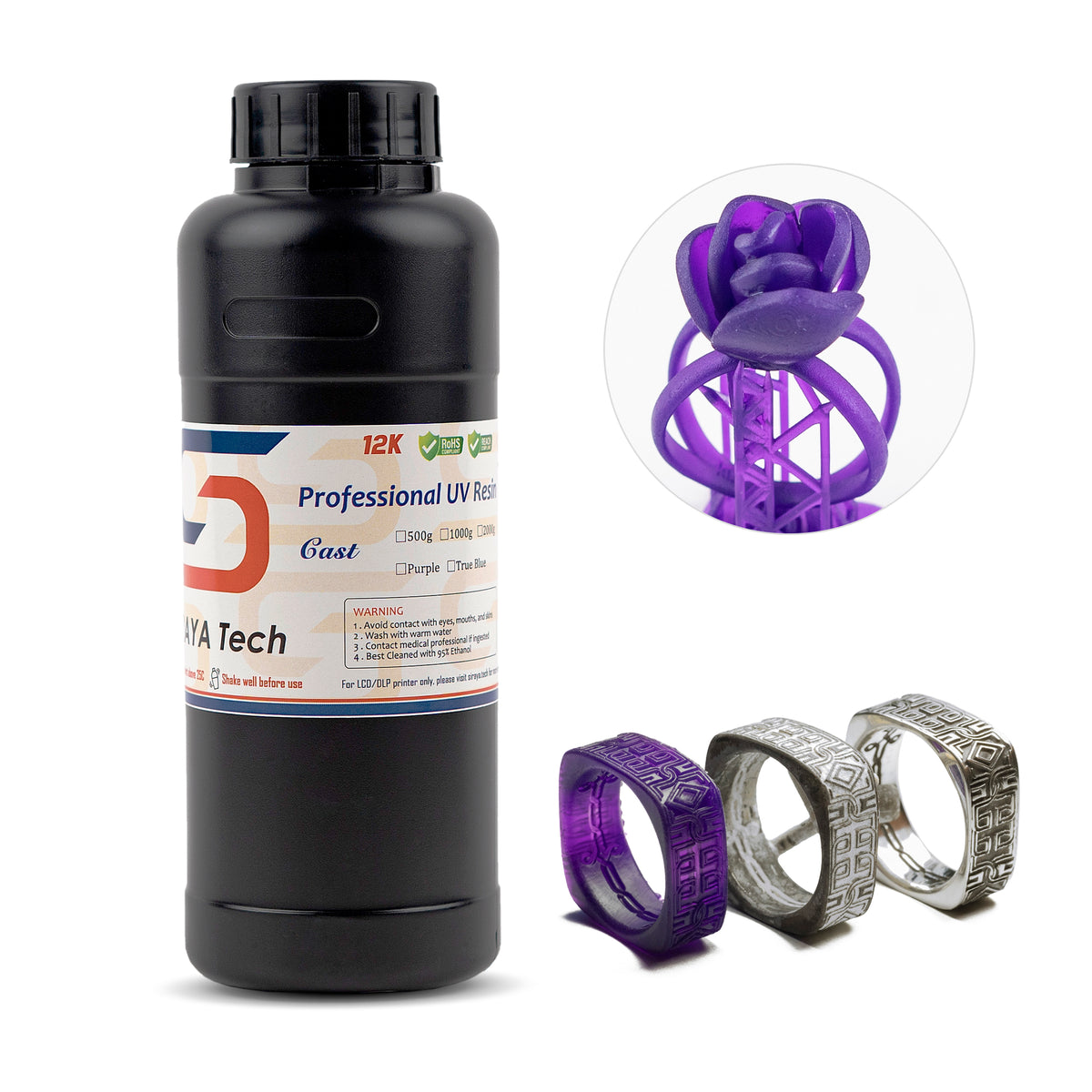

Carbon fiber filament is powerful, but it is not the only option worth knowing. To better understand when to use it and when to choose something else, don’t forget to browse Best Filament for 3D Printing That Fits Your Needs.
Types of Carbon Fiber Filament

Not all carbon fiber filaments behave the same. The base plastic plays a major role in strength, print difficulty, and heat resistance.
|
Carbon Fiber Filament Type |
Ease of Printing |
Strength and Rigidity |
Heat Resistance |
Common Use Cases |
|---|---|---|---|---|
|
PLA Carbon Fiber Filament |
Very easy |
High stiffness, lower toughness |
Low |
Visual parts, light functional prints |
|
PETG Carbon Fiber Filament |
Easy |
Balanced strength and rigidity |
Medium |
Brackets, enclosures, daily use parts |
|
Nylon Carbon Fiber Filament |
Moderate to hard |
Very strong and durable |
High |
Tools, mechanical parts |
|
High‑Performance CF Filament |
Hard |
Extremely stiff and stable |
Very high |
Industrial and high‑heat applications |
PETG‑CF is often picked for its balance of strength and ease of printing. To learn more about how PETG‑based materials perform, discover more details in The Best PETG Filament of 2026: Buyer’s Guide
How to Choose the Best Carbon Fiber Filament for Your Project
Choosing the best carbon fiber filament depends on how the printed part will be used. Some projects only need stiffness, while others require heat resistance or long term durability.
For indoor parts with light stress, PLA carbon fiber filament works well. PETG‑CF or nylon carbon fiber filament is better for functional parts.
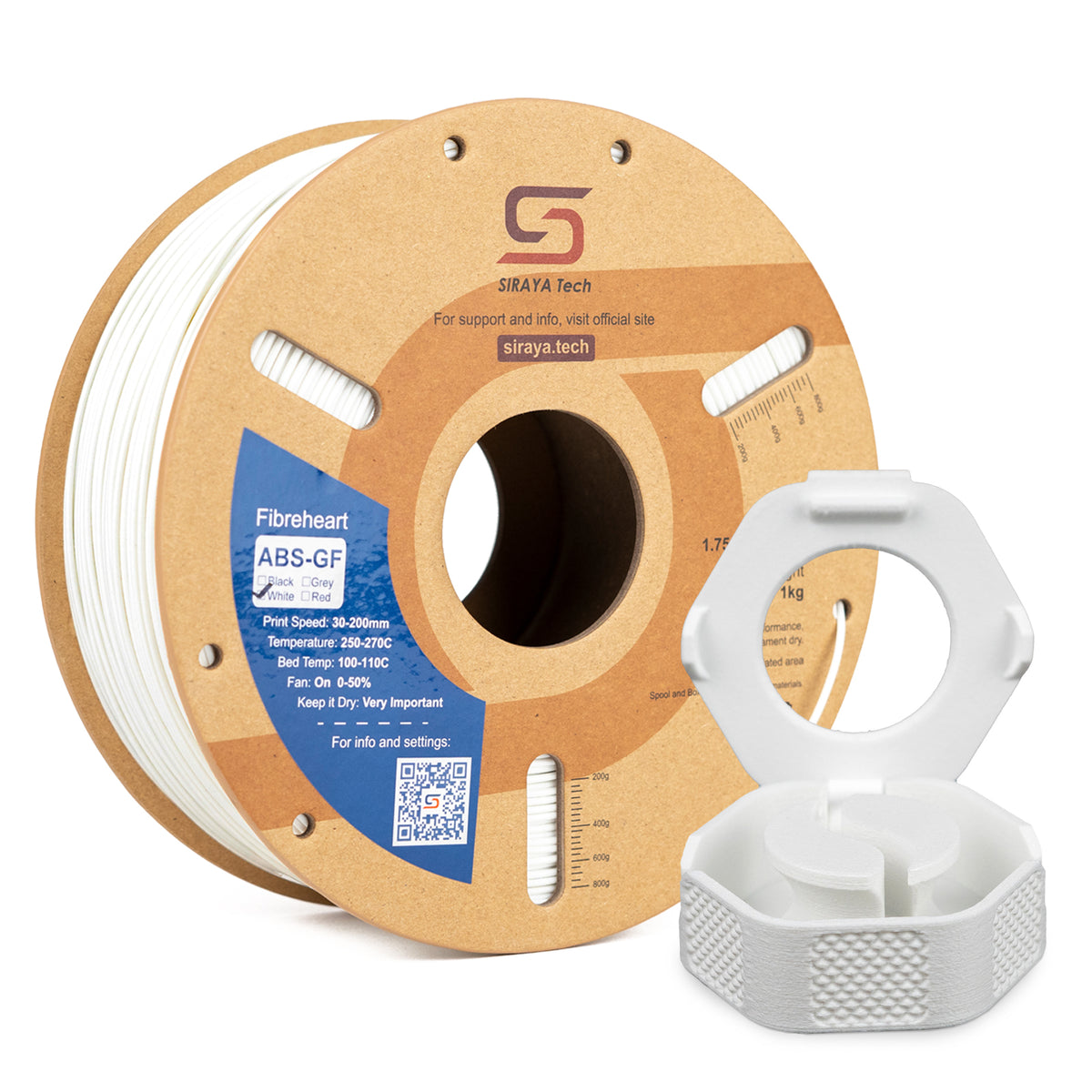
When higher durability is needed, reinforced options such as Siraya ABS‑CF, Siraya ABS‑GF, and Siraya ABS‑CF Core offer improved rigidity and heat resistance without overly complex printing requirements.
Siraya 3D Filaments and Resin You May Shop
Explore More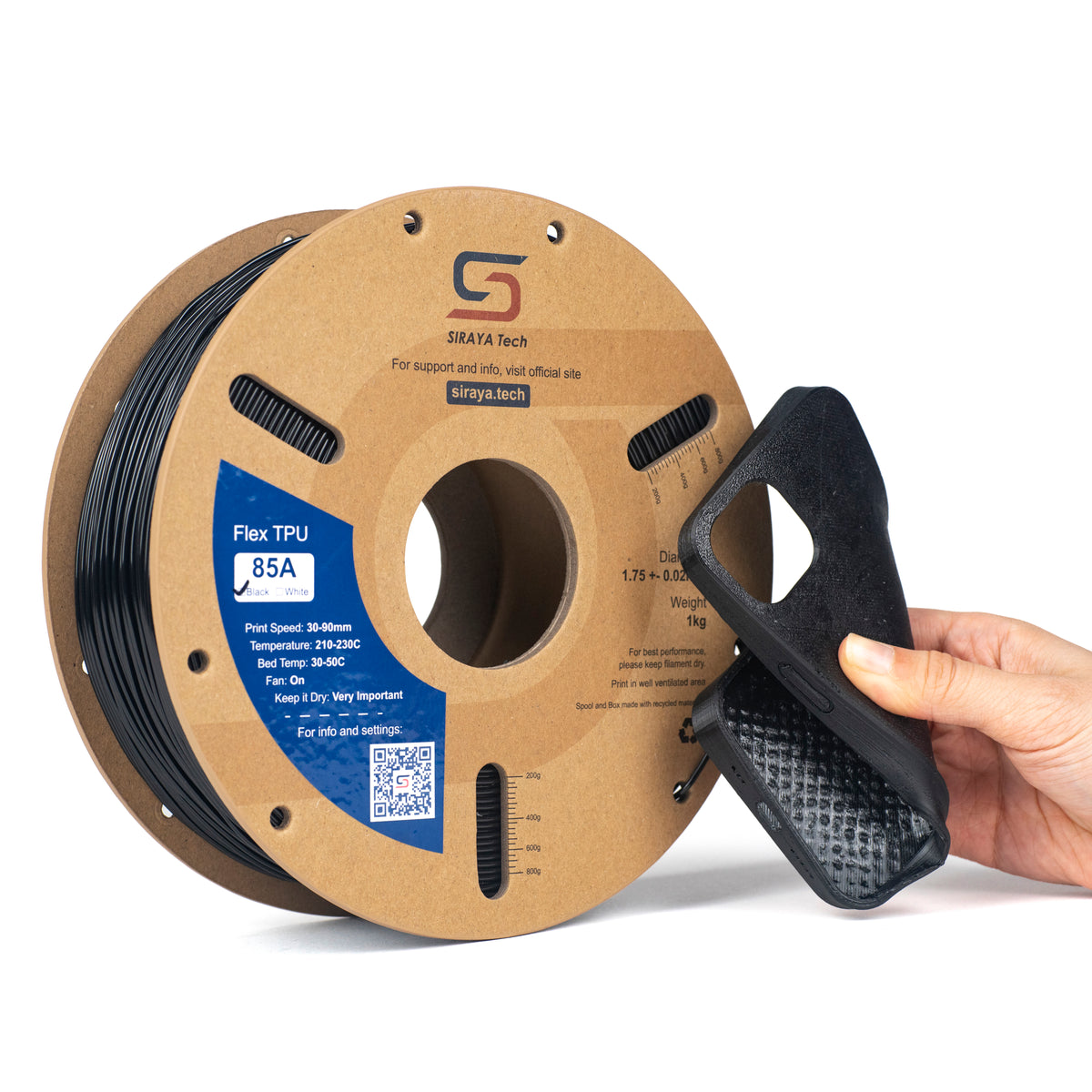
Best Carbon Fiber Filament Properties That Matter Most
Strength and Rigidity
Carbon fiber filament significantly increases rigidity. Parts resist bending and flexing, which is ideal for structural components. This stiffness is often more important than raw strength for printed parts.
Dimensional Stability
Carbon fibers reduce shrinkage during cooling. This helps parts stay accurate and reduces warping, especially on larger prints.
Surface Finish
Most carbon fiber filaments create a smooth matte surface. This finish hides layer lines and improves the look of functional parts without extra finishing.
Before deciding, it helps to understand how carbon fiber compares to other popular filaments. For a broader view, check out Best 3D Filament For Smooth and Reliable Prints.
Carbon Fiber Filament vs Standard and Reinforced Materials
Compared to standard PLA or PETG, carbon fiber filament offers better stiffness and print stability. Standard plastics may bend under load, while carbon fiber reinforced parts stay rigid.
ABS based reinforced materials are useful when higher heat resistance is required. Siraya ABS‑GF focuses on stiffness and thermal stability. Siraya ABS‑CF increases rigidity and surface quality. Siraya ABS‑CF Core combines strength with improved print consistency for larger or more demanding parts.
For outdoor or UV exposed applications, ASA reinforced with glass fiber offers better weather resistance than standard plastics. Siraya ASA‑GF filament maintains shape under sunlight and heat while improving stiffness for long term outdoor use.
Printer Requirements for the Best Carbon Fiber Filament

Carbon fiber filament is abrasive, so printer setup is important. A hardened steel nozzle is required to prevent wear.
Other helpful requirements include:
- Nozzle size of 0.4 mm or larger
- Reliable bed adhesion
- Dry storage to prevent moisture issues
- Enclosure for nylon based carbon fiber filament
Proper hardware setup improves print consistency and part strength.
Best Print Settings for Carbon Fiber Filament
Carbon fiber filament prints best at moderate speeds. Printing too fast can weaken layers and reduce surface quality.
General tips include:
- Slightly higher nozzle temperatures than standard filament
- Reduced cooling for better layer bonding
- Slower speeds for consistent extrusion
Fine‑tuning these settings leads to stronger and cleaner prints.
Common Problems With Carbon Fiber Filament and How to Fix Them
Carbon fiber filament can be very reliable when set up correctly. Most issues come from hardware or material handling.
- Nozzle wear caused by abrasive fibers can be fixed by using a hardened steel nozzle
- Brittle prints often mean the filament is wet or printed too cold
- Poor layer adhesion can improve by increasing nozzle temperature and lowering fan speed
- Rough surfaces may come from printing too fast or using a worn nozzle
Safety Tips When Printing Carbon Fiber Filament
Printing carbon fiber filament safely helps protect both your printer and your workspace.
- Use good ventilation or an enclosure to reduce airborne particles
- Wear a mask when sanding or cutting printed parts
- Keep filament dry to avoid poor prints and excess dust
-
Clean the print area regularly to remove fine debris
For workflows that involve molding or duplication, printed parts are often paired with Siraya silicone to create flexible molds.
Conclusion
The best filament offers excellent stiffness, stability, and surface quality when chosen for the right application. Understanding filament types, printer requirements, and common issues helps you get reliable results with less trial and error.
For more helpful guides and practical tips about carbon fiber filament and other 3D printing topics, Siraya provides valuable resources worth exploring.
Siraya also offers high quality products such as 3D printing filaments, resins for 3D printing, Tenacious resin, castable resin, and platinum silicone crafting materials to support consistent and professional project results.
FAQs About the Best Carbon Fiber Filament
What is the best carbon fiber filament?
The best carbon fiber filament depends on how the part will be used. Some types focus on ease of printing, while others prioritize strength or heat resistance. Choosing based on the application gives the best results.
Is carbon fiber filament really strong?
Carbon fiber filament is very stiff and holds its shape well under load. It is not impact‑proof and can crack if pushed too far. It works best for rigid parts rather than flexible or shock‑absorbing ones.
What is the best grade of carbon fiber?
Most 3D printing filaments use chopped carbon fiber rather than woven fiber. The quality of the base plastic and fiber mixing matters more than fiber grade labels. Consistent formulation leads to better prints.
Is PETG stronger than carbon fiber?
Standard PETG is not stronger than carbon fiber reinforced filament. Carbon fiber versions are stiffer and more dimensionally stable. Regular PETG can bend more before breaking.
What is the difference between 3K and T700 carbon fiber?
These terms refer to woven carbon fiber sheets, not chopped fiber used in filament. They do not directly apply to 3D printing materials. The base plastic influences performance more.