Foaming 3D Printer Filament
5 products
Showing 1 - 5 of 5 products
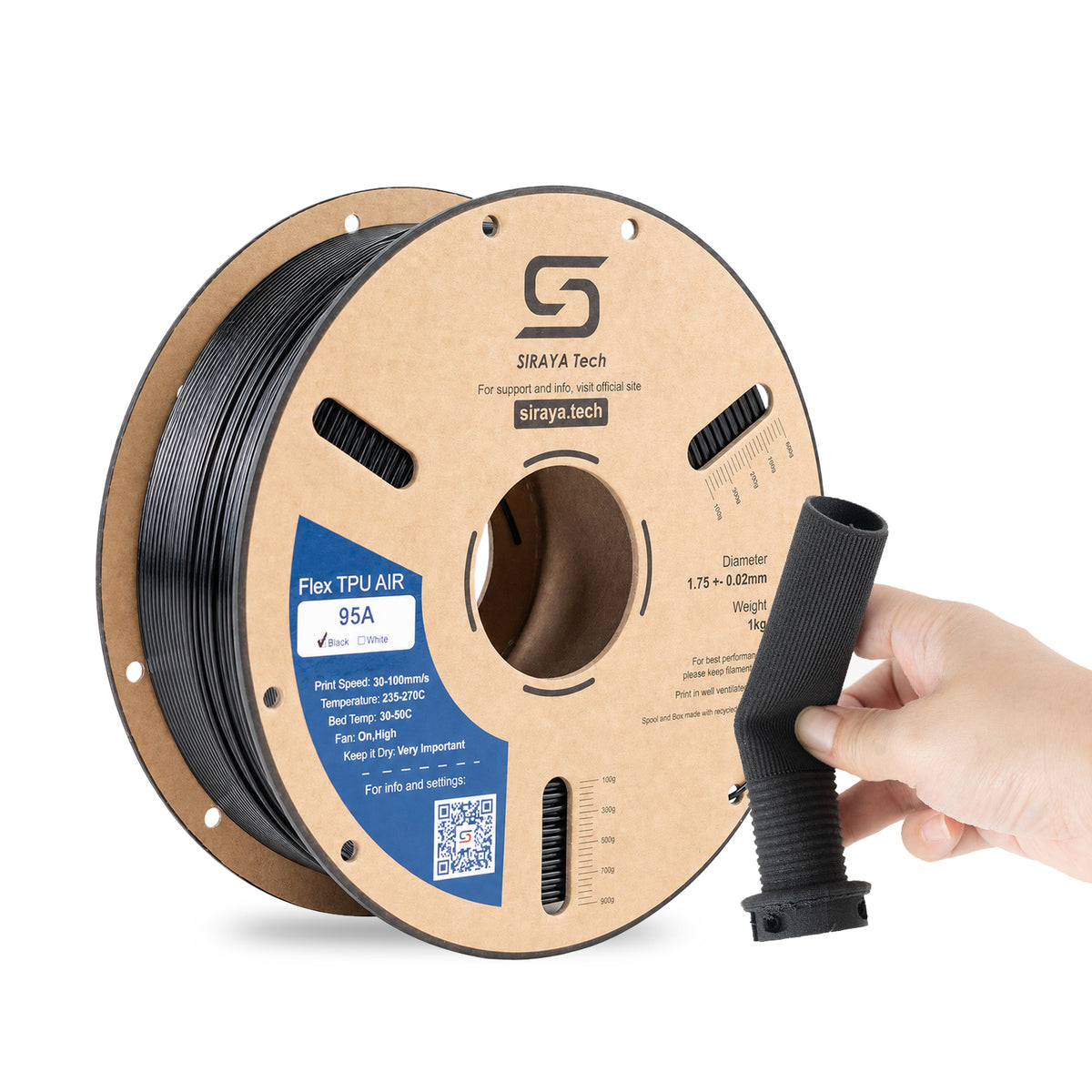
Siraya Tech’s foaming 3D printer filaments are designed for makers who want to achieve lightweight, flexible, and high-performance prints without compromising durability.
Using advanced active foaming technology, these materials expand during printing to form a fine, airy structure that reduces weight while maintaining elasticity and strength.
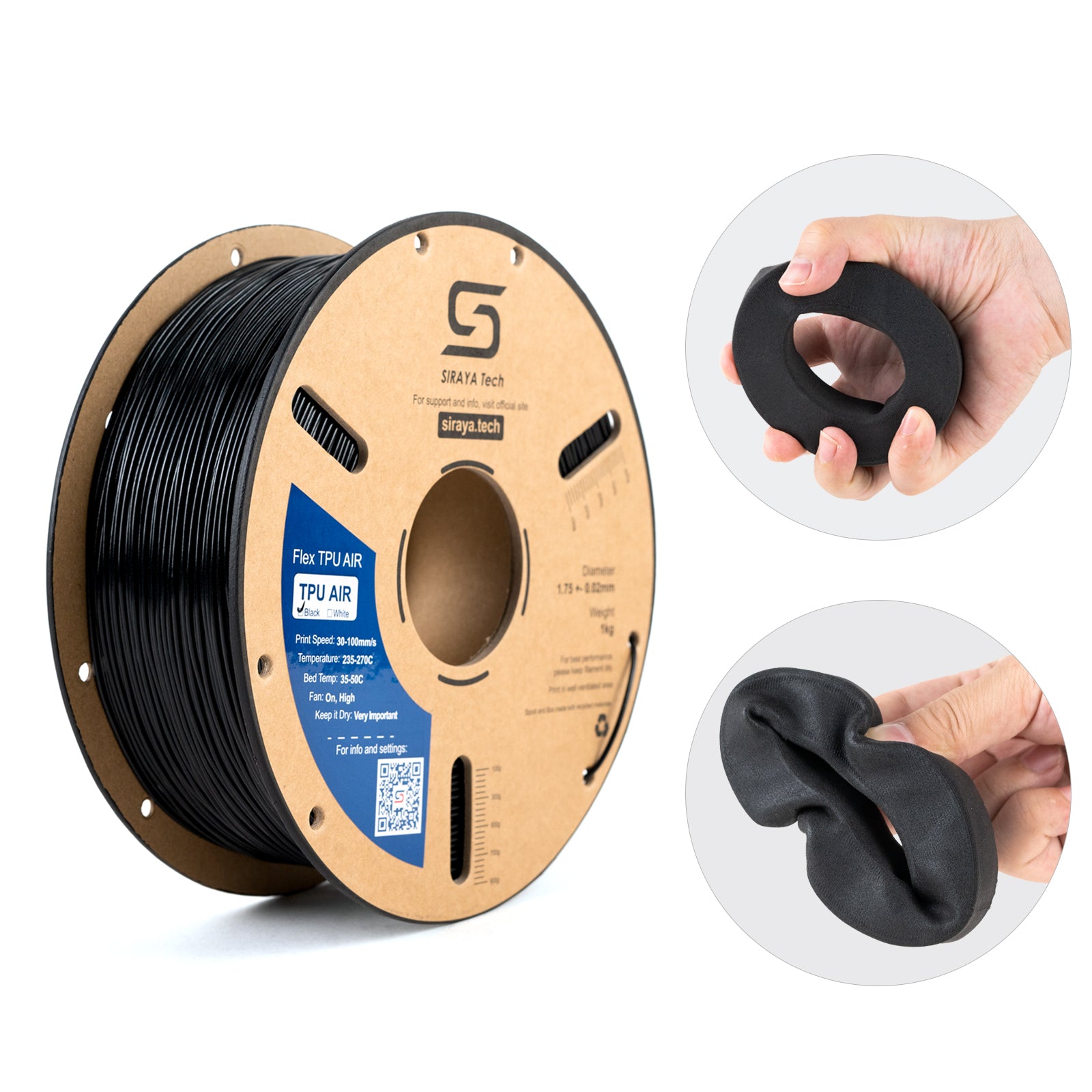
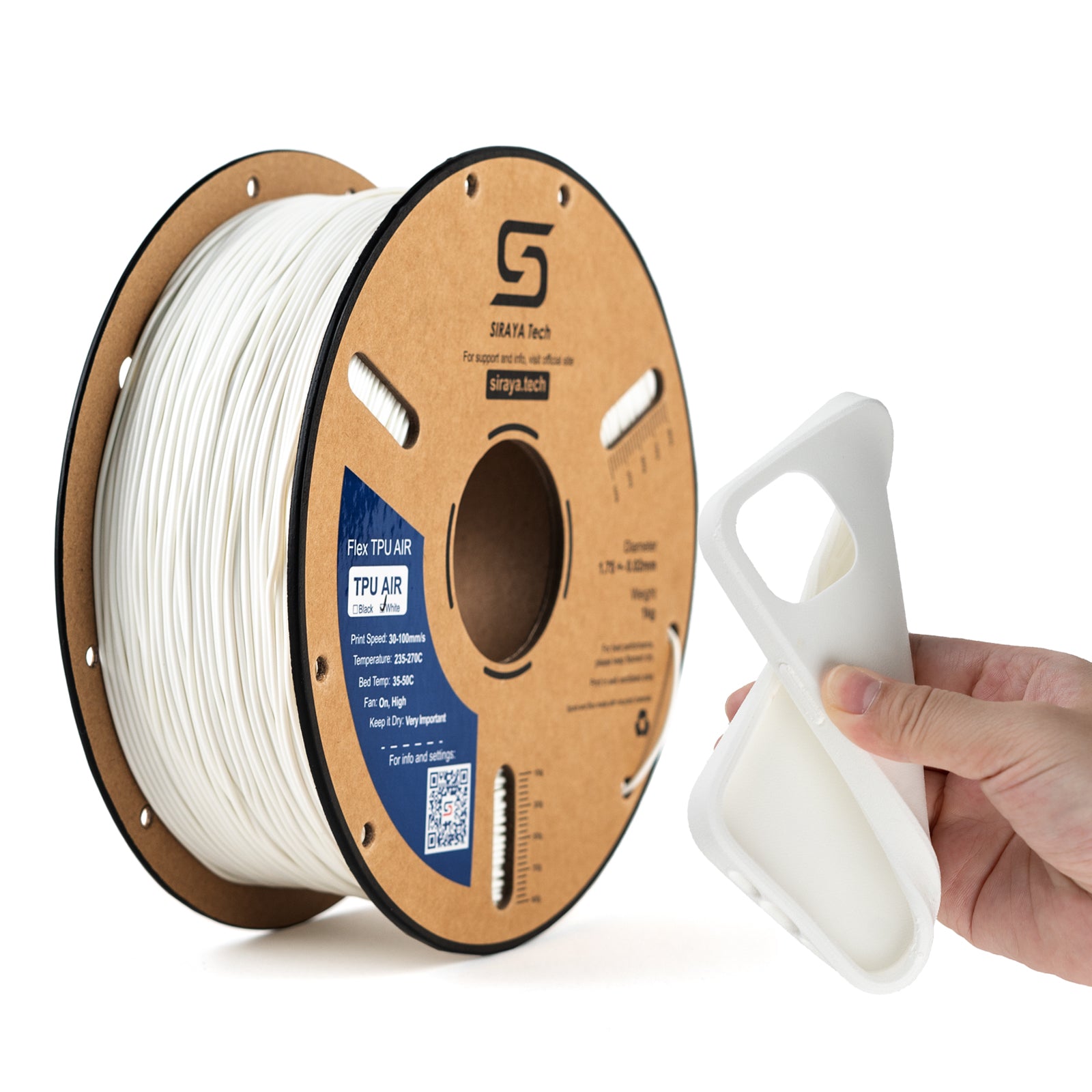
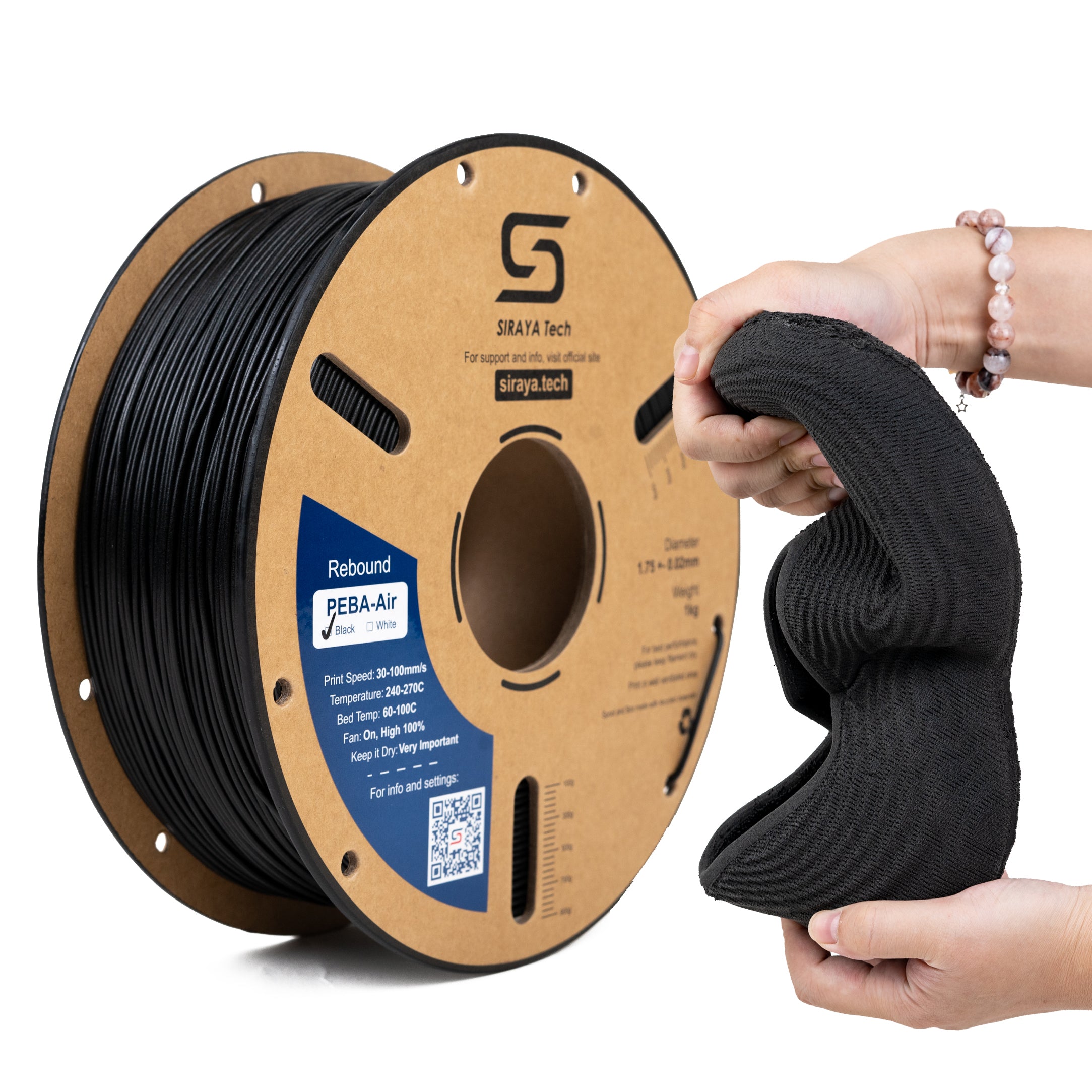
Siraya Tech currently offers two advanced foaming filament options: TPU Air, a flexible thermoplastic with adjustable softness (65A–82A), and PEBA Air, a high-rebound elastomer with tunable flexibility (70A–95A). Both are engineered for precision, comfort, and durability in demanding applications.
With adjustable softness and density controlled by print temperature, these filaments are ideal for wearables, sports gear, drone components, and functional prototypes that demand both comfort and performance.
Why Choose Siraya Tech Foaming Filament
Siraya Tech foaming filaments use a heat-activated foaming process that allows you to fine-tune the hardness and flexibility of each print.
Lower temperatures produce denser, tougher parts, while higher temperatures create lighter, softer foams with a smooth matte finish.
✅ Up to 50% weight reduction with active foaming
✅ Adjustable hardness and elasticity through temperature control
✅ Soft, skin-friendly texture ideal for comfort applications
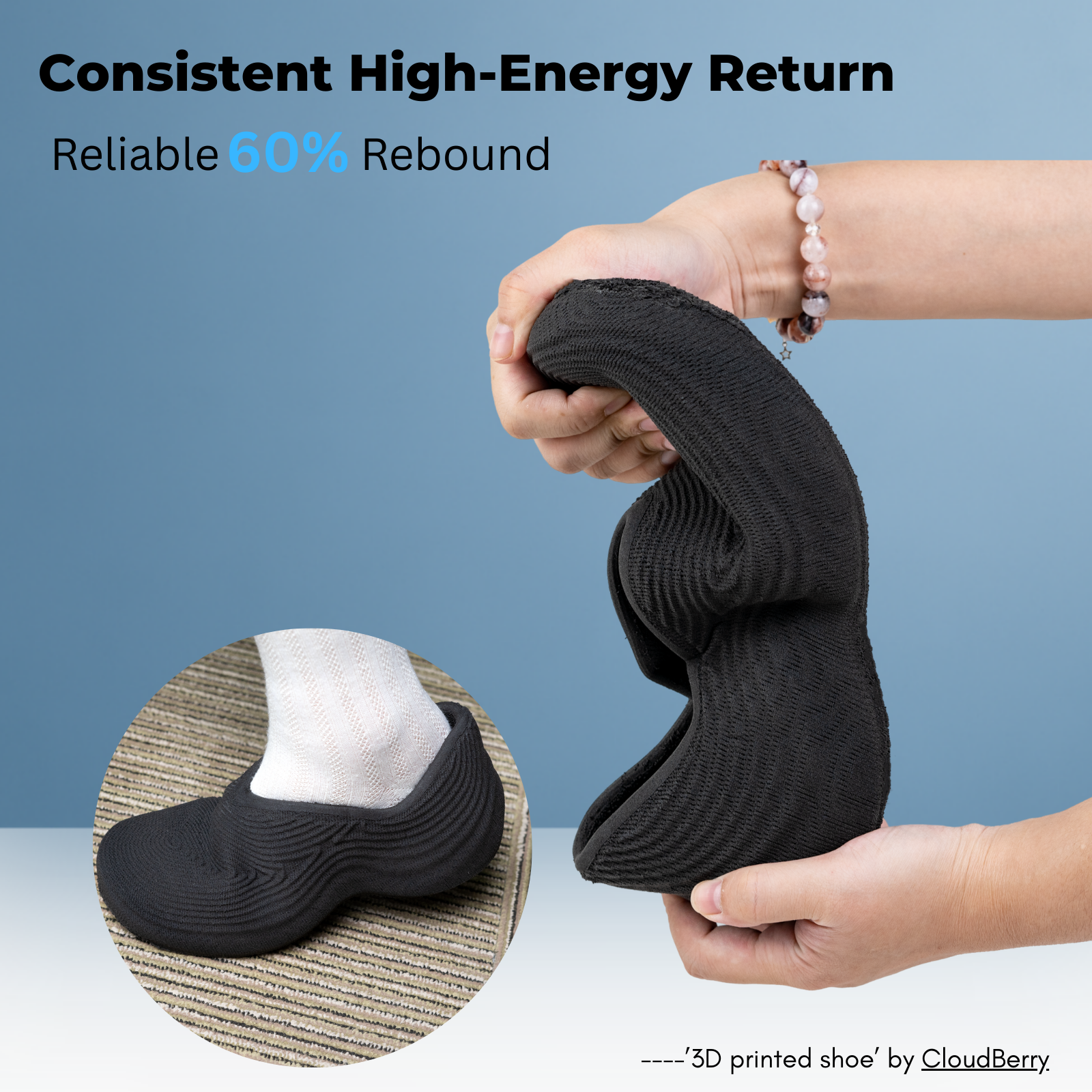
✅ Durable, high-rebound performance for functional parts
Lightweight and Tunable Performance
Siraya Tech’s foaming filaments give you the ability to customize your print’s mechanical behavior. The foamed microstructure reduces density while preserving structural integrity, resulting in parts that are both strong and lightweight.
This tunable performance makes them perfect for applications that need impact absorption, flexibility, or reduced mass, such as sports equipment, ergonomic accessories, and lightweight mechanical components.
Soft Texture, Strong Foundation
These filaments feature a smooth, soft-touch surface combined with a high strength-to-weight ratio, offering both comfort and durability. The foamed structure provides a cushioned feel while maintaining stability and resistance to fatigue.
Their soft matte surface also gives prints a professional, fabric-like finish, ideal for consumer products, wearables, and designs that require a refined look and feel.
Easy and Efficient Printing
Siraya Tech foaming filaments are optimized for easy, high-speed printing with consistent flow and strong layer adhesion. Their balanced density ensures smooth extrusion even at higher speeds, minimizing the risk of clogs or irregular expansion.
By adjusting temperature and flow rate, you can precisely control the foaming level to achieve the desired softness, density, and surface texture for every project.
✅ Works with most standard FDM printers equipped for flexible materials
✅ Supports high-speed printing with stable extrusion
✅ Consistent foaming for repeatable, professional-quality results
Common Uses for Foaming Filament
Siraya Tech foaming filaments are versatile materials suitable for both functional and creative applications. Their combination of lightness, flexibility, and strength makes them ideal for a wide range of projects.
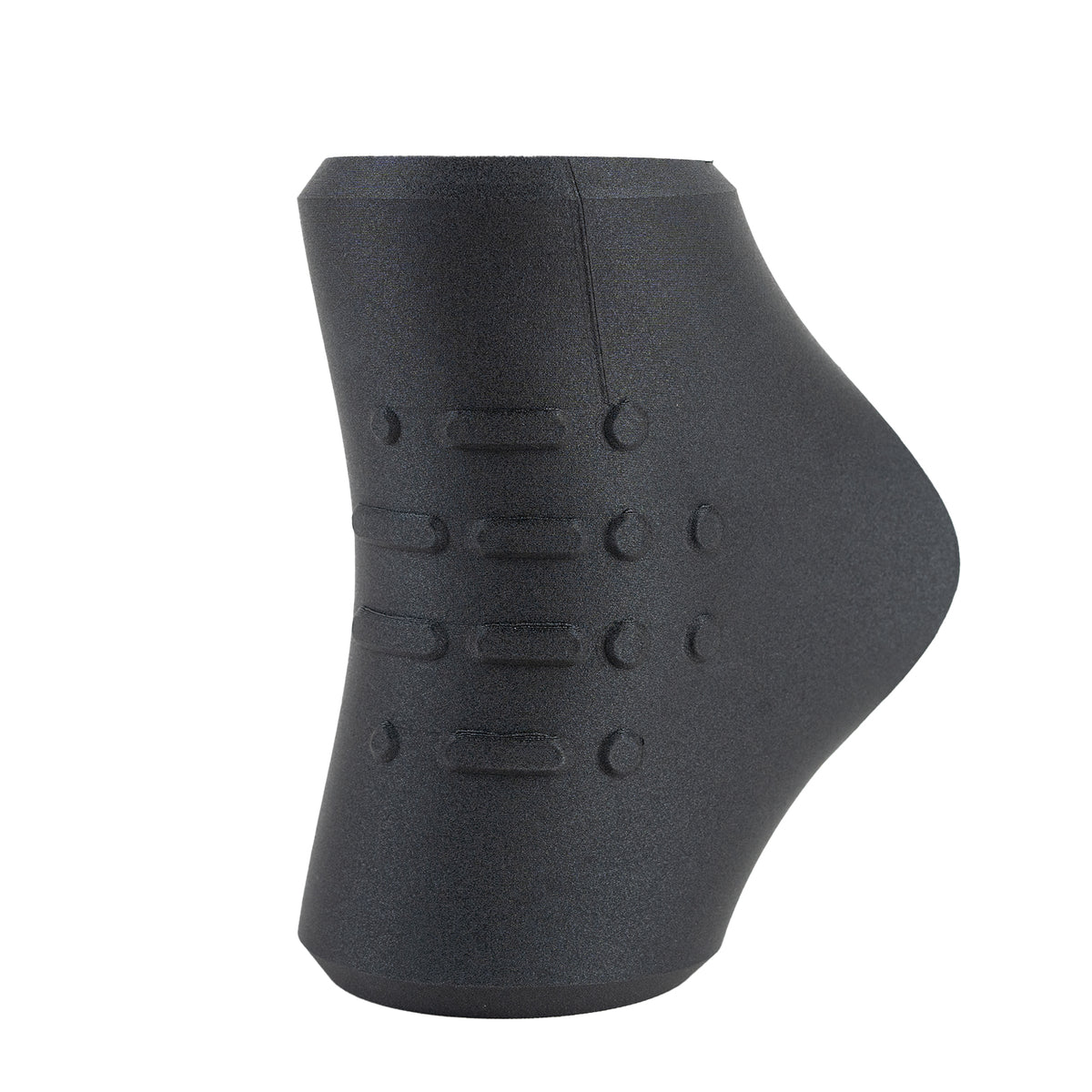
✅ Sports gear, insoles, and protective covers
✅ Lightweight drone or RC components
✅ Wearables, grips, and ergonomic parts
✅ Flexible prototypes and decorative models
Explore More High-Quality Materials from Siraya
At Siraya, we are dedicated to helping makers craft better, stronger, and more creative projects. Alongside our foaming 3D printer filament, we offer a wide range of high-quality 3D printing filaments, UV resins, and platinum silicone for crafting and engineering.
Ready to take your projects to the next level? Browse and shop our collections below to find the perfect materials for your next build.
✨ Siraya TPU Filament – Flexible and durable TPU blends for soft, impact-resistant prints.
✨ Siraya ASA Filament – UV-stable ASA filaments for outdoor and weather-resistant parts.
✨ Siraya Strong Filament – High-strength materials built for tough, functional prints.
✨ Siraya Elastic Filament – Stretchy, flexible options for creative and functional designs.
Frequently Asked Questions About Foaming 3D Printer Filament
How does foaming 3D printer filament adjust its softness and hardness?
Foaming filaments allow you to control softness and density by changing the print temperature. Lower temperatures result in firmer, denser parts, while higher temperatures create lighter, softer foams. This makes it easy to fine-tune flexibility and comfort based on your project’s needs.
What makes foaming filament lighter than regular filament?
During printing, the material expands as heat activates a foaming agent inside the filament. This expansion forms microscopic air pockets that reduce overall density. The result is a part that can be up to 50% lighter without sacrificing structural integrity.
Is foaming filament suitable for flexible or elastic parts?
Yes, foaming filaments are excellent for flexible applications thanks to their elastic base materials and tunable hardness. They can produce soft, cushioning parts or firm, resilient components depending on print temperature. This versatility makes them ideal for wearables, grips, and performance gear.
What print settings work best for foaming filament?
Typical print temperatures range from 220°C to 260°C, depending on the desired level of expansion. Adjusting temperature and flow rate helps control foaming behavior and surface texture. It’s recommended to start at a moderate temperature and increase gradually to achieve your preferred softness and weight.
What types of projects benefit most from foaming filament?
Foaming filaments are perfect for projects that require lightweight strength, flexibility, and comfort. They work especially well for sports gear, ergonomic accessories, and functional prototypes where cushioning or reduced mass is important. Their smooth, matte surface also makes them ideal for aesthetic or wearable designs.