
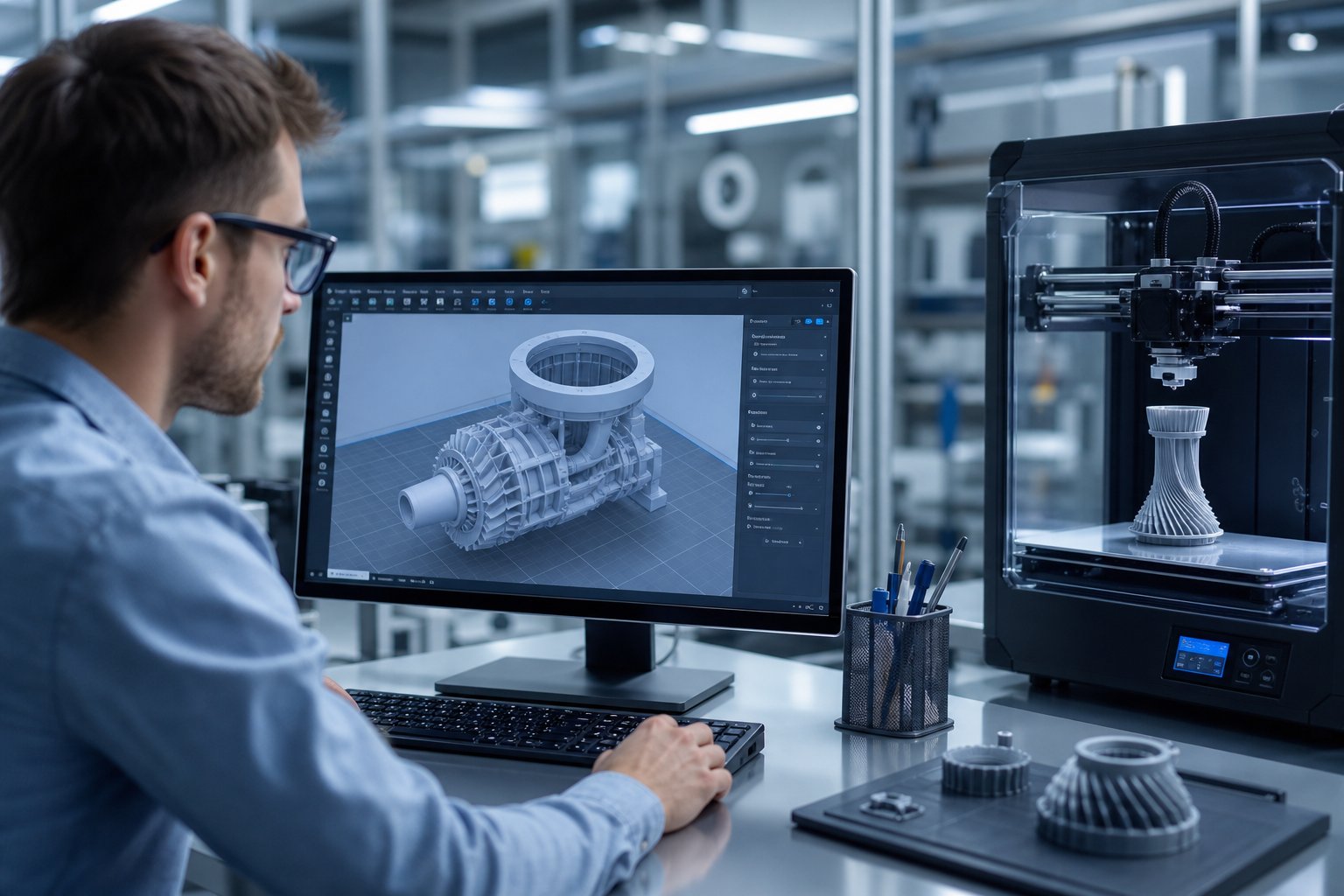
3D printing has already changed how we design and make things. Now, AI for 3D printing is making the process faster, smarter, and more efficient. It can help create 3D models, improve print quality, reduce waste, and lower the risk of failures through simulation tools and real-time monitoring. Whether you're a beginner or an experienced maker, understanding how AI fits into 3D printing can help you get better results from your filaments and resins right out of the gate.
Keep reading to see how AI actually works inside the printing pipeline, where it earns its keep, and where you still need to step in yourself.
🧠Key Takeaways
- •AI for 3D printing improves design, slicing, and print quality
- •AI 3D printing tools can generate models from text or images
- •Some modern slicers use advanced optimization algorithms, and higher-end systems integrate AI-based monitoring features
- •Generative design creates lighter and stronger parts
- •Pairing AI optimization with high quality materials like Siraya filaments, resins, and platinum silicone leads to better results
What Is AI for 3D Printing?

AI for 3D printing uses smart software to improve how 3D models are created and printed. It helps automate tasks that normally take a lot of time and experience to get right.
Instead of manually adjusting every detail, AI can suggest better shapes, stronger structures, and smarter print settings before you ever hit print.
Where AI Fits Into the Workflow
AI supports multiple stages of additive manufacturing, including model creation, design optimization, slicing preparation, print monitoring, and quality control.
| 3D Printing Stage | How AI Helps | Result |
|---|---|---|
| Model Design | Generates or improves geometry | Faster creation |
| Optimization | Strength and weight adjustments | Stronger parts |
| Slicing | Auto orientation and supports | Less waste |
| Printing | Failure detection and monitoring | Fewer errors |
| Post-Processing | Surface correction suggestions | Better finish |
How AI for 3D Printing Works
AI works by studying patterns from many 3D models and prints. It learns what designs succeed and what causes failures, and that learning improves recommendations and optimizations over time.
Machine Learning in Additive Manufacturing
AI systems analyze layer bonding performance, stress distribution, warping behavior, and common weak points. This data helps reduce the risk of print failure through predictive analysis, simulation tools, and monitoring systems.
Generative Design and Smart Geometry
Generative design lets you enter goals like weight, strength, and size, and the software builds an optimized structure automatically.
These designs often include lattice interiors or organic shapes that reduce material use while keeping strength. When printed with durable materials such as ABS-CF, ASA-GF, or PETG-CF, the final result is both lightweight and strong. PETG-CF, for example, shares many properties of standard PETG but adds a matte finish, improved stiffness, and reduced warping.
AI for 3D Printing in Model Creation
Design is one of the biggest areas where AI makes a difference. It helps beginners and professionals create printable files faster than starting from a blank canvas.
AI-Assisted 3D Model Generation
AI 3D printing tools can turn text descriptions into 3D models, convert 2D images into 3D shapes, modify existing STL files, and suggest thickness improvements. This reduces the need for advanced CAD skills, though it doesn't eliminate the need for a final check.
Can You Use AI to Design 3D Prints?
Yes, AI can design 3D prints by generating base models and optimizing geometry. Human review is still important for measurements and functionality, though. AI speeds up the creative process, but it does not replace final design checks.
AI 3D Printing Tools and Software

Different AI tools focus on different parts of the printing process. Some specialize in design, while others focus on slicing or monitoring.
Major Tool Categories
| Tool Type | Main Purpose | Best For |
|---|---|---|
| AI Model Generators | Create models from text or images | Fast prototyping |
| AI CAD Software | Generative design and simulation | Engineering parts |
| AI Slicer Software | Optimize print settings | Reducing failures |
| AI Monitoring Systems | Detect print errors in real time | Production environments |
AI-Enhanced Slicer Software
AI slicers can automatically orient models, minimize supports, estimate print time accurately, and flag potential issues through advanced optimization algorithms. In higher-end systems, this extends to AI-based monitoring during the print itself.
Better slicing improves surface quality and reduces wasted filament or resin. When printing AI-optimized parts, material quality still matters just as much as the software. Using reliable Siraya filaments or high performance resins ensures that optimized settings translate into real-world durability rather than a print that looks good in the preview and fails on the bed.
Benefits of AI for 3D Printing
AI improves efficiency, strength, and consistency in additive manufacturing. These benefits apply to both hobby projects and industrial production.
Faster Prototyping
AI speeds up design revisions. You can quickly generate multiple variations and test them, which shortens product development time considerably.
Stronger and Lighter Parts
Generative design reduces unnecessary material while keeping strength. Internal lattice structures improve performance without adding weight.
For resin printing, combining optimized geometry with flexible options like Tenacious resin can improve impact resistance. For jewelry or casting applications, castable resin works well with detailed AI-generated models.
Reduced Waste and Lower Costs
AI reduces failed prints by improving orientation and supports, and by reducing risk through simulation and monitoring systems. This leads to lower material consumption, fewer reprints, and shorter print times. Over time, this saves money and materials.
Improved Accessibility
AI lowers the skill barrier. Beginners can start designing without mastering complex modeling software first.
Pair AI-Optimized Designs With Materials That Hold Up
A generatively designed part is only as strong as the material it's printed in. Browse Siraya's reinforced filaments and resins to match the right material to your AI-optimized geometry.
Explore Siraya Materials →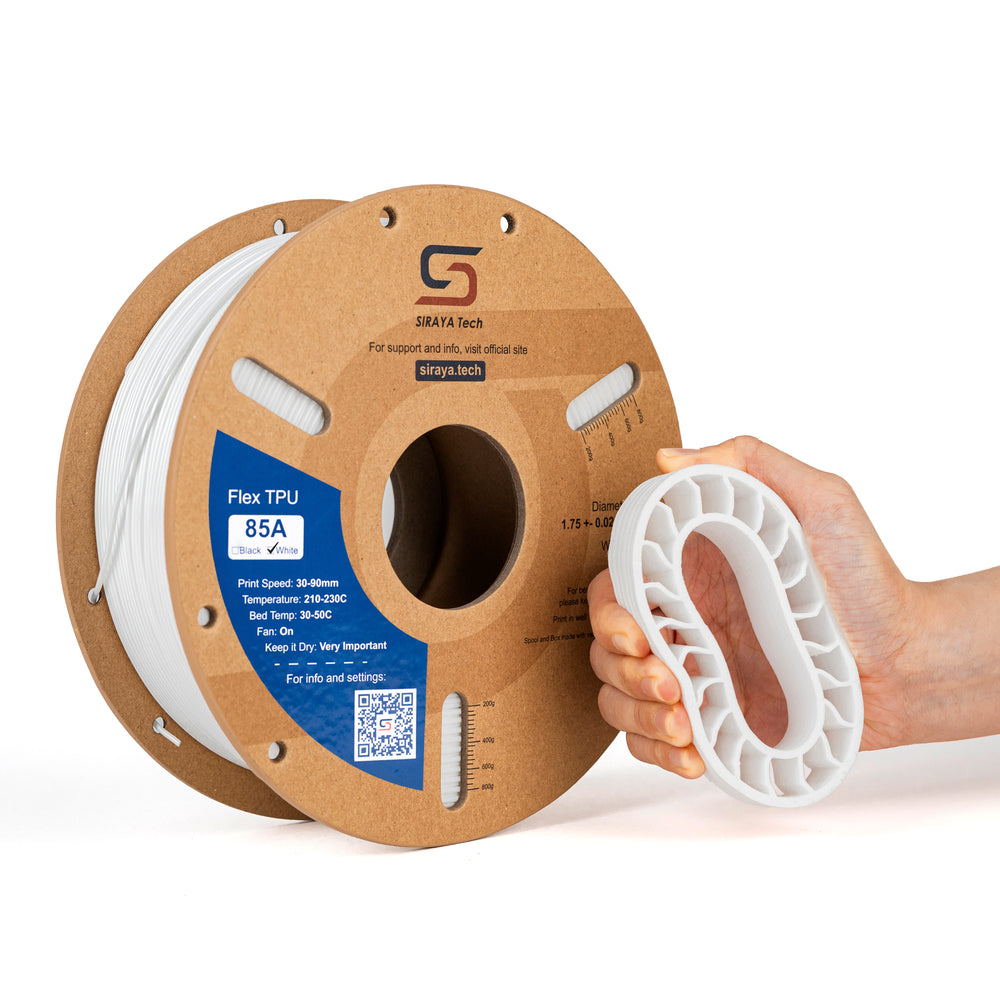


Real-World Applications of AI for 3D Printing
AI is already being used across many industries, and its role keeps expanding as the underlying technology improves.
Industrial Manufacturing
AI helps manufacturers produce lightweight aerospace components, automotive prototypes, and functional tooling. Optimized geometry improves performance while reducing material use.
Medical and Dental Printing
AI supports the creation of custom prosthetics, dental aligners, and surgical planning models. Precision and personalization are the key benefits in this space.
Consumer Products and Small Businesses
Entrepreneurs use AI 3D printing tools to create custom accessories, develop home decor products, and test product ideas quickly.
For mold making and crafting applications, platinum silicone can be used alongside 3D printed masters to produce flexible, high-detail molds.
Limitations of AI for 3D Printing
AI offers many advantages, but it has limits. Understanding these helps you avoid common problems before they cost you a print.
| Limitation | Explanation | Solution |
|---|---|---|
| Over-Complex Geometry | Designs may be hard to print | Simplify before slicing |
| Thin Walls | Weak structural areas | Increase wall thickness |
| STL Errors | Non-manifold or mesh issues | Use repair tools |
| Material Mismatch | Poor strength or warping | Use high quality filament or resin |
Even the best AI-generated design depends on proper material choice. Reinforced filaments such as ABS-GF or PETG-CF provide improved stiffness and durability for functional parts.
Conclusion
AI for 3D printing is changing how products are designed and manufactured. It speeds up model creation, strengthens parts, reduces waste, and makes 3D printing more accessible. From generative design to smart slicing, AI 3D printing tools are helping users achieve better results with less effort.
To get the most from AI-optimized prints, material quality still matters. Explore the rest of the Siraya Tech blog for more guides on AI for 3D printing and other 3D printing topics. For reliable performance, browse Siraya's filaments including reinforced options like PETG-CF and ABS-CF, plus resins such as Tenacious resin and castable resin, and platinum silicone for crafting detailed, durable molds for your projects.
Frequently Asked Questions
What is the best AI software for 3D printing?
The best software depends on your goal. Some programs focus on model generation, while others specialize in generative design or slicing optimization. Beginners often prefer simple model generators, while engineers tend to use advanced CAD platforms.
What is the best free AI tool for 3D printing?
Free AI tools are available for basic model generation and simple optimization. They're useful for learning and small projects, but advanced features often require a paid version.
Is AI the future of 3D printing?
AI is becoming a key part of additive manufacturing. It improves efficiency, reduces errors, and speeds up design. Traditional skills remain important, but AI will continue shaping the future of 3D printing alongside them.
How accurate are AI-generated 3D models for printing?
AI-generated models can be accurate but may need adjustments. Wall thickness and tolerances should always be checked before printing, and testing prints helps confirm final performance.
How is AI used in additive manufacturing?
AI is used for generative design, slicing optimization, and failure detection. It studies data from previous prints to improve future results, which makes production smarter and more consistent over time.
Can AI improve 3D print quality?
Yes, AI improves print quality by optimizing orientation, supports, and layer settings. It can also help reduce failure risks through monitoring systems. Combined with good materials, it leads to cleaner and stronger prints.
Does AI replace 3D designers?
AI supports designers but does not replace them. It speeds up repetitive tasks and suggests improvements, but human creativity and decision-making are still essential to the final result.