
You are scrolling through filaments, looking for that perfect balance of strength and ease of use. You know standard PETG is dependable, but then you see "PETG Pro," "PETG+," or "High Flow PETG." The price is slightly higher, but is it worth it?
Many makers assume "Pro" is just marketing fluff. It isn't. In the world of PETG vs PETG Pro, the difference often comes down to chemistry.
While standard PETG is a workhorse, Pro variants are engineered to solve specific headaches, like slow print speeds and stringing.
In this guide, we will break down the technical differences so you can stop guessing and start printing the right material for your project.
The Quick Takeaways:
- Standard PETG: This is the reliable workhorse. It is perfect for slow, functional prints on older machines. It is tough and chemically resistant but prints slowly and loves to string.
- PETG Pro (High Flow): This is engineered for modern speed. It has a lower viscosity when melted. This means it can flow through the nozzle fast enough to keep up with 300mm/s print speeds without jamming.
- The Core Difference: Standard PETG limits your speed to around 60mm/s. PETG Pro unlocks the full potential of your high-speed printer.
- Recommendation: If you value your time or hate cleaning up stringy prints, buy the Pro. If you are printing simple brackets on a budget, stick to Standard.
Shop PETG Filament
Explore More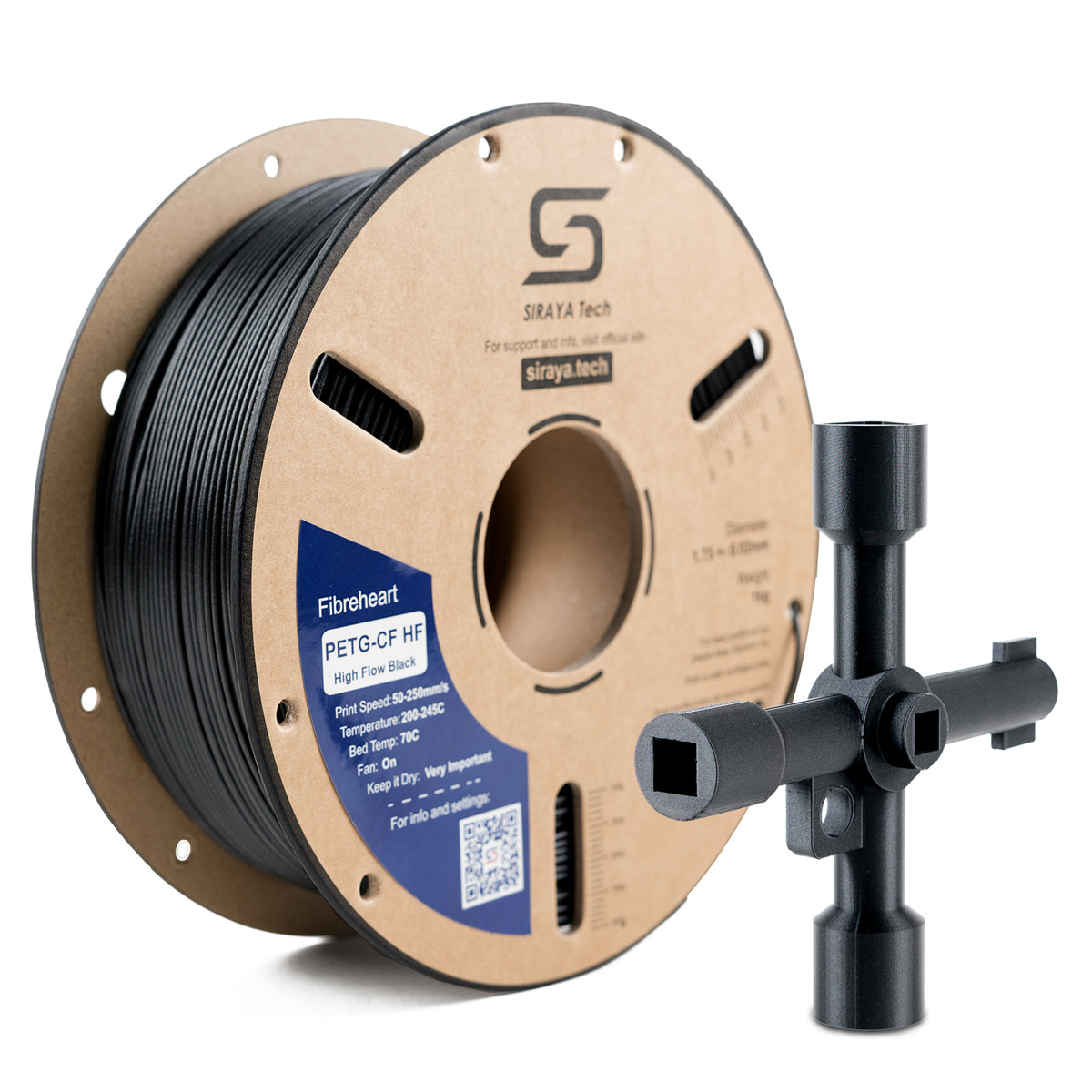

What is Standard PETG?
To understand why we need a "Pro" version, we first need to look at the original. Polyethylene Terephthalate Glycol, or PETG, became the darling of the 3D printing community about ten years ago. Before PETG, we only had two real choices: PLA and ABS.
PLA was easy to print but brittle and melted in a hot car. ABS was strong and heat-resistant, but warped severely and emitted toxic fumes. PETG was the compromise. It offered the heat resistance of ABS with the printability of PLA.
👉 If you are new to the material science behind this, check out our guide on what is PETG filament for a full history.
However, standard PETG has flaws. It is naturally very sticky. It loves to adhere to the nozzle, creating blobs that ruin prints. It is also "viscous," meaning it is thick and gooey when melted.
This makes it hard to push through a nozzle quickly. If you try to print standard PETG too fast, the extruder gear will slip because the plastic cannot melt fast enough. This results in weak, under-extruded layers.
What is PETG Pro?
"PETG Pro" is a category of enhanced filaments rather than a single specific formula. Every manufacturer has a slightly different recipe, but they all aim to address the speed and stringing issues of the standard material.
Engineers achieve this by adding "modifiers" to the raw plastic resin. These are chemical additives that change how the polymer chains interact.
1. Viscosity Modifiers (The Speed Factor)
Imagine trying to drink a milkshake through a straw. That is standard PETG. Now imagine drinking water through the same straw. That is PETG Pro.
Lowering viscosity allows the plastic to flow with less resistance. This allows your printer to push more plastic in less time. You will often see this sold as high-flow filament.
2. Impact Modifiers (The Toughness Factor)
Standard PETG is tough, but it can shatter under sudden impact. Some Pro variants add a rubber-like compound to the mix.
This allows the material to absorb shocks better, making it ideal for drone parts or RC car bumpers that crash often.
3. Crystallization Promoters
One of the biggest issues with standard PETG is cooling. It stays hot and gooey for a long time. If you try to print a bridge or an overhang, the plastic droops before it hardens.
PETG Pro is often formulated to crystallize (harden) faster once the cooling fan hits it. This leads to cleaner overhangs and sharper details.
Head-to-Head: PETG Vs PETG Pro
Let's look at the hard data. We compared standard generic PETG against high-performance Pro variants in a controlled test.
|
Feature |
Standard PETG |
PETG Pro / High Flow |
Winner |
|
Volumetric Flow |
10 - 15 mm³/s |
20 - 30+ mm³/s |
PETG Pro |
|
Max Print Speed |
40 - 60 mm/s |
150 - 400 mm/s |
PETG Pro |
|
Stringing |
High (Requires tuning) |
Low (Cleaner retraction) |
PETG Pro |
|
Price per KG |
$15 - $20 |
$22 - $35 |
Standard |
|
Heat Deflection |
~70°C |
~70°C - 75°C |
Tie
|
Performance: PETG Vs PETG Pro
1. The Need for Speed
This is the most critical difference. If you own a modern CoreXY printer like a Bambu Lab X1, P1P, or a Voron, standard PETG will act like a speed limiter on a Ferrari.
These machines are designed to operate at speeds of 300 mm/s or higher. Standard PETG physically cannot melt fast enough to keep up.
If you try to force standard PETG to print at 300 mm/s, you will get "matte"- looking prints.
This is because the plastic is not fully melted, leading to incredibly weak layer adhesion. PETG Pro maintains its strength even at high velocities.
👉 For a detailed look at high-speed materials, read our comparison of PETG HF vs CF.
2. The Stringing Nightmare
We have all seen it. You finish a PETG print, and it looks like it is covered in spiderwebs. This is stringing. It happens because standard PETG is viscous and sticky. When the nozzle moves to a new location, the plastic stretches out like melted cheese on a pizza slice.
PETG Pro fixes this with its lower viscosity. When the printer "retracts" (pulls the filament back), the plastic breaks cleanly instead of stretching. This results in prints that need almost no post-processing with a heat gun or clippers.
3. Stiffness vs Flexibility
Standard PETG is known for being slightly flexible. It will bend quite a bit before it breaks. This is great for snap-fit connectors. However, sometimes you want a part to be rigid and stiff.
Many Pro variants are formulated to be stiffer than the standard resin. This brings them closer to the performance of composites.
If you find that even PETG Pro is too flexible for your engineering needs, you should look into fiber-reinforced options.
👉 Check out our guide on PET-CF vs PETG-CF to see how carbon fiber changes the game.
4. Environmental Durability
Both standard and Pro versions are excellent for outdoor use. They resist UV light (sunlight) and rain much better than PLA. If you print a flower pot or a car mount, both will survive a hot summer without melting.
However, there is a catch. Both materials are hygroscopic. This means they absorb moisture from the humidity in the air. A wet spool is the number one cause of print failures for both Standard and Pro PETG.
If you hear popping noises while printing, your filament is wet. Regardless of which version you buy, knowing how to dry PETG is mandatory for success.
Which One Should You Buy?
Still not sure? Let's look at three common scenarios to see which filament fits your specific needs.
Scenario A: The Production Farm
You run a business selling 3D printed wall mounts. You have 10 printers running 24/7.
✨ Verdict: Buy PETG Pro.
Why? Time is money. If PETG Pro allows you to print a mount in 2 hours instead of 4 hours, you have effectively doubled your production capacity without buying more printers. The extra cost of the filament is negligible compared to the increased output.
Scenario B: The Weekend Hobbyist
You have an older Ender 3 or Prusa MK3. You print for fun on the weekends, mostly brackets and toys.
✨ Verdict: Buy Standard PETG.
Why? Your printer likely has a maximum speed of around 60mm/s to 80mm/s. You cannot physically use the speed benefits of PETG Pro.
You would be paying extra for performance your machine cannot use. Save the money and buy more colors of standard filament.
Scenario C: The Cosplayer
You are printing a large helmet or armor pieces.
✨ Verdict: Buy PETG Pro.
Why? Large prints take forever. A helmet can take 3 days to print in standard PETG. With a high-flow Pro variant, you might reduce it to 1.5 days. Plus, the reduced stringing means less time sanding the prop later.
👉 For more on cosplay materials, see our list of the best PETG filaments.
Tips for Printing PETG Pro
Even though it is "Pro," it still follows the basic rules of PETG. Here are a few settings to tune for the best results.
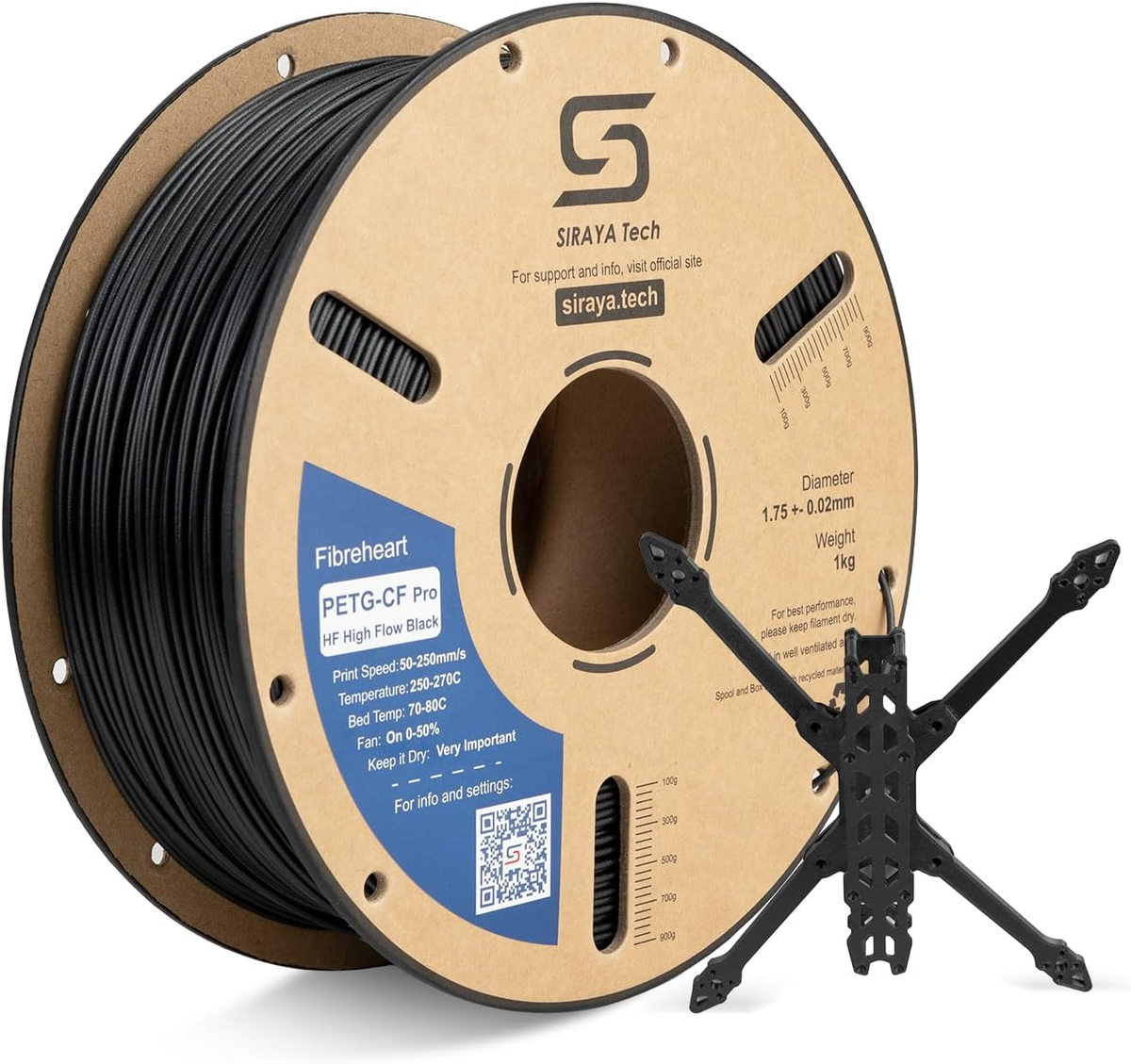
- Temperature: You usually need to run Pro hotter than standard. While standard prints at 230°C, Pro often likes 240°C to 260°C to ensure it melts fast enough for high speeds.
- Cooling Fan: With standard PETG, we often keep the fan low (30%) to help layer adhesion. With Pro, because you are printing faster, you need more cooling. Bump the fan up to 50% or even 80% for fast layers.
- Build Plate: Both types love a textured PEI sheet. They release easily when cool. Do not print on smooth glass without glue stick, or chunks of glass might rip out with the print.
👉 If you are looking for other material options beyond PETG, check out our comprehensive guide to 3d filament types.
Conclusion
The battle of PETG vs PETG Pro reflects the rapid evolution of the 3D printing industry. A few years ago, simply getting a print to finish was a success. Now, we demand prints that are fast, clean, and mechanically robust.
While standard PETG remains a fantastic, economical choice for basic projects, PETG Pro represents the future. It solves the biggest complaints users have had for years—the slow speeds and the messy stringing. It transforms a "finicky" material into a reliable, high-performance daily driver.
So, the next time you are restocking your filament shelf, ask yourself: How much is my time worth? If saving hours on a print and avoiding post-processing cleanup is valuable to you, then the Pro spool is worth every penny.
Ready to print faster and cleaner?
Shop High-Performance PETGFAQs About PETG Vs PETG Pro
Is PETG Pro stronger than PLA+?
Generally, yes. While PLA+ is rigid, it is brittle. If you bend PLA+, it snaps. PETG Pro is ductile. It will bend, stretch, and deform before it finally breaks. This makes it much better for mechanical parts that take abuse or vibrations. For a full breakdown, see our article on PETG vs PLA.
Does PETG Pro need a hardened nozzle?
Usually, no. Unless the "Pro" version explicitly states it contains Carbon Fiber (CF) or Glass Fiber (GF), it is non-abrasive. You can safely print it with your standard brass nozzle. However, if you upgrade to abrasive composites later, you will need a hardened steel nozzle.
Can I print PETG Pro on a stock Ender 3?
Yes, absolutely. It is compatible with almost any printer that has a heated bed. You won't get the extreme speed benefits because the Ender 3 motion system is slower, but you will still benefit from the reduced stringing and better layer consistency.
What happens if I print PETG Pro too cold?
If you print it too cold, the layers won't bond together. You might find that your print looks okay, but it crumbles apart in your hands. This is called delamination. Always print a "temperature tower" when you get a new spool to find the perfect heat setting.
Is PETG Pro food safe?
Raw PETG is often food safe, but the process of 3D printing is not. The tiny layer lines trap bacteria that cannot be washed out. Furthermore, we don't know what additives are in the "Pro" formula. Unless the specific spool is certified FDA food safe, do not use it for contact with food.