
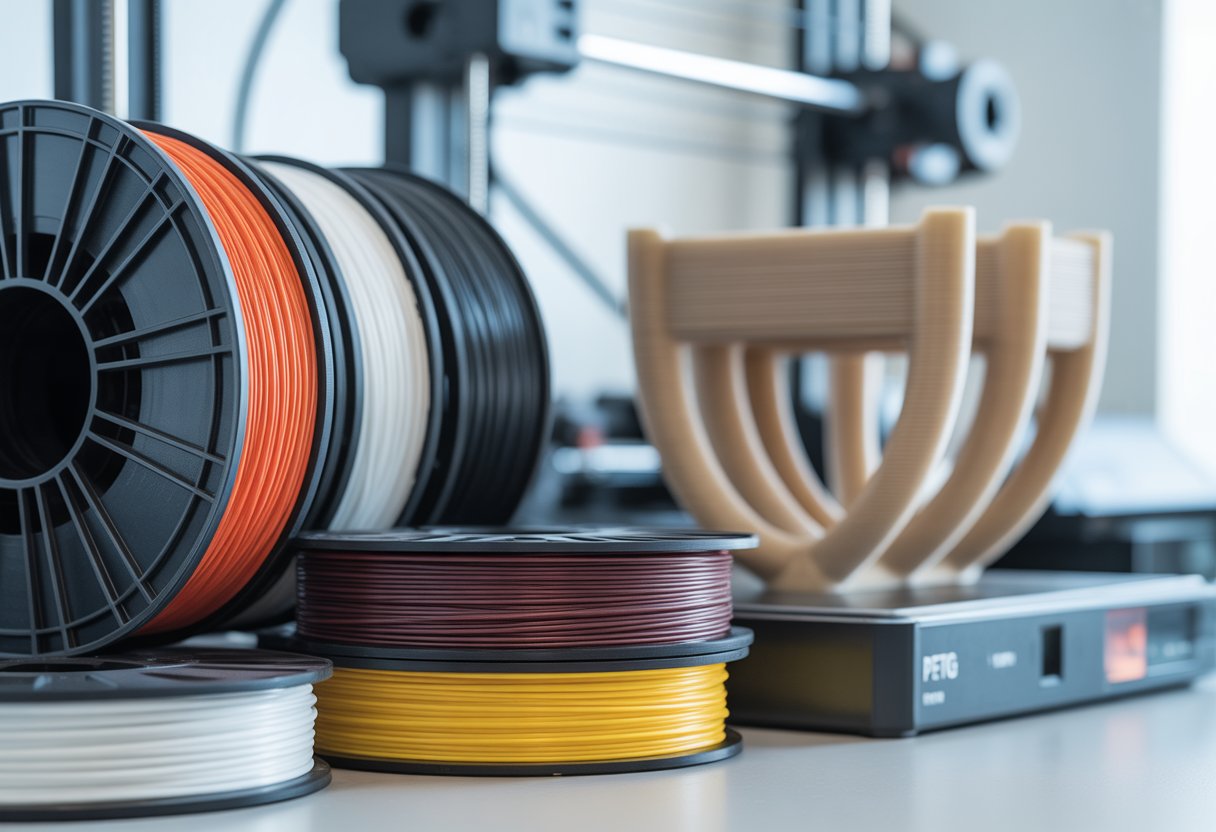
Picking the best filament for structural parts can make or break your 3D printing project.
For strong structural parts, nylon, PETG, and carbon fiber composites offer the best mix of strength, durability, and impact resistance. These materials handle stress better than basic filaments like PLA and work well for parts that need to support weight or handle tough conditions.
The right filament depends on your part's needs. Will it face high heat? Does it need to flex without breaking? How much weight will it carry? Answering these questions helps you pick a material that fits your needs without overspending.
You don't need to be an expert to choose strong filament. Read on to learn which materials work best for different structural applications and how to get the strongest prints from your 3D printer.
Key Takeaways
- Nylon, PETG, and carbon fiber composites are top choices for strong structural parts
- Match your filament choice to your part's specific requirements like heat resistance and load-bearing needs
- Proper printer settings are just as important as choosing the right material for maximum strength
Siraya offers a complete range of reliable 3D printer filaments engineered for strength and consistent performance. Browse our 3D Printer Filament collection to find the perfect material for your next build.
What Makes a Filament Ideal for Structural Parts

Good structural filaments need to be strong enough to hold weight without breaking. They also need to stick together well between layers and resist heat or chemicals that might weaken them over time.
Understanding Strength and Mechanical Properties
When picking a filament for structural parts, strength is key. Tensile strength tells you how much pulling force a part can handle before it breaks. But that's not the whole story.
Impact resistance measures how well your part can take a sudden hit without cracking. Nylon and carbon fiber filaments usually perform well here because they can bend a little before breaking.
Stiffness matters too. A stiff material won't flex much under pressure, which is important for parts like brackets or mounts that need to stay rigid.
The strength-to-weight ratio shows how much strength you get without adding extra weight. Carbon fiber composites are strong and lightweight.
Impact strength tells you if your part will survive drops or vibrations. Parts like protective cases or tool handles need high impact strength.
Layer Adhesion and Printability
Layer adhesion is how well each layer of filament sticks to the one below it. Weak layer bonding is a common reason structural parts fail. When layers don't stick well, your part can split apart along those lines.
PETG gives you excellent layer bonding right out of the box. It melts at lower temps than some engineering filaments but still creates strong connections.
Printability affects whether you can make the part you designed. Some strong filaments are hard to print and may need special equipment or settings.
Bed adhesion keeps your first layer stuck to the print bed. Without it, your part can lift or move during printing, ruining the print.
Thermal and Chemical Resistance
Heat resistance determines the highest temperature your part can handle before it gets soft or loses its shape. Standard PLA starts to weaken around 140°F, which is too low for many uses.
Nylon filaments can typically handle temps up to 180-200°F. For even hotter applications, materials like polycarbonate resist heat up to 240°F or higher.
Chemical resistance protects your parts from oils, solvents, and cleaning products. Nylon offers good chemical resistance for most common substances.
Dimensional Stability and Warping
Dimensional stability means your part keeps its exact size and shape after printing. Parts that shrink or change shape won't fit where they're supposed to go.
Warping happens when different parts of your print cool at different speeds. The edges curl up and the part loses its flat shape. This is a big problem for structural parts that need to fit precisely.
Carbon fiber filaments usually have better dimensional stability than pure plastics. The carbon fibers act like tiny reinforcement bars that help prevent shrinking.
Temperature control during printing helps prevent warping. Using an enclosed printer or heated chamber keeps the whole part at a steady temperature as it cools down.
Our strong filament collection features high-performance options that deliver exceptional layer bonding and impact resistance for structural applications.
Top Filament Types for Structural Applications

Different filament types offer varying levels of strength, heat resistance, and durability for structural parts. Carbon fiber composites, nylon materials, and engineering plastics like PETG and ABS each bring specific benefits depending on your project needs.
PLA and Enhanced PLA (PLA+ and Carbon Fiber PLA)
Standard PLA filament is easy to print but isn't ideal for structural parts that need to handle stress or heat. It's stiff but can break under impact.
PLA+ filament improves on regular PLA with better layer adhesion and impact resistance. Brands like eSun PLA+ offer stronger parts than basic PLA while keeping the same easy printing. You'll get better durability without dealing with warping or complicated settings.
Carbon fiber PLA adds chopped carbon fibers to the mix. This makes parts much stiffer and stronger than regular PLA.
The carbon fibers help the material resist bending. You'll need a hardened nozzle since the fibers wear down brass quickly.
These PLA types work well for lightweight structural parts that won't see extreme temperatures. They stay easy to print. Just remember that PLA softens around 140°F, so it's not good for hot environments or parts under constant load.
Also read: Best Carbon Fiber Filament: Buyer's Guide
PETG and PETG Composites

Peopoly Lancer PETG-CF HF Filament - Manufactured by Siraya Tec
PETG filament balances strength, flexibility, and ease of use. It's tougher than PLA and can handle more impact without cracking.
This material resists chemicals and moisture well. Parts can handle outdoor use and exposure to oils or cleaners. PETG also tolerates heat up to about 170°F before softening.
Carbon fiber PETG adds stiffness and strength while keeping PETG's toughness. The carbon fibers reduce flexibility but increase the material's ability to support weight. You'll get parts that bend less under load.
PETG prints at around 450-480°F with a heated bed at 160-180°F. It doesn't warp as much as ABS but can be stringy. You might need to adjust retraction settings to get clean prints.
This material works well for brackets, enclosures, and parts that need to flex slightly without breaking. It's a practical choice for functional structural parts.
ABS, ASA, and Blends
ABS filament (acrylonitrile butadiene styrene) offers good strength and heat resistance up to around 200°F. It's tougher than PLA and can handle impacts better.
ABS needs higher temperatures to print, usually around 460-480°F. You'll also need a heated bed at 200-230°F and an enclosed printer to prevent warping. The fumes can be strong, so good ventilation matters.
ASA filament is similar to ABS but handles UV light and weather much better. Materials like Polymaker ASA won't fade or become brittle in sunlight. This makes ASA good for outdoor structural parts.
ASA prints at similar temperatures to ABS and also needs an enclosure. The layer adhesion is strong, creating durable parts.
PC-ABS blends combine polycarbonate's strength with ABS's printability. You get tougher parts that can handle more stress. These blends work well when you need extra durability but don't want to deal with pure polycarbonate's printing challenges.
All these materials create strong structural parts that can handle heat and impacts. They're harder to print than PLA or PETG but offer better performance for demanding applications.
Also read: ASA vs PLA: Which 3D Printing Filament Should You Choose?
Nylon and Nylon Composites

Fibreheart Rebound PEBA 95A Black Elastic filament
Nylon filament (polyamide) is one of the strongest and most durable options. This material flexes without breaking and has excellent layer adhesion.
PA6 and PA12 are the most common types. PA6 is stronger and stiffer, while PA12 is easier to print and absorbs less moisture. Both types create tough parts that resist wear and fatigue.
Nylon absorbs moisture from the air, which causes printing problems. You need to dry it before use and store it properly. An enclosure helps with printing since nylon can warp.
Carbon fiber nylon combines nylon's toughness with carbon fiber's stiffness. The result is extremely strong parts that don't flex as much as regular nylon. These composite filaments are among the strongest you can print.
Glass fiber nylon is another option that adds strength and reduces warping. Both composites need hardened nozzles.
Nylon prints at high temperatures, usually 480-520°F, with a heated bed around 160-190°F. The material bonds to itself very well, creating parts that won't separate at the layers.
Use nylon for gears, hinges, brackets, and any structural part that needs to handle repeated stress or impact. It's the go-to choice when you need maximum durability and strength in a 3D printed part.
Flexible structural parts require specialized materials. By reading our easy guide What Is TPU Filament: An Easy Guide For Smart 3D Printing, you'll understand when flexible filaments make the best choice for impact-resistant structural designs.
High-Performance Engineering Filaments

When you need parts that can handle serious heat and stress, polycarbonate and PEEK filaments deliver the performance that standard materials can't match. These engineering filaments work best for frames, machine parts, and other high-stress applications where failure isn't an option.
Polycarbonate: Strength and Heat Resistance
Polycarbonate is one of the strongest 3D printer filaments for structural parts. It handles impacts well without cracking or breaking. You can use it for parts that need to bend without snapping.
This material stands up to heat better than most filaments. It won't soften or warp until temps reach around 240°F. That makes it suitable for parts near engines or heated areas.
Your printed parts will stay tough in cold weather too. PC doesn't get brittle when temps drop. It keeps its strength whether you're building outdoor frames or protective cases.
Common uses include:
- Machine guards and protective covers
- Frames for tools and equipment
- Parts that get hit or dropped often
- Items exposed to hot or cold temps
You'll need a printer with a heated bed and enclosed chamber to print PC well. The material requires higher printing temps around 260-290°C.
PEEK and Advanced Polymers for Specialized Use
PEEK is a heat-resistant filament that outperforms most others. It handles temperatures up to 480°F without losing strength, making it ideal for aerospace, medical, and industrial parts.
These advanced polymers cost more than regular filaments but deliver results close to machined metal. Your parts will resist chemicals, wear, and extreme conditions.
PEEK needs special equipment. You'll need a printer that reaches 360-400°C and a chamber heated to 212°F. Most hobby printers can't meet these requirements.
Other options like PPS-CF and PPSU offer similar benefits at lower costs. They work well when you need chemical resistance or parts that stay strong in high heat.
Structural parts often face challenging temperature conditions. If your builds need to withstand heat without losing strength, explore our Heat Resistant Filament collection for materials that maintain performance under thermal stress.
Choosing the Right Filament for Your Application
Choosing the right 3D printing filament depends on what your part needs to do, where it will be used, and your budget. Match the material's features to your project's needs.
Matching Material Properties to Part Requirements
Different structural parts need different filament features. If you're making frames or brackets that hold weight, use filaments with high tensile strength like nylon or polycarbonate.
For functional prototypes that need to flex, consider TPU or flexible filaments. PETG or ABS work well for parts that stay in place and hold things steady.
Common Part Types and Best Filaments:
- Load-bearing brackets - Nylon, polycarbonate, carbon fiber filled
- Flexible joints - TPU, TPE
- Fixed mounts - PETG, ABS, ASA
- Moving parts - Nylon, PETG (low friction)
Think about how your part might fail. Will it crack, bend too much, or wear down? Pick a filament that matches these challenges.
Environmental and Mechanical Considerations
Where your part is used matters. Heat can break down some filaments quickly. PLA gets soft around 60°C, so it fails in hot cars or near motors. ABS and ASA handle heat better, staying strong up to 100°C.
Outdoor parts need UV protection. Regular PLA becomes brittle in sunlight after a few months. ASA is made for outdoor use and won't break down. PETG has moderate UV resistance.
Water affects 3D printing filaments too. Nylon absorbs moisture and gets weaker over time. PETG and ASA resist water better. If your parts get wet often, avoid nylon unless you seal it.
Cold weather can make some materials brittle. ABS can crack in freezing temperatures, while PETG stays tough even in the cold.
Balancing Cost, Printability, and Performance
Budget is important when picking filament. PLA is the cheapest and easiest to print, but it's weak for structural parts. PETG costs a bit more and offers much better strength.
High-performance filaments like polycarbonate or carbon fiber cost more than PLA and need a printer that can reach at least 260°C. The printer bed also needs to reach 100°C or more.
Some filaments need a closed printer box or special settings, which adds time and effort. For frequent functional prototypes, choose a filament that prints reliably.
Cost vs Performance Quick Guide:
|
Filament |
Price |
Print Difficulty |
Strength |
|
PLA |
$ |
Easy |
Low |
|
PETG |
$ |
Medium |
Medium-High |
|
ABS/ASA |
$ |
Medium-Hard |
High |
|
Nylon |
$$ |
Hard |
Very High |
|
Polycarbonate |
$$ |
Very Hard |
Highest |
If you need many parts, spending more on tougher filament can make sense because your parts will last longer and perform better.
Two of the most popular filaments serve very different purposes. Discover which one works better for structural applications by checking out our comparison PETG vs PLA: Which Filament Is Best for 3D Printing? to understand their strength differences.
Printer Setup and Tips for Strong Structural Prints
Getting strong prints from structural filaments requires the right hardware and settings. A hardened steel nozzle is needed for abrasive materials, and proper heating and bed prep prevent warping.
Nozzle Types and Upgrades for Abrasive Filaments
Standard brass nozzles wear out quickly when printing carbon fiber or glass-filled filaments. These materials act like sandpaper and can ruin a brass nozzle after a few prints.
A hardened steel nozzle lasts much longer with tough filaments. Steel nozzles cost more than brass ones, but they're worth it if you print structural parts often.
Check your extruder type. A direct drive extruder works better than a Bowden setup for strong filaments, giving you more control and handling flexible or high-strength materials more easily.
Some printers need upgrades to handle tough filaments. Make sure your printer can reach the high temperatures these materials need. Polycarbonate and nylon often require nozzle temps above 250°C.
Heated Beds, Enclosures, and Bed Adhesion
Strong filaments need good bed adhesion or your prints will warp. A heated print bed is essential for most structural materials. The bed temperature depends on your filament.
Nylon works best at 70-90°C bed temps. Polycarbonate needs higher temps, around 100-120°C. ABS and ASA also need hot beds to prevent corners from lifting.
An enclosed printer or heated build chamber keeps the air around your print warm and stable. This stops warping and helps with layer adhesion.
You can add a simple enclosure to most printers with acrylic panels or foam boards. Even a basic box improves print quality with engineering materials.
Use adhesion helpers like glue stick, hairspray, or PEI sheets. Clean your bed with isopropyl alcohol before each print. Store your filament in a filament dryer or dry box since moisture weakens structural parts.
Optimizing Print Settings for Maximum Strength
Your slicer settings affect how strong your part will be. Print speed should be slower for structural parts, usually 30-50 mm/s. Faster speeds can create weak spots between layers.
Nozzle temperature affects layer bonding. Set it at the higher end of your filament's recommended range. Hotter temps help layers fuse together better but avoid going so high that the material burns.
Layer height matters for strength. Use 0.2mm or smaller layers for better adhesion between layers. Thicker layers print faster but create weaker parts.
Set your infill to at least 50% for structural parts. Use patterns like gyroid or honeycomb that spread force evenly. For maximum strength, print at 100% infill or use more wall lines.
Add 4-6 wall lines (perimeters) to make the outside shell stronger. The walls carry most of the load in functional parts. Turn off cooling fans or set them low for materials like ABS and nylon.
Understanding different material properties helps you make smarter choices. Read our article What is ABS Filament? Uses, Pros, and Cons for 3D Printing, to learn when ABS makes sense for your structural projects and how it compares to other options.
Wrap Up
Strong structural parts require the right material for the job. Nylon, PETG, carbon fiber composites, and polycarbonate each offer unique advantages for different applications. Match your filament choice to your part's specific requirements—heat resistance, flexibility, impact strength, or load-bearing capacity. Don't forget that proper printer settings matter just as much as material selection for maximum strength.
Ready to upgrade your structural prints? Siraya delivers engineering-grade filaments with tight tolerances and consistent performance. Our Strong 3D Printer Filament collection and Carbon Fiber Filament options provide the strength and reliability your projects demand. Try Siraya for your next structural build.
Choosing between dozens of materials can feel overwhelming. Learn the differences between each option by exploring our detailed guide 3D Filament Types: Complete Guide for Every 3D Project to match the right material to your specific structural requirements.
Frequently Asked Questions
What's the strongest type of 3D printing material for load-bearing parts?
Polycarbonate (PC) is the strongest for load-bearing parts. It can handle a lot of force before breaking and works well for parts that hold heavy weights.
Nylon is a close second with excellent impact resistance. It bends instead of snapping, making it ideal for parts that get hit or vibrate often.
Carbon fiber nylon combines strength and lightness. It's lighter than regular nylon but just as strong and resists bending under heavy loads.
Anybody tried using carbon-fiber infused filaments for heavy-duty applications?
Carbon fiber filaments work well for heavy-duty projects. The carbon fibers make the plastic stiffer and stronger without adding much weight.
You'll need a hardened steel nozzle because carbon fibers wear down brass nozzles quickly.
Most people use carbon fiber PETG or carbon fiber nylon for strong parts like brackets, mounts, and tool parts. They print easier than pure polycarbonate and still offer great strength.
Got a project that needs some tough parts; which filament should I be looking at?
ASA is a good choice for tough outdoor parts. It handles UV light and weather changes without becoming brittle or weak.
PETG offers good toughness for indoor projects at a lower price. It's stronger than PLA and doesn't need a heated enclosure like ABS.
For parts that take a lot of stress, use nylon or TPU. Nylon handles repeated stress without cracking, while TPU bends and bounces back for flexible tough parts.
Hey, looking for temperature resistant filaments that can take some stress, any suggestions?
Polycarbonate handles heat up to 240°F before it gets soft. It's the best option for parts near engines or hot equipment.
ASA works well up to about 200°F and also resists UV damage, making it perfect for outdoor parts that get hot in the sun.
PETG-CF (carbon fiber reinforced PETG) offers decent heat resistance up to 180°F while staying strong under stress. It costs less than polycarbonate but still handles most high-temperature jobs.
Can anyone share their experience with durable filaments that don't cost an arm and a leg?
PETG gives you solid durability at a reasonable price. It costs about the same as ABS but prints easier and works better for structural parts.
ASA filament offers great outdoor durability for just a bit more than PETG. Good brands are available for around $20-25 per kilogram.
Some budget nylon blends work well for tough parts. They're not as strong as premium nylons, but they cost much less and still outperform regular plastics.
What's the best bang for your buck when you need a filament that's tough as nails?
PETG is affordable, easy to print, and strong enough for most working parts that aren't exposed to extreme conditions.
Polymaker ASA costs more but lasts much longer outdoors, so you won't need to replace parts as often.
Carbon fiber PETG costs more than regular PETG, but it produces stiffer parts that can handle higher loads without thicker walls.