
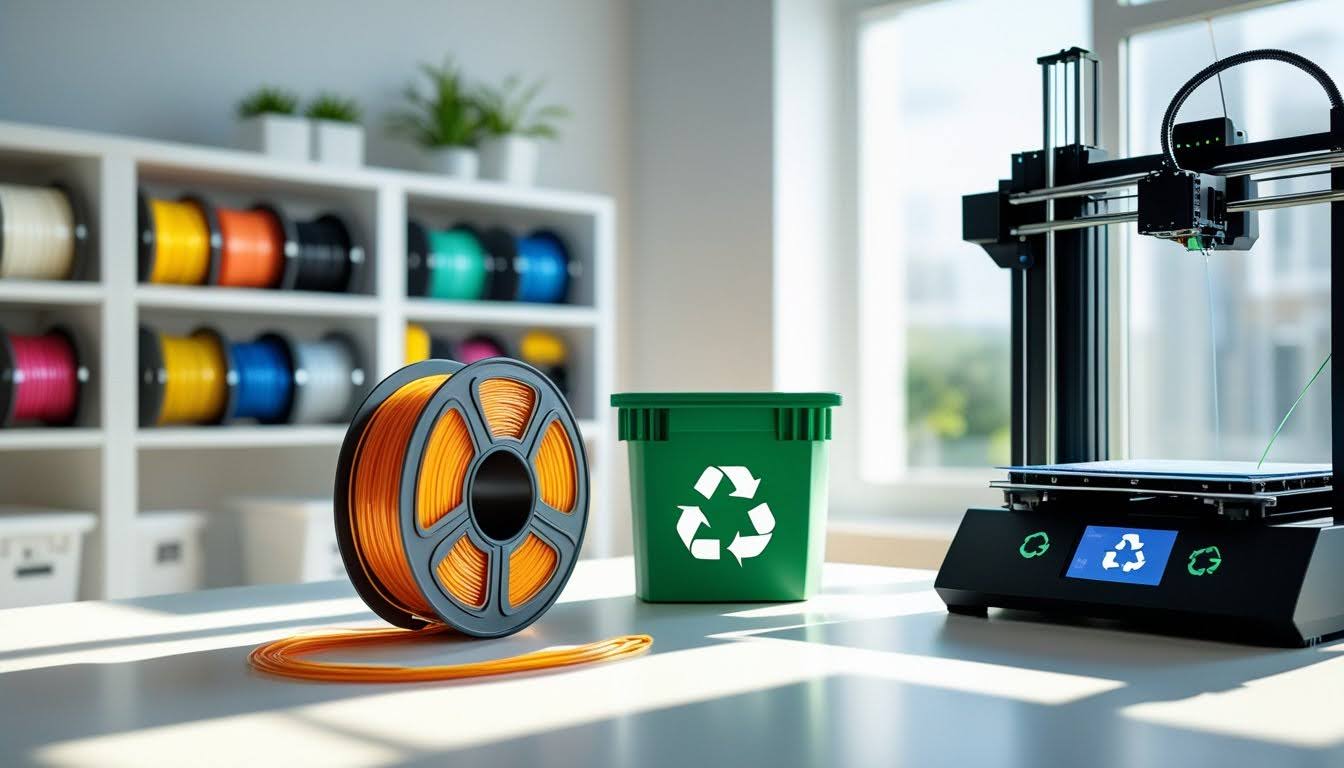
Can you recycle 3D printer filament? Yes, but the process depends on filament type, available equipment, and local recycling options. PLA and PETG are recyclable, though most curbside programs don't accept 3D printing waste.
Recycling filament at home requires specialized equipment like filament extruders, which grind failed prints into pellets and reform them into usable filament. Industrial recycling services offer more practical alternatives for most users, accepting various filament types through mail-in programs.
This guide explains which filaments you can recycle, realistic home and industrial recycling methods, and practical ways to reduce waste before it happens.
Browse our 3D printer filament collection for precision-manufactured materials with enhanced packaging.
Understanding 3D Printer Filament Recycling

Most 3D printing filaments can be recycled, but the details depend on the plastic and whether you’re using home gear or sending it out. Each material melts at its own temperature, and mixing types just ruins the batch. You’ve got to keep things sorted if you want usable filament.
Which Filament Types Can Be Recycled
PLA, ABS, PETG, and nylon are the usual suspects for recycling in 3D printing. Each has its quirks—different melting points, different recycling results.
PLA’s the easiest if you’re recycling at home. It melts at lower temps and doesn’t stink up your workspace. But don’t buy the “biodegradable” hype—PLA only breaks down in industrial composters, not your backyard bin.
ABS and PETG need more heat to recycle. ABS smells when you melt it, so crack a window or use a vent. PETG soaks up moisture, so you have to dry it out or you’ll end up with bubbly, weak filament.
TPU and other flexible filaments don’t play nice with most home extruders—they jam up, or just don’t flow right. Nylon’s tricky too, thanks to how much water it absorbs and its fussy temperature demands.
Never mix different filament types. If you toss PLA and ABS together, you’ll get a mess—different melting points, different chemistry, and the result just doesn’t print well.
| Filament Type | Resin Code | Recyclability Level | Recommended Method |
|---|---|---|---|
| PLA | 7 (Other) | Moderate | Industrial Composting / Specialized Service |
| PETG | 1 (PET) | Low (Modified) | Dedicated 3D Recycling Programs |
| ABS | 7 (Other) | High | Mechanical Shredding & Re-extrusion |
| TPU | 7 (Other) | Difficult | Reuse as stuffing or soft padding |
How to Recycle 3D Printer Filament at Home (DIY)
For the dedicated maker, the most direct way to recycle 3d printer filament is to create a closed-loop system in your own studio. This typically involves three main hardware components:
1. Plastic Shredders
Before plastic can be reused, it must be broken down into uniform pieces. Manual or motorized plastic shredders take your failed prints and support rafts and turn them into small plastic flakes. This increases the surface area for even melting during the next stage.
2. Filament Extruders
Machines like the Filastruder or the DevoWorm take shredded flakes and melt them through a heated nozzle. This "re-extruded" plastic is then wound onto a spool.
Note that recycled filament often loses some tensile strength, so it is best used for non-structural parts or "draft" quality prints.
3. Maintaining Purity
When you attempt to recycle 3d printer filament at home, purity is everything. Even a small amount of PETG mixed into a batch of PLA can cause massive clogging issues in your printer’s hotend due to the vastly different melting points of the two materials.
How to Recycle Failed Prints and Waste Filament

When you’re ready to do something with your pile of failed prints, you’ve got three main routes: set up a home recycling system, use a local program at a makerspace or workshop, or ship your waste to a mail-in service. Each has its own costs, time commitment, and results.
Using a Filament Extruder at Home
If you want to recycle at home, you’ll need a filament extruder setup. That means a shredder to chop up old prints, an extruder to melt and reform the plastic, and a spooler to wind it up. It’s not plug-and-play—you’ll have to tinker.
Popular gear includes the Filabot system, or you can build something with plans like the Precious Plastic Shredder. Expect to spend anywhere from $500 to $3,000 depending on whether you DIY or buy.
Here’s the basic process: shred your prints into pieces under 5mm, dry them to get rid of moisture, feed them into the extruder, and spool the new filament. Keep everything sorted by material—mixing PLA, ABS, and PETG just doesn’t work.
The downsides? You’ll get some variation in filament diameter, risk contamination if colors or materials mix, and it takes time to dial everything in. Most people blend recycled with new filament for better results. And yeah, you’ll need space and patience to mess with it.
Local Recycling Programs That Accept Filament
Lots of makerspaces and workshops now take 3D printer waste. They usually have better recycling machines than you’ll find at home, so the filament quality ends up higher. Bring in your failed prints, support material, or purge waste—but keep it sorted by plastic type.
Check your local makerspace, university engineering labs, or maker groups. Some programs are free, others charge a small fee, or you might trade waste for recycled filament.
Some libraries with 3D printers collect waste too. Call ahead to see what they’ll take and how they want it sorted. Usually, they only want clean, single-material prints—no metal inserts or mixed plastics.
Mail-In Recycling Services for 3D Printing Waste
Some companies let you mail in your waste for pro recycling. You fill up a box with failed prints, ship it off, and get credit toward recycled filament—or just the satisfaction of recycling responsibly.
Filamentive’s PLA Recycle Scheme, for example, sends you a free box and picks it up when it’s full. You don’t pay for the service, and you can buy their recycled filament made from post-consumer waste.
Other options include TerraCycle and a few niche 3D printing recyclers. Most want PLA, PETG, and ABS, sorted by type. Pull out anything that’s not plastic—magnets, metal, whatever—before shipping.
Mail-in services make sense if you’re a business or print a lot—enough that shipping is worth it. The best part? You get pro-quality recycling without having to mess with machines or learn all the technical stuff.
Ready to explore flexible materials? Our soft 3D printer filament collection offers TPU and elastomers for specialized applications.
Reducing Filament Waste in Your Printing
Tweaking your print settings, reusing material, and picking recyclable filaments can cut your waste by a third or more. These steps help you avoid failed prints and make better use of leftovers.
Print Settings That Minimize Failed Prints
Start by dialing in your bed adhesion. Prints that don’t stick just waste filament and your time. Clean the bed before each job and set the bed temp for your specific material.
PLA likes 190-220°C and a bed around 50-60°C. ABS needs 220-250°C and a 100-110°C bed. PETG sits at 220-250°C with a 70-80°C bed.
Skip supports unless you really need them. Often, you can orient parts so they print fine without supports. When you do use them, set them to easy-remove and go light on infill—5-10% usually does it.
Store filament somewhere dry, or use a filament dryer. Moisture ruins prints—think bubbles, weak layers, and failed jobs. A basic dry box with silica gel keeps your PLA filament and others ready to go.
Reusing Support Material and Print Scraps
Keep your failed prints and support waste in separate bins by material. Don’t mix types—each melts differently, and mixing just makes recycling harder.
PLA scraps require industrial composting facilities to break down—do not add to home compost bins. Home filament recyclers can shred and melt old prints into something new, or send PLA waste to specialized recycling services.
ABS scraps have their own uses. Mix them with acetone for:
- Bed adhesive (4g ABS per 50ml acetone)
- Glue (8g ABS per 50ml acetone)
- Gap filler slurry (20g ABS per 50ml acetone)
Let it sit overnight before using. It’s a free way to get useful materials for your next print instead of tossing scraps.
Choosing Recyclable Filament Materials
Recyclable filaments make life easier from the start. PLA’s probably your best bet—compost it at home or recycle it into new filament.
PETG works too, but double-check with your local recycling center and keep it separate. Many places accept PETG since it’s similar to other recyclable plastics.
Whenever you can, buy filament made from recycled materials. Recycled PLA prints just as well as new, but it cuts down on waste. Plus, you’re supporting the recycling industry.
Don’t mix filament types in your prints. Pure materials are way easier to recycle than blends or fancy filaments with additives.
Need versatile filament for clean results? Browse our white 3D printer filament collection across PLA, PETG, and specialty materials.
Conclusion: Can You Recycle 3D Printer Filament
Yes, you can recycle 3D printer filament, but the best method depends on your printing volume and available resources. PLA and PETG recycle most easily, while home setups require significant equipment investment and produce inconsistent results compared to virgin filament.
Mail-in recycling services and local makerspaces offer better quality and convenience than DIY recycling for most users. The most effective waste reduction strategy combines optimized print settings to minimize failures with responsible recycling of unavoidable scraps.
Reduce waste from the start with quality filament. Our 3D printer filament collection features precision manufacturing for fewer failed prints and less material waste.
Frequently Asked Questions: Can You Recycle 3D Printer Filament
Can you melt down and reuse 3D printer filament?
Yes, you can melt down and reuse 3D printer filament with a shredder and filament extruder, though quality decreases with each cycle. Polymer chains degrade during remelting, reducing strength by 10-20% and creating diameter inconsistencies. Sort by material type and remove contaminants before processing—mixing PLA, ABS, or PETG produces unusable results.
Is 3D printer filament eco-friendly?
3D printer filament's environmental impact depends on material type and sourcing. PLA comes from renewable corn starch but requires industrial composting to break down. PETG and ABS are petroleum-based plastics that persist for decades in landfills but can be recycled multiple times. Recycled-content filament and optimized print settings reduce environmental impact significantly.
Is recycling filament worth it?
Recycling filament is worth it if you print several kilos monthly or have access to makerspace equipment—home setups cost $500-$3,000 and produce variable quality. Mail-in services make sense for occasional recycling without equipment investment. The biggest environmental benefit comes from reducing waste through better print settings rather than recycling failed prints.
Why can't PLA be recycled?
PLA can be recycled, but most curbside programs don't accept it because it contaminates other plastic streams and requires different processing temperatures. PLA needs industrial composting at 60°C+ to biodegrade and won't break down in home compost bins or landfills. Specialized mail-in services and some makerspaces recycle PLA into new filament through grinding and re-extrusion.