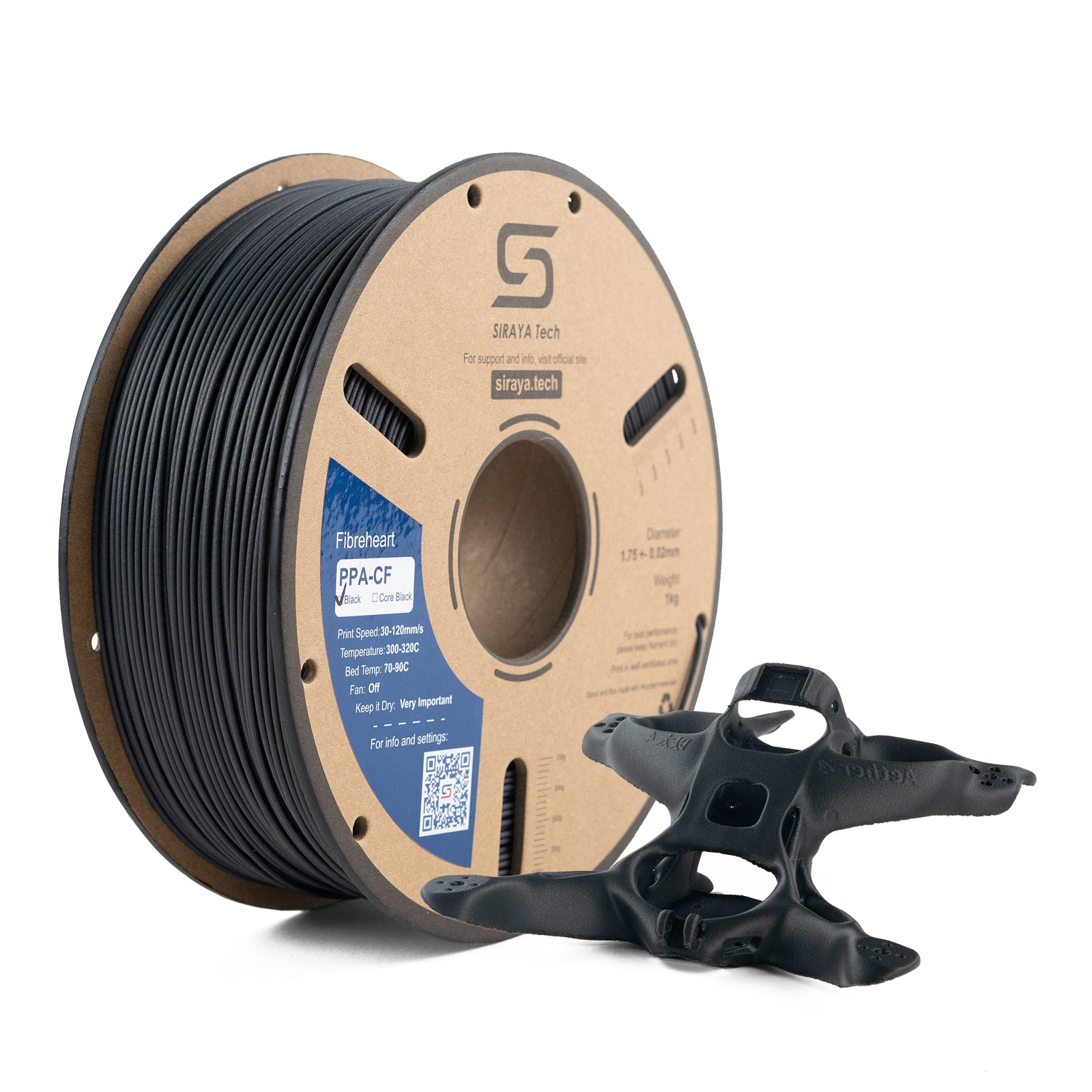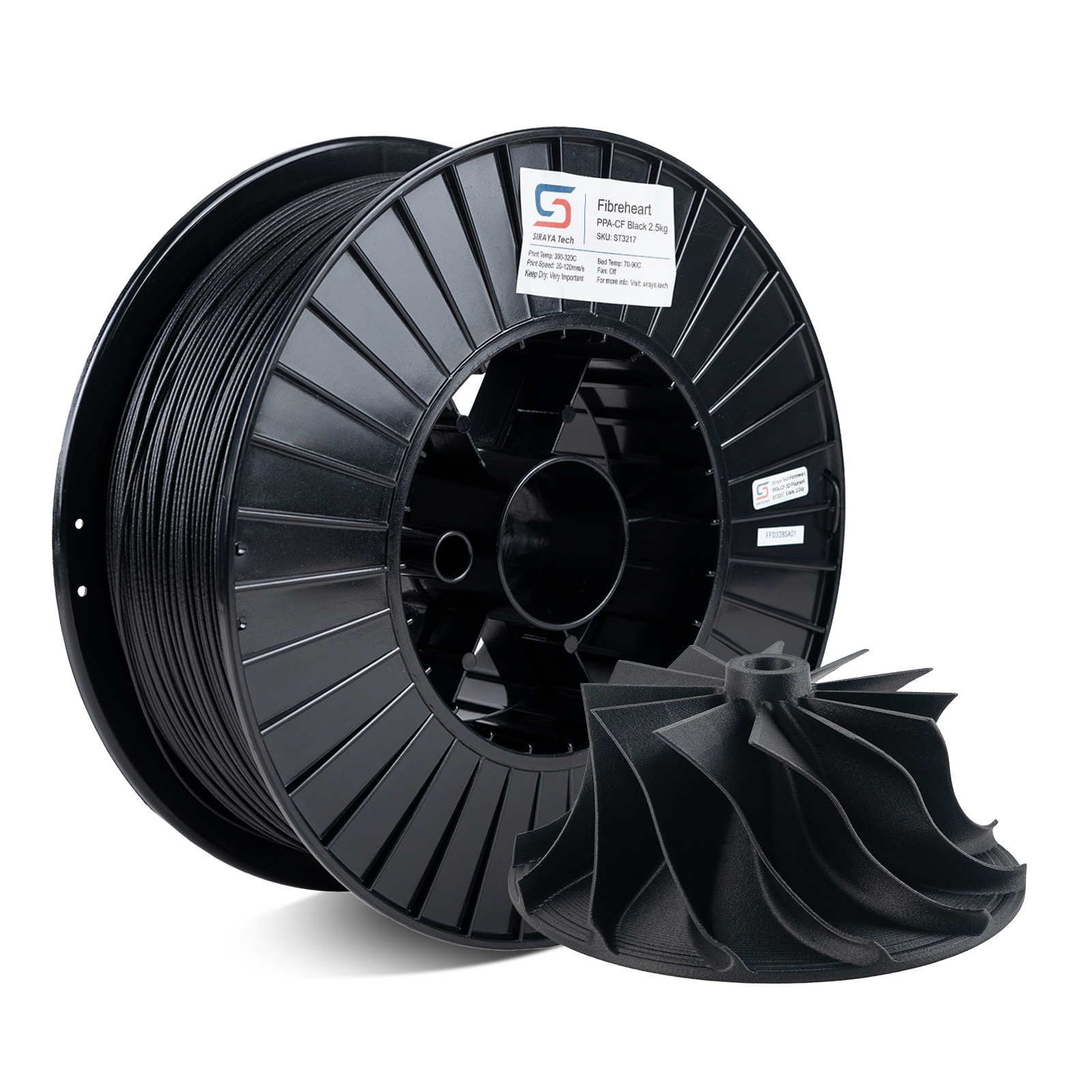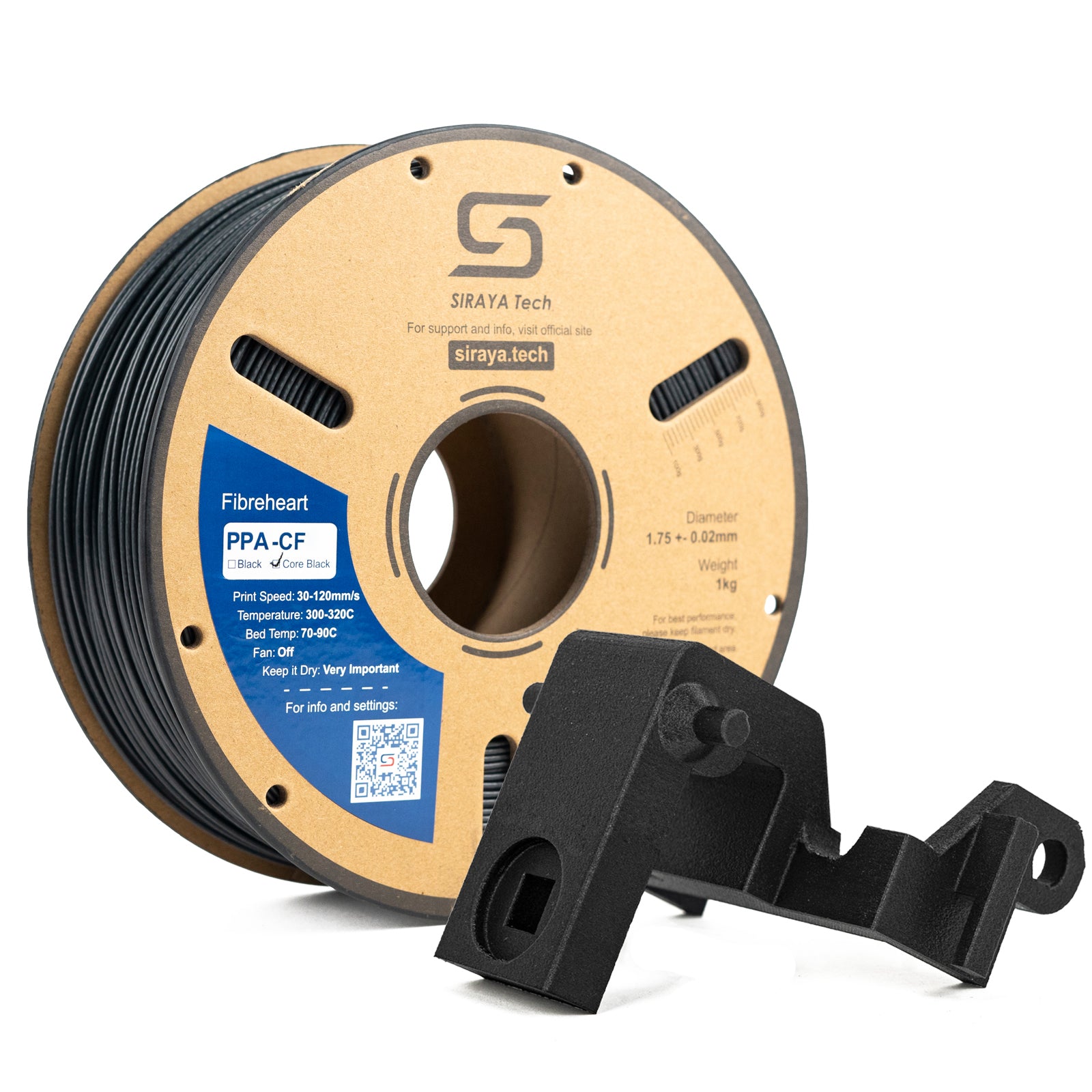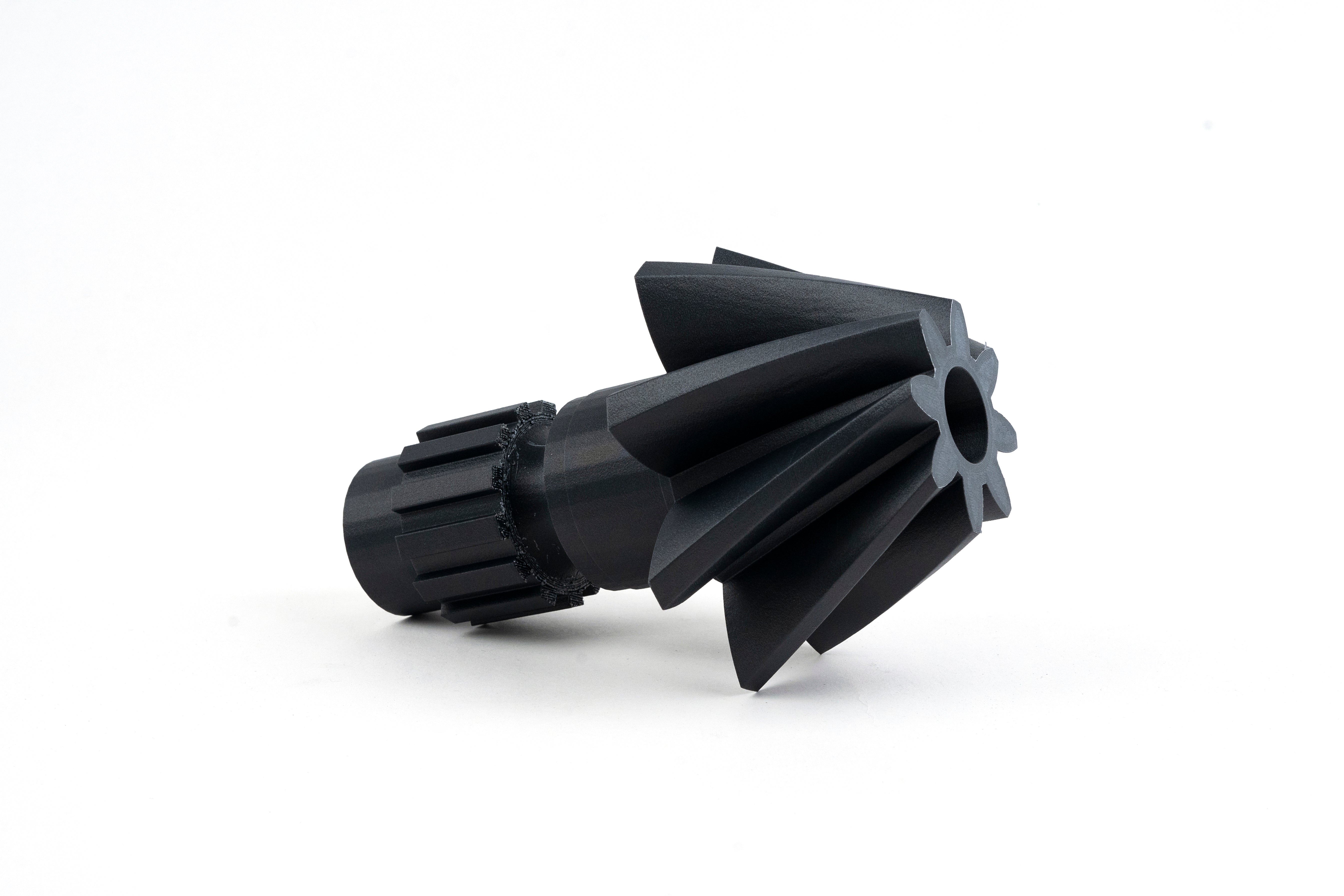
Heavy Duty 3D Printer Filament
7 製品
7 製品の1 - 7を表示しています。
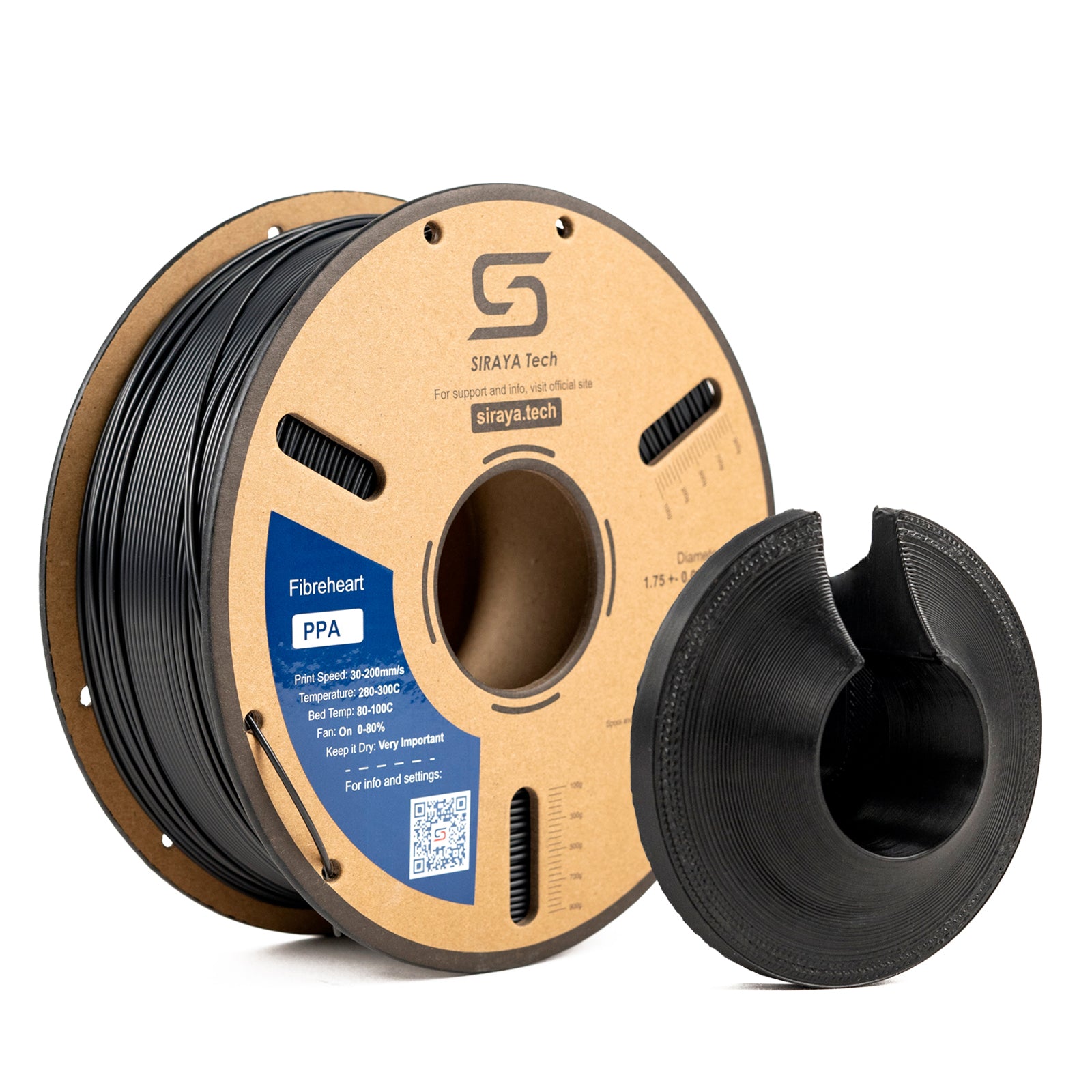
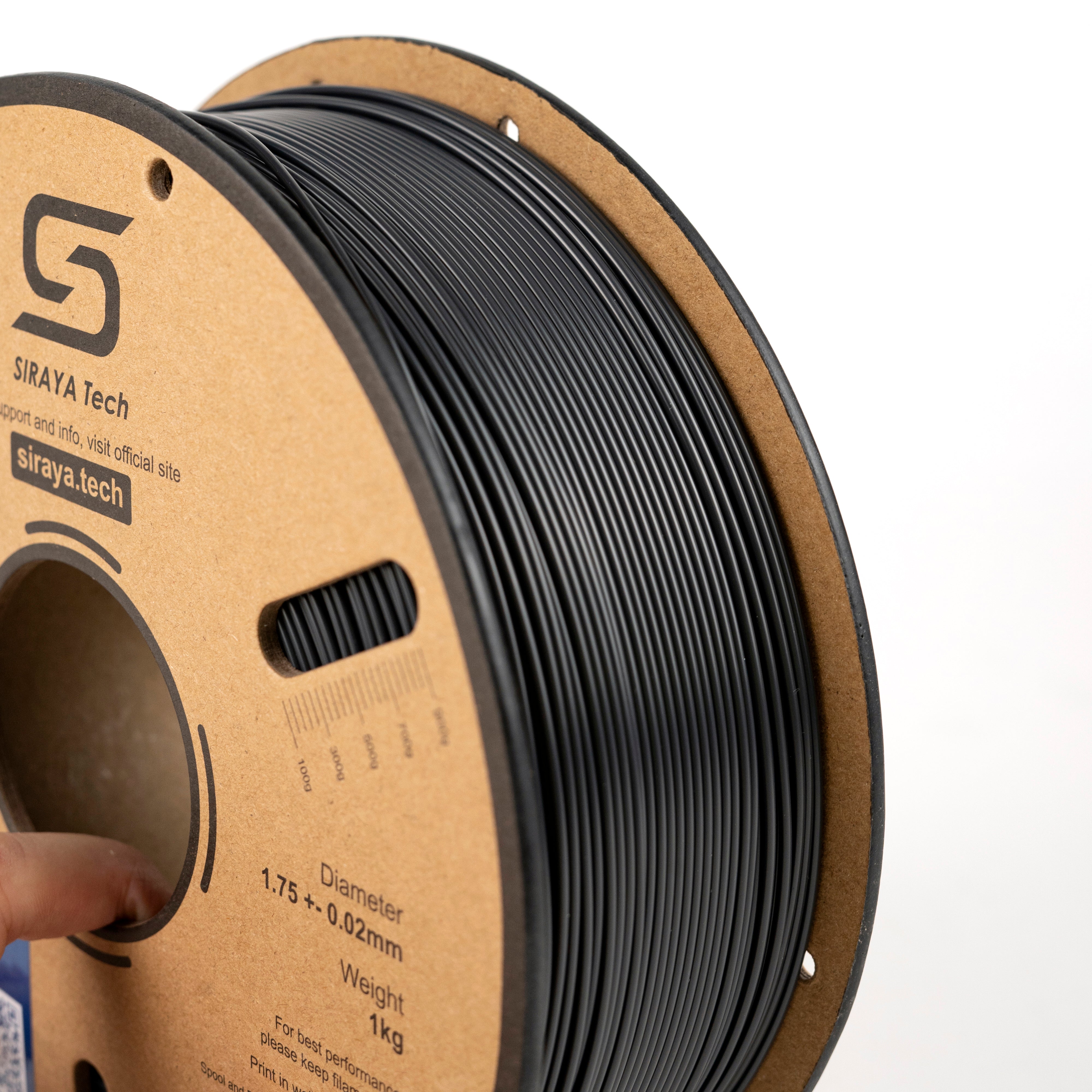
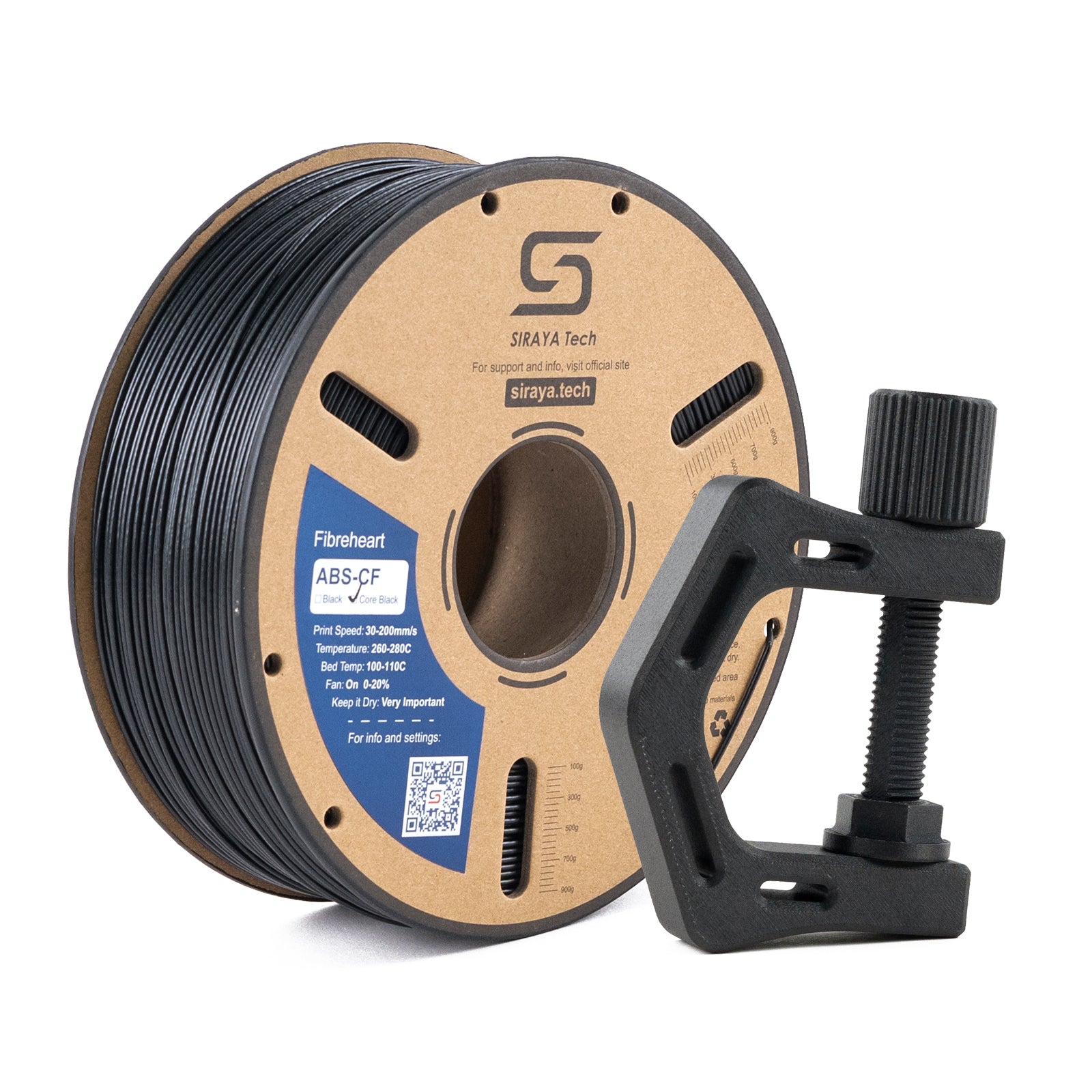
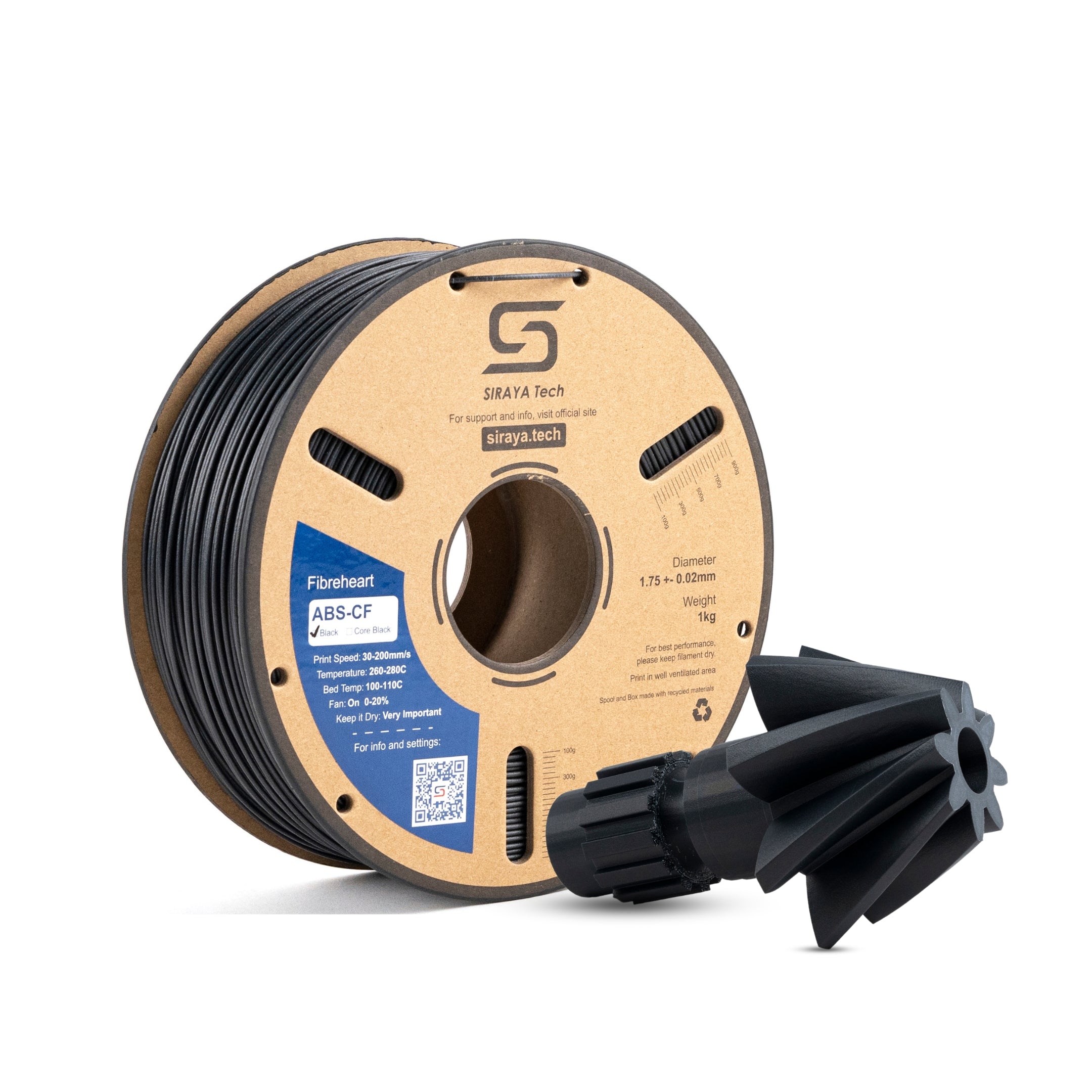
Heavy duty 3D printer filament means a material that does not quit when things get demanding. Siraya Tech heavy duty filaments are built for structural parts, high-stress assemblies, and environments that would break a standard spool. From carbon fiber PPA for aerospace-grade strength to glass fiber ABS for impact-resistant housings, these are the filaments makers and engineers reach for when ordinary materials fall short.
What Makes a Filament Heavy Duty
Heavy duty is not a single property. It is a combination of tensile strength, impact resistance, thermal stability, and structural stiffness under load. A filament that handles a functional bracket is heavy duty. A filament that also survives under-hood heat and oil exposure is heavy duty in a different sense.
Siraya Tech separates its heavy duty range into fiber-reinforced filaments for maximum stiffness, high-temperature filaments for demanding thermal environments, and tough elastomer blends for parts that need to flex without cracking.
- Carbon fiber reinforced filaments add stiffness and reduce thermal expansion without adding weight
- Glass fiber reinforced filaments improve impact resistance and dimensional stability
- High-temperature materials like PPA maintain properties at temperatures that would soften or distort standard filaments
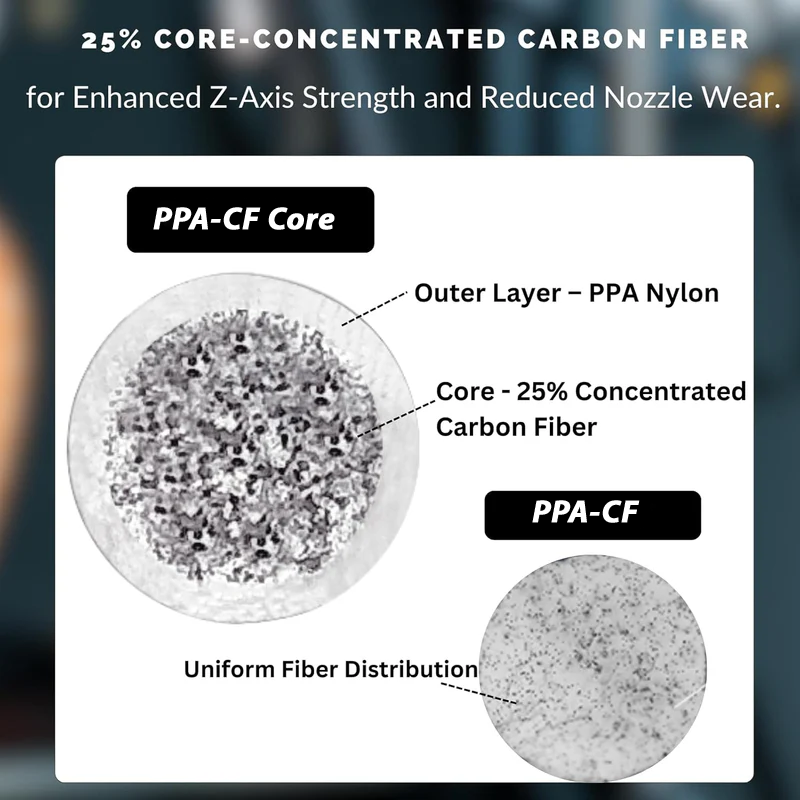
- Core-shell structures concentrate fiber where it is most effective, reducing nozzle wear and improving layer bonding
Siraya Tech Heavy Duty Filament Options
Heavy Duty vs. Standard Filament
Standard filaments like PLA handle most hobby and prototyping use cases well. They print easily, stick to most beds, and do not require enclosures or hardened nozzles. Heavy duty filaments take over when PLA hits its limits.
- Structural load: Carbon fiber PPA and glass fiber PPA can hold functional loads where PLA would deform or crack under sustained stress.
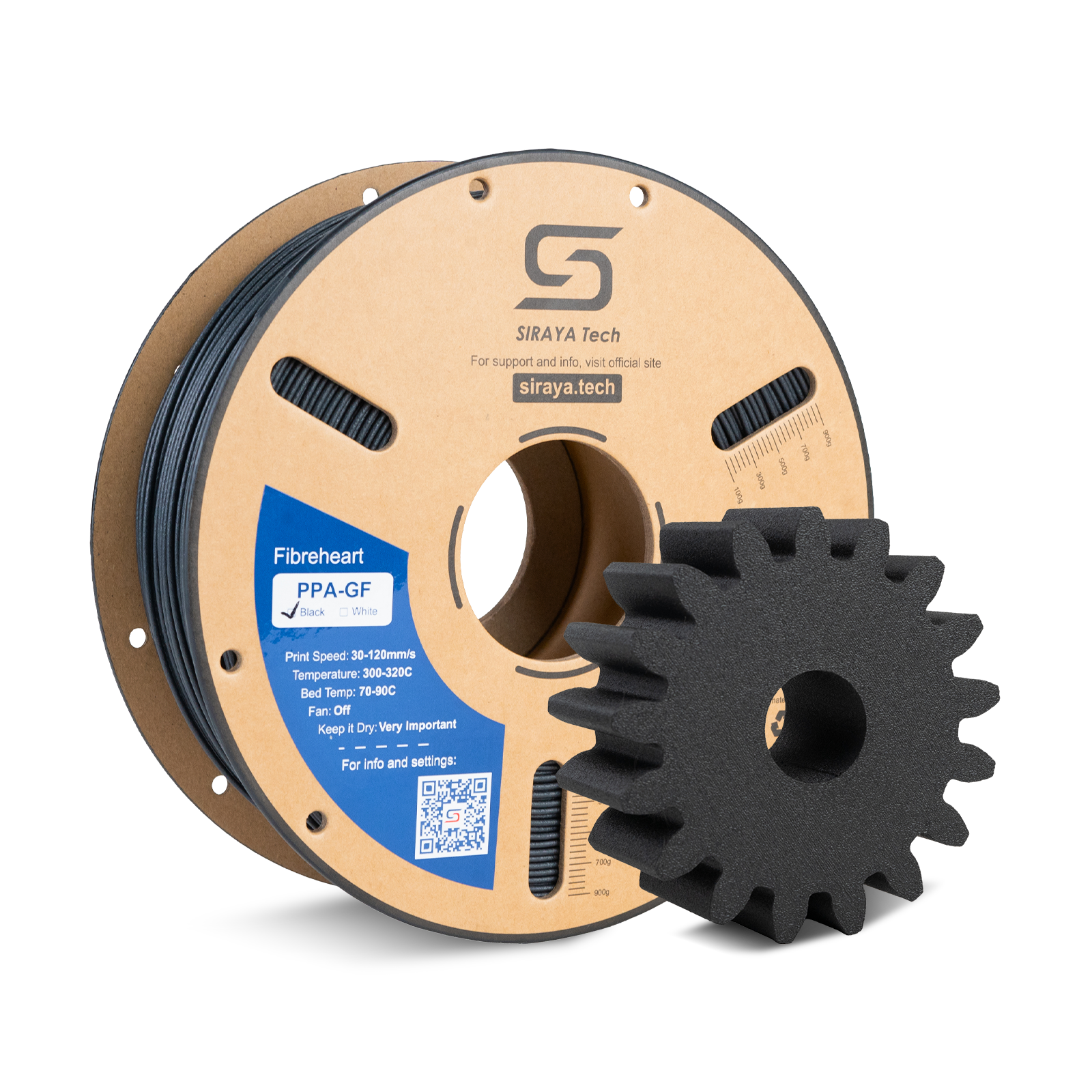
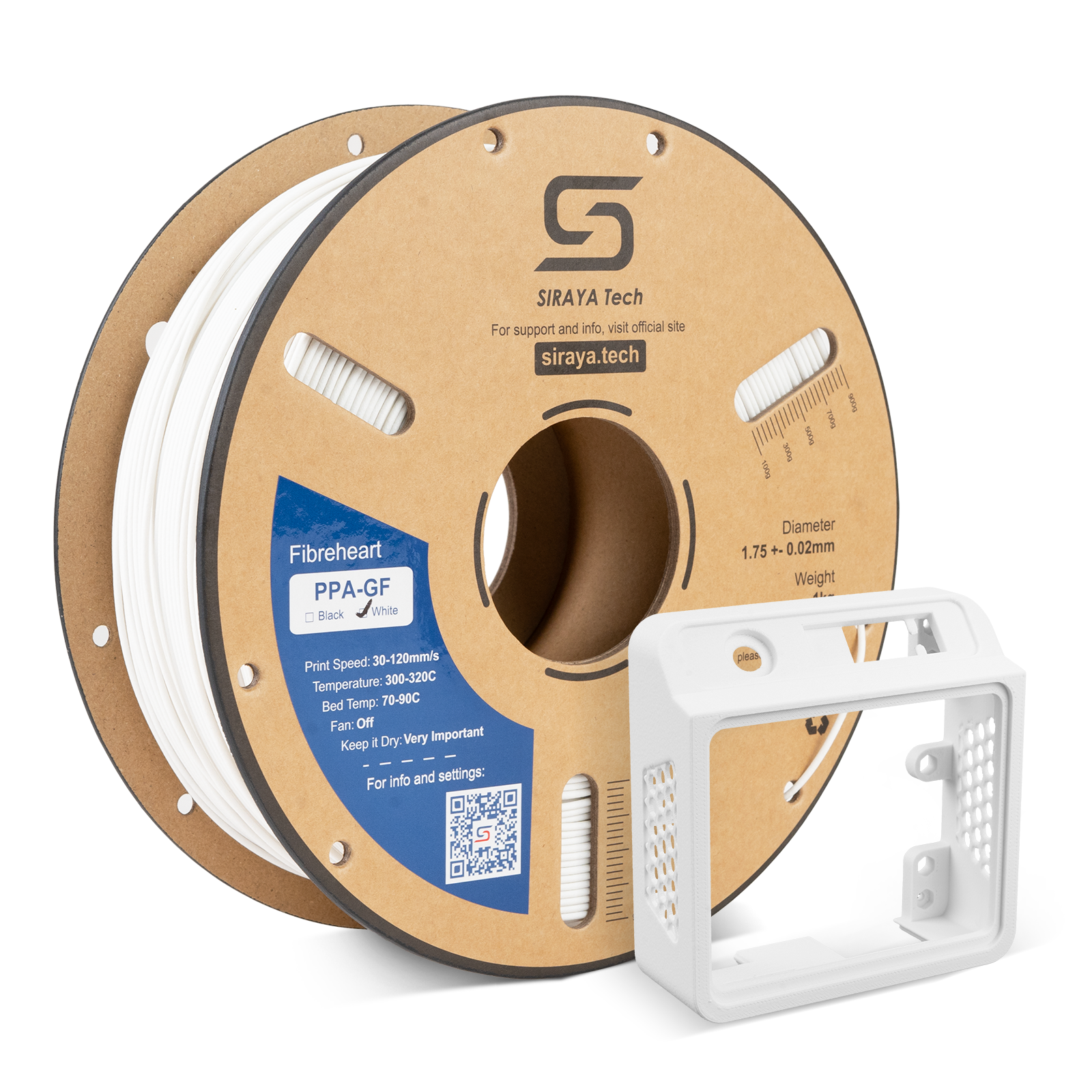
- Thermal environments: Standard filaments soften well below the temperatures found in automotive engine bays or industrial equipment. PPA-GF at 185C HDT handles those environments without deforming.
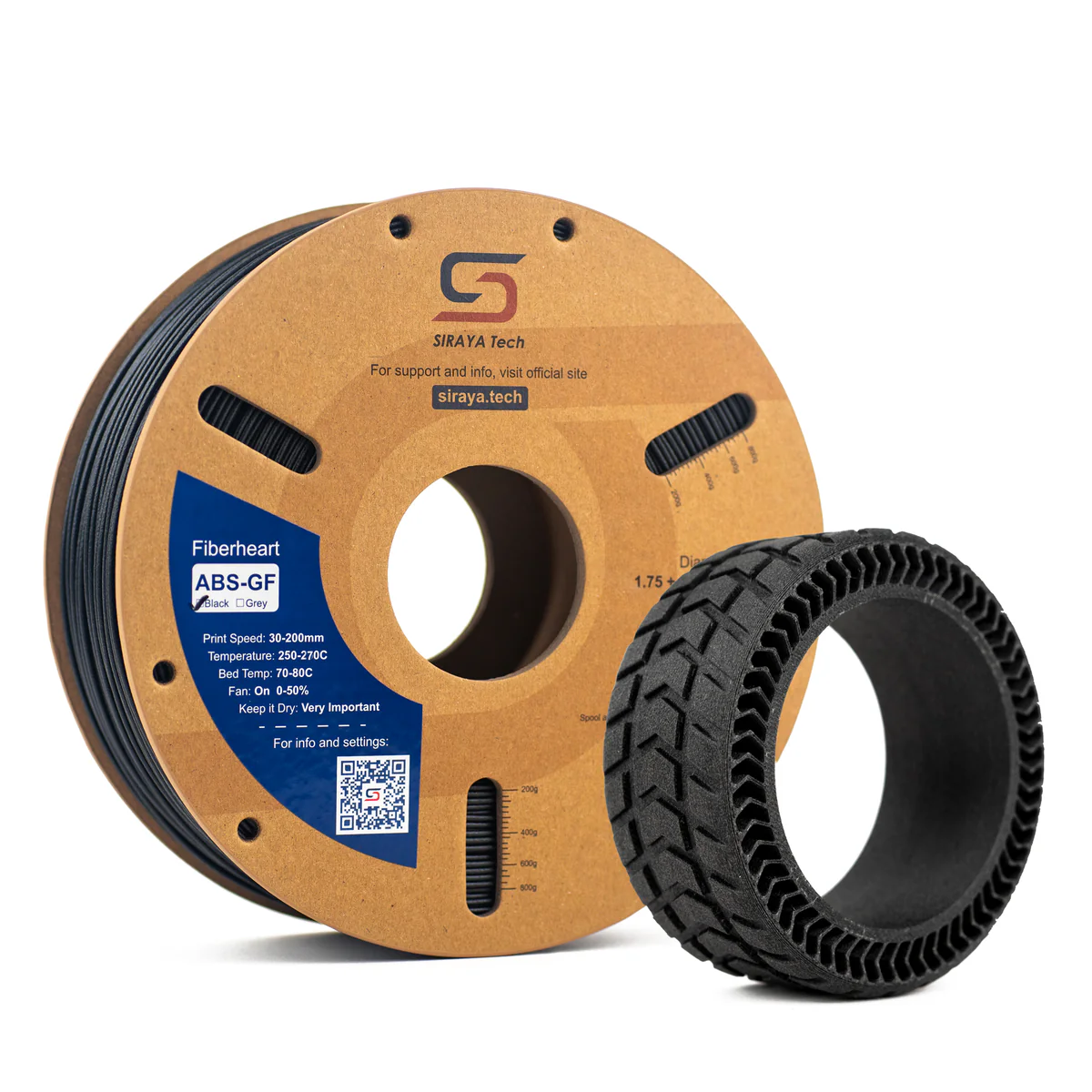
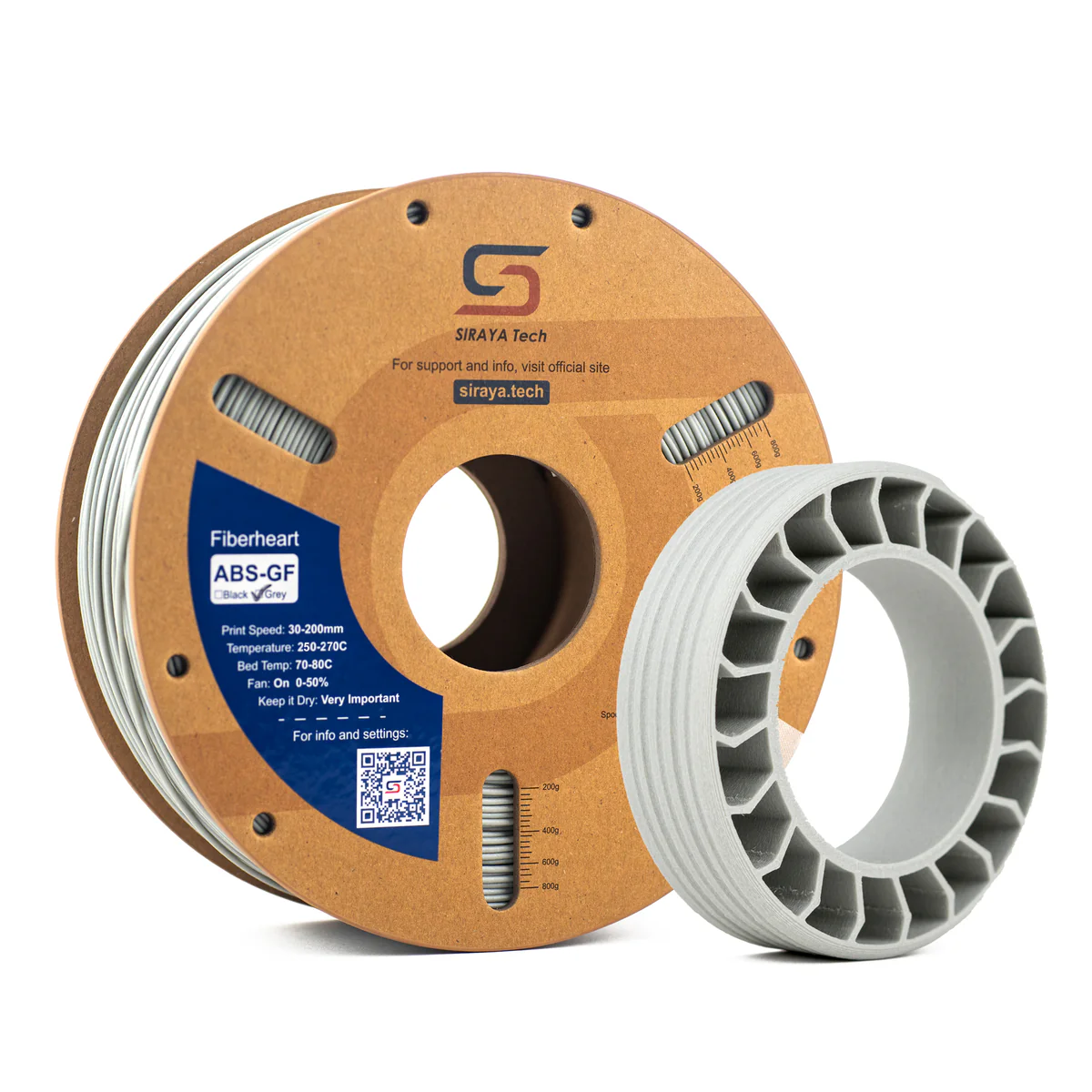
- Impact resistance: ABS and glass fiber reinforced grades absorb impact without shattering, unlike PLA which can be brittle under sudden load.
- Dimensional stability: Fiber-reinforced filaments have much lower thermal expansion coefficients, meaning printed parts hold their dimensions as temperature changes.
- Abrasive environments: Carbon fiber and glass fiber reinforced filaments are significantly more abrasion-resistant than unfilled polymers, making them suitable for parts that rub or contact other surfaces.
Real-World Applications for Heavy Duty Filament
- Functional brackets and mounts: Load-bearing brackets for electronics enclosures, sensor mounts, and equipment fixtures. Carbon fiber PPA or ABS-CF Core handle static and dynamic loads better than unfilled filaments.
- Automotive under-hood parts: Parts exposed to engine bay temperatures and fluids need HDT ratings well above 100C. PPA-GF at 185C HDT is designed for exactly this environment.
- Industrial jigs and fixtures: Manufacturing aids that must hold tolerances through repeated use. Glass fiber ABS offers a good balance of stiffness, ease of printing, and dimensional stability.
- Robotics and drone parts: High stiffness-to-weight ratio matters. Carbon fiber reinforced filaments deliver the strength of metal at a fraction of the weight.
- Housings for electronics: ABS grades offer good impact resistance and are easier to post-process than fiber-reinforced alternatives. ABS HT HF adds temperature resistance for enclosed electronics that generate heat.
- Marine hardware: Glass fiber reinforced filaments resist moisture-induced degradation better than standard nylons and hold up in humid, salty environments.